Get Full Government Meeting Transcripts, Videos, & Alerts Forever!
Get email alerts on the Flags In Classrooms topic
No spam. Unsubscribe anytime.
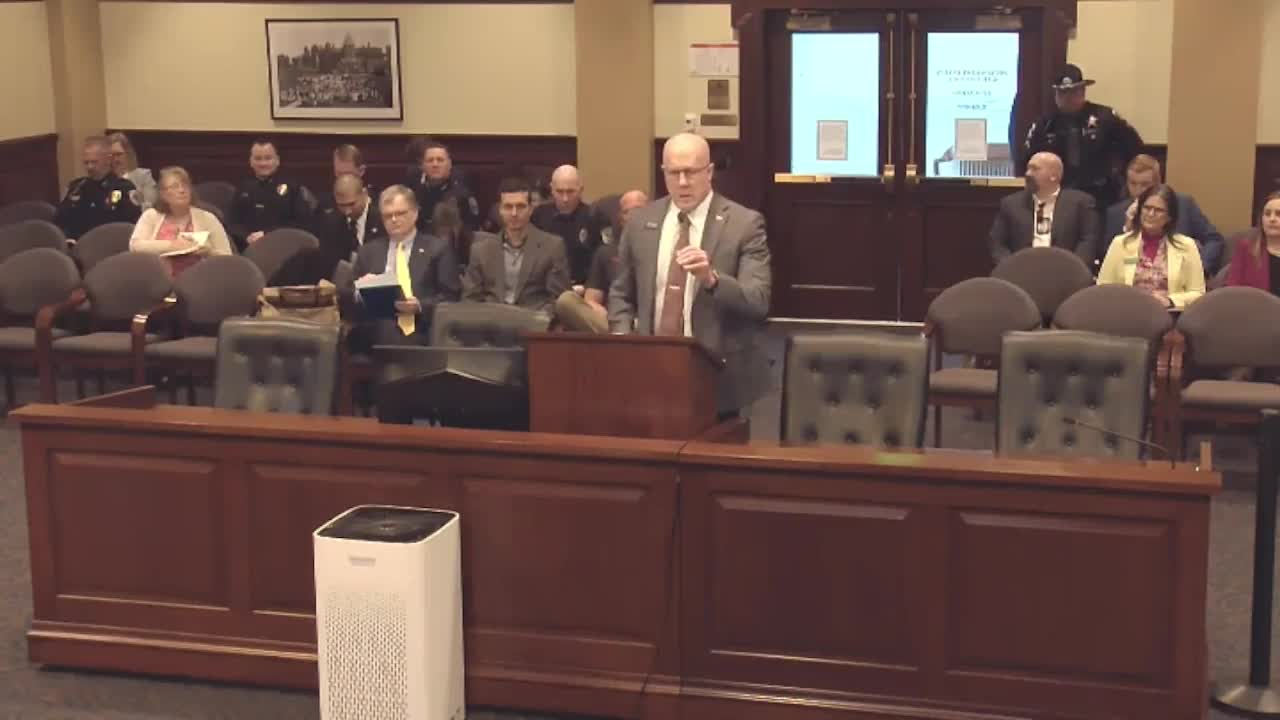
Education panel advances bill limiting political, ideological and religious flags in classrooms
Summary
Representative Ted Hill, R.-District 14, introduced RS31963 on Jan. 23 to restrict classroom displays of political, ideological and religious flags and to clarify exceptions for certain official flags.
Representative Ted Hill, R.-District 14, introduced RS31963 on Jan. 23 to restrict classroom displays of political, ideological and religious flags and to clarify exceptions for certain official flags. "We will have the safe flag and the American flag is the primary and all other political, ideological and religious flags will not be allowed," Hill said.
The bill, as presented, preserves display of U.S. and state flags and allows other nation-state flags in instructional contexts except when the United States is in open hostilities with that nation. Hill described "conflict" as "hostilities" and said the determination is intended to refer to kinetic war: "That's when bullets are flying and people are dying and that's where we're gonna focus on. That's the line." He also said enforcement would be left to local school boards: the bill contains only a "shall" and no penalties, so school districts would decide how to apply the rule.
The bill drew questions about classroom instruction. Representative Brent Church, citing an Advanced Placement comparative government class, asked whether flags used for instruction (for example, the Chinese or Iranian flag when studying those countries) would be allowed. Hill replied that "we are not in open hostilities" with China and therefore a Chinese flag could be displayed for instruction. Representative Cap Mathias asked for clarification by example: Hill said under the draft the Iranian flag could be displayed during instruction but a "Back the Blue"-style political flag would not.
Other committee members raised practical and oversight concerns. Representative Amanda Ehart questioned which body would make determinations about hostilities and said the state school board currently does not manage many school-level banners; she warned the bill could create administrative burdens. Hill acknowledged the practical limits and said the bill relies on "reasonability and patriotism" and local school-board monitoring.
The committee moved to introduce RS31963 and recommend it to the second-reading calendar. Representative Mundy made the motion to introduce; the committee adopted the motion by voice vote and the motion passed. The transcript records a voice vote in which "the ayes clearly have it; the motion passes." The vote was not recorded by individual names in the committee record.
The bill will return for a fuller hearing on the House floor process if printed and scheduled for second reading. The bill text (RS31963) as discussed clarifies allowed displays, leaves enforcement to local districts and contains no civil penalties or criminal sanctions.
Looking ahead, committee members signaled they expect further debate on how the definition of "hostilities" would be applied and whether administrative or funding responsibilities for monitoring displays should fall to local school boards or a state body.