Get Full Government Meeting Transcripts, Videos, & Alerts Forever!
Get email alerts on the Property Tax Appeals Homestead Exemption topic
No spam. Unsubscribe anytime.
Committee sends bill to floor that shifts burden in some property-tax appeals, clarifies proration of homeowner exemption
Summary
The Senate Local Government and Taxation Committee voted to send House Bill 354 to the floor with a due-pass recommendation after hearing that the bill would shift the burden of proof in certain property-tax appeals and specify how the homeowner (homestead) exemption is prorated when eligibility begins or ends mid-year.
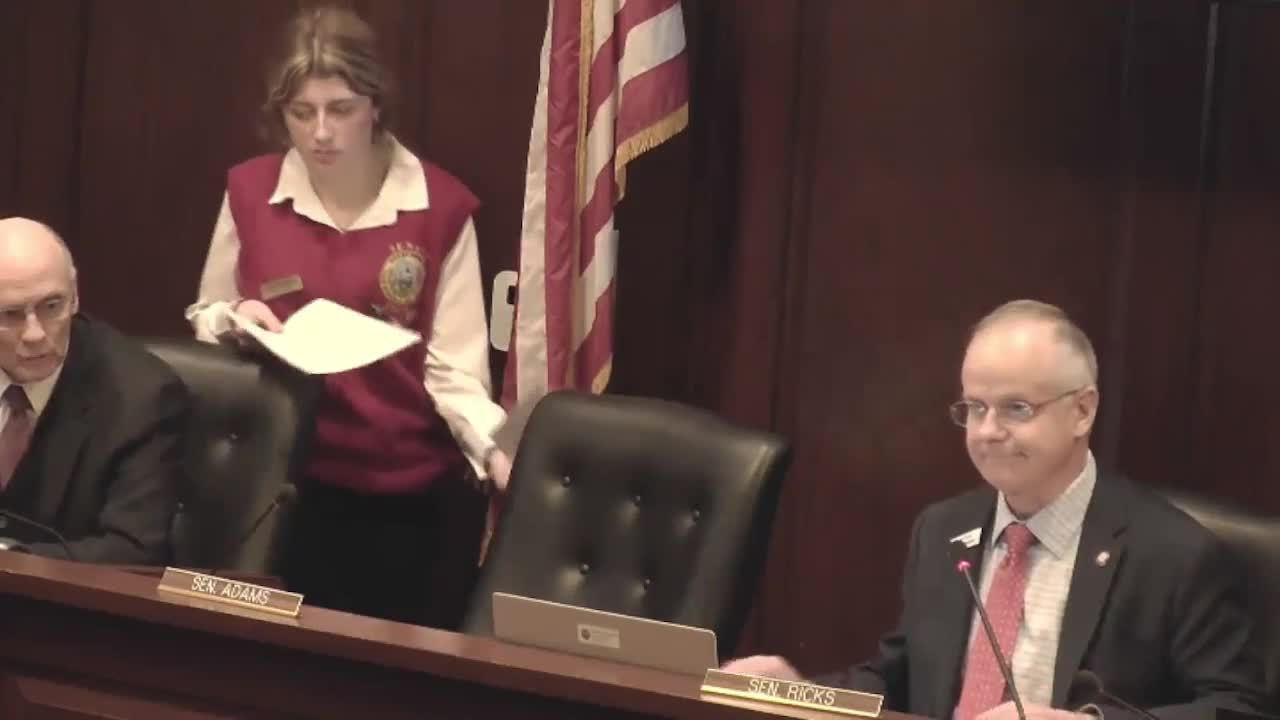
The Idaho Senate Local Government and Taxation Committee voted to send House Bill 354 to the Senate floor with a due-pass recommendation on a voice vote after hearing sponsor testimony and support from county and real-estate groups.
House Bill 354, introduced to the committee by State Representative Dustin Manwaring of District 29 (Pocatello), would do two primary things: shift the burden of proof in certain property-tax appeals and put into statute how to prorate the homeowner (homestead) exemption when eligibility begins or ends partway through a year. “If the county assessor is not within that standard, didn’t apply that standard the year before and they raised somebody’s rates more than 10% in a single year, we thought it would be appropriate to shift that burden to the assessor,” Manwaring said during the committee hearing.
The bill would move a set of equalization standards currently in an administrative rule—applied statewide by the Idaho State Tax Commission—into statute, and tie a shift in burden of proof to those standards and to a threshold increase in assessed value. Representative Manwaring told the committee the proposal arose in part from a past episode in Bannock County when a change in assessment practice led to thousands of tax appeals. “In Bannock County… we had this issue where Bannock County was below the median market rate ratios… and the new assessor came in and raised countywide thousands of properties in one fell swoop and there was at least 3,500 if not more tax appeals,” Manwaring said as background for the change.
On the homeowner-exemption proration, Manwaring explained the calculation the bill would direct assessors to use: take the levy rate multiplied by the market value, divide by the number of days in the year (365 or 366), to arrive at a daily tax amount, then multiply by the number of days the exemption applies. The bill text includes specific language directing county assessors how to apply that proration when a homeowner becomes eligible or ceases to qualify during the year. Manwaring also noted that the state removed an April 15 deadline for the homeowner exemption in about February 2020; HB 354 is intended to clarify how proration should work after that deadline was removed.
Witnesses who signed up to testify expressed support. Sarah Westbrook, representing the Idaho Association of Counties, told the committee the association supports the bill and described it as “fair and implementable.” Max Pond, government affairs director for the Idaho Realtors, also voiced support and thanked counties for negotiating toward a solution. A few others listed in the hearing record either declined to testify or spoke briefly in support.
Senator Taggs moved to send House Bill 354 to the floor with a due-pass recommendation; the committee record later notes the motion as recited by the clerk as being by Senator Toews with a second by Senator Taylor. The motion passed on a voice vote; the chair declared the motion carries and Senator Burt agreed to carry the bill on the Senate floor.
The committee did not take a roll-call vote on the bill in this hearing; committee members asked limited clarifying questions about the proration calculation and whether the statute would address both proration when the exemption comes on and when it rolls off. Manwaring and witnesses confirmed the bill addresses both.
The committee also noted one agenda item that could not be considered: a Senate draft (referred to in the hearing as a new RS with bill number 1164) had been routed to the Commerce Committee and was not heard by this committee.
The committee adjourned after completing the agenda; the bill will next be scheduled on the Senate floor per usual legislative process.