Get Full Government Meeting Transcripts, Videos, & Alerts Forever!
Get email alerts on the Parks And Recreation topic
No spam. Unsubscribe anytime.
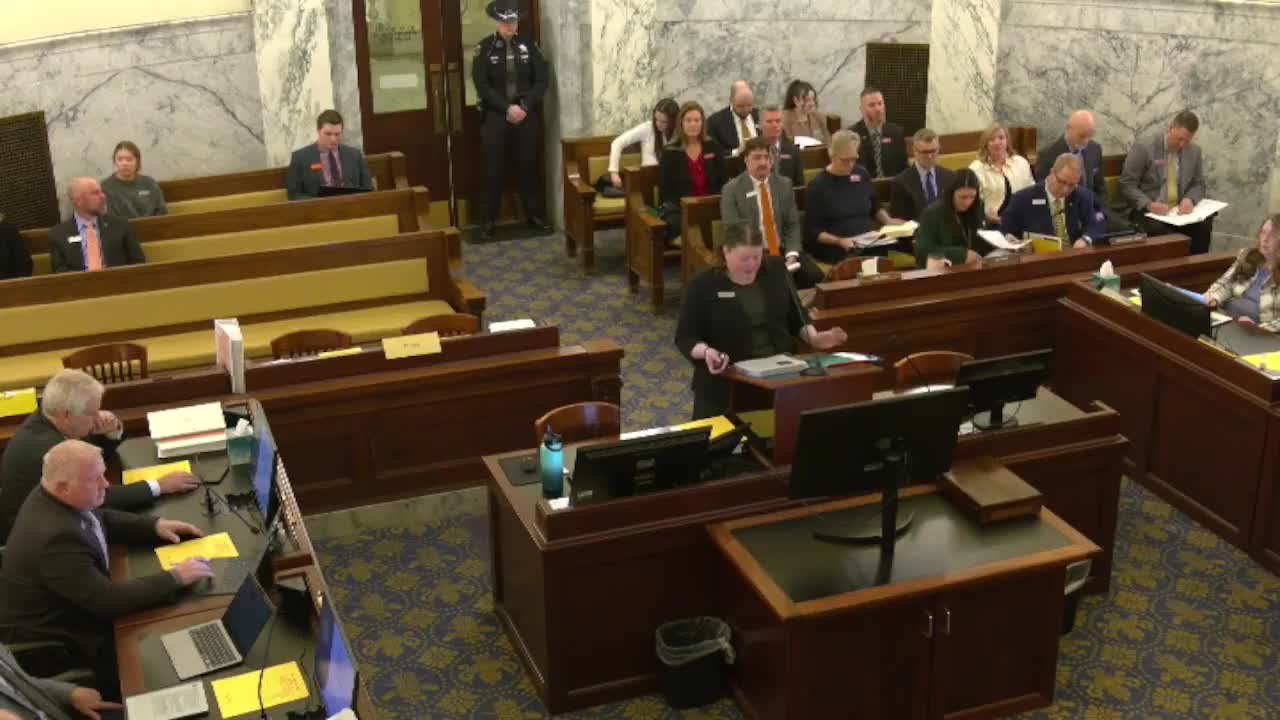
Idaho Parks seeks program consolidation, higher seasonal pay and capital funding
Summary
At a Joint Finance-Appropriations Committee hearing, the Idaho Department of Parks and Recreation requested a program consolidation, higher seasonal wages and funding for capital projects and deferred maintenance, while answering questions about dock replacements at Hebron State Park and equipment funded by dedicated snowmobile fees.
The Idaho Department of Parks and Recreation told the Joint Finance-Appropriations Committee it is seeking to consolidate two management programs, raise seasonal wages and secure funding to complete capital and deferred-maintenance projects.
The request, presented by Janet Jessup of Legislative Services and Director Susan Buxton, would merge the department's management‑services and park‑operations budgets (a net‑zero technical consolidation), raise seasonal compensation and implement targeted pay steps for park rangers to address internal pay compression. Director Susan Buxton said the department also included sizable capital outlay requests, including projects at Bear Lake Fish Haven and Lake Cascade, and is working with the Coeur d'Alene Tribe to replace two aging marinas at Hebron State Park.
The consolidation and pay changes matter because much of the department's operating revenue is dedicated by statute to specific purposes, limiting flexibility, while capital work and seasonal hiring affect whether parks can operate reliably through peak seasons.
Buxton and Legislative Services analyst Janet Jessup described the agency's structure and funding. Jessup said the department is allocated about 190.8 full‑time positions (FTP) and noted the capital development program in the budget shows 0 FTP because capital projects are funded as one‑time appropriations. Buxton said seasonal employees and rangers perform complex, year‑round work—“take care of sewer systems, water systems, roads, criminals, people being happy, unhappy, all sorts of stuff, animals, docks,” she said—arguing pay adjustments reflect that scope.
On pay, the department proposes raising seasonal compensation from $12 an hour toward $15 an hour and creating a tiered ranger compensation program to address compression. Representative Tanner reviewed prior incremental funding and said the committee has put roughly $350,000 toward moving seasonals from $12 toward $15 across multiple years (citing prior figures of about $150,000, $200,000 and $210,000 in successive budget requests). Buxton and Human Resources Officer Jennifer Quindell Miller said managers currently have discretion within a range but that local labor markets vary: “In some places, we're having to go to 17 or so,” Buxton said, describing resort and remote labor markets where $15 may be a floor rather than a market‑clearing wage.
Committee members asked about specific purchases and projects. Troy Elmore, the department's operations administrator, said the compact wheel loader requested for snow‑related work is paid from the snowmobile sticker fund, is the third similar piece of equipment purchased and supports 27 county snowmobile programs; the department owns groomers while counties operate equipment. On Hebron State Park (described by Buxton as roughly 7,000 acres on Lake Coeur d'Alene), Buxton said two marinas—Rocky Point and Chocolat—are long overdue for replacement, and work with the tribe and existing federal funds should increase available slips (Buxton said the combined marinas exceed roughly 150 slips).
Jessup and Buxton also discussed deferred‑maintenance funding and the appearance of unspent balances: Jessup emphasized that appropriations tied to dedicated or federal sources often carry restrictions and multi‑year project timelines, so apparent reversions reflect timing and statutory restrictions rather than unspent discretionary cash. Buxton said the department has provided a slide deck and ARPA/surplus accounting in committee materials and offered to provide a more detailed written summary of ongoing deferred‑maintenance projects on request.
The director and staff did not request new general fund support for parks; the proposals rely mainly on existing dedicated and federal funds and one‑time capital appropriations. Buxton closed by thanking the committee for support and offering further detail on projects and spending plans.