Get Full Government Meeting Transcripts, Videos, & Alerts Forever!
Get email alerts on the Fire District Consolidation topic
No spam. Unsubscribe anytime.
Bill to ease consolidation of fire districts approved by committee for floor; bill aims to remove budget-growth disincentives
Summary
House Bill 208 would allow Idaho fire districts to consolidate or otherwise combine budgets and levies without being penalized by the 3% budget-growth cap; the committee sent the bill to the floor with a due-pass recommendation after fire-service supporters described operational efficiencies and safeguards for local control.
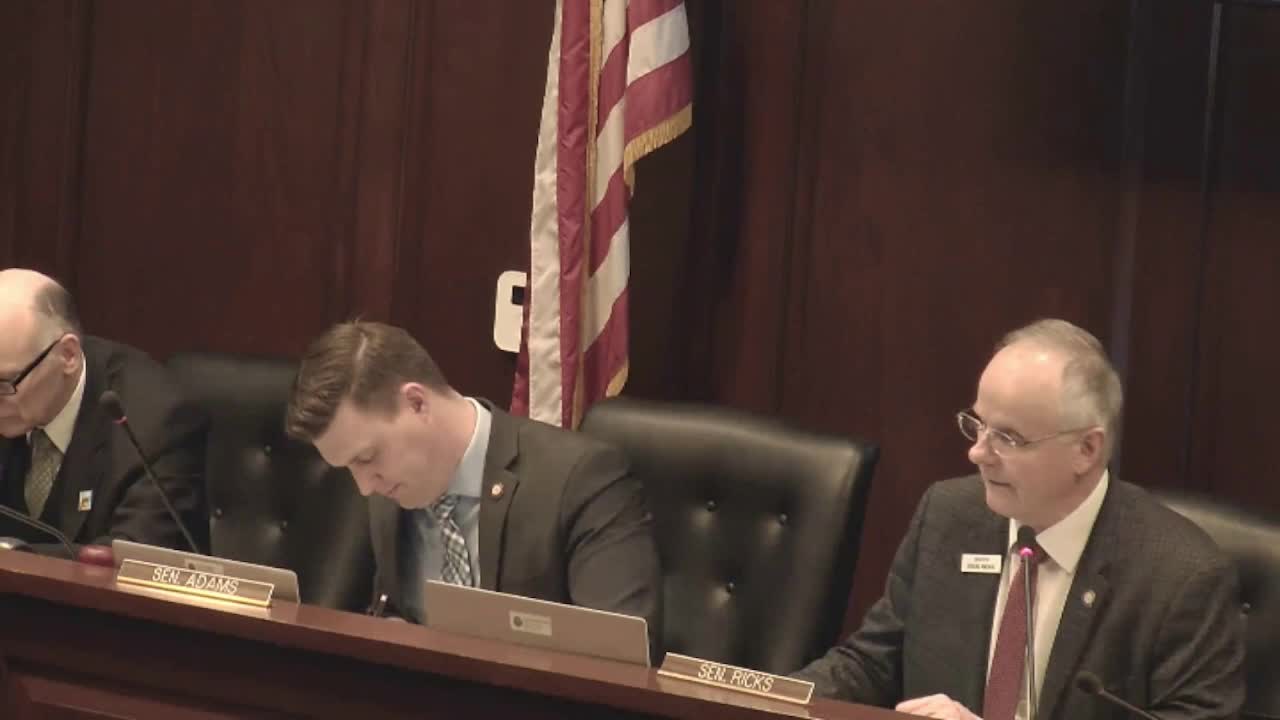
The Senate Local Government and Taxation Committee on a voice vote sent House Bill 208 to the Senate floor with a due-pass recommendation after testimony that the bill would remove a budget-growth disincentive that currently discourages consolidation of fire districts.
Senator Jim Woodward, Legislative District 1, introduced the bill and deferred to Representative Mark Sauter, who said the measure is intended to fix an “unintended consequence” created when a 3% budget-growth cap was combined with older code governing fire-district budgets. “There is no incentive to — in fact there’s a deterrent to a consolidated fire district even though there may be operationally a reason to do that,” Sauter said.
Sauter, a retired fire chief, said the bill creates a process allowing fire districts to combine budgets and arrive at a single levy based on the combined assessed value, similar to how cemetery or water districts can consolidate. He said the change does not force consolidation, does not eliminate local elected fire-district boards, and includes public hearings and an appeals process.
Chief Greg Tominski of Middleton and Star Fire District explained levy mechanics to the committee: the combined districts pool budgets, compute a new levy across the enlarged tax base and the levy rates will fluctuate as they do now; some taxpayers in the new district may pay more while others pay less, but the overall levy averages across the combined assessment. Sauter gave examples of areas already discussing consolidation under the proposal, including Kootenai County Fire Rescue and Northern Lakes Fire District, and noted Bonner County’s multiple districts around Priest Lake as an area where consolidation conversations may follow the bill.
Senator Grohl moved to send House Bill 208 to the floor with a due-pass recommendation; Senator Taylor seconded. The committee approved the motion by voice vote. Supporters said the bill has the backing of the State Fire Chiefs Association and is designed to enable operational efficiencies — such as shared leadership, shop space, and mutual deployment of apparatus — while preserving local control.
Several senators commented that similar consolidation barriers exist for other special districts such as highway districts and that the bill could prompt future work in other committees to address analogous issues.
The bill will proceed to the Senate floor for further consideration.