Get Full Government Meeting Transcripts, Videos, & Alerts Forever!
Get email alerts on the Homestead Exemption topic
No spam. Unsubscribe anytime.
Committee advances bill to let married homeowners each claim full Idaho homestead exemption; bankruptcy provision left for amendment
Summary
The Senate Local Government and Taxation Committee voted to send House Bill 282 to the fourteenth order for possible amendment after testimony that the measure would let married co-owners each claim a $175,000 homestead exemption and raised questions about a bankruptcy-related change that the sponsor recommended removing.
The Idaho Senate Local Government and Taxation Committee on an apparent voice vote sent House Bill 282 to the fourteenth order of business for possible amendment after lawmakers heard that the bill would let each married homeowner claim a full homestead exemption and that a separate bankruptcy-related change may need more work.
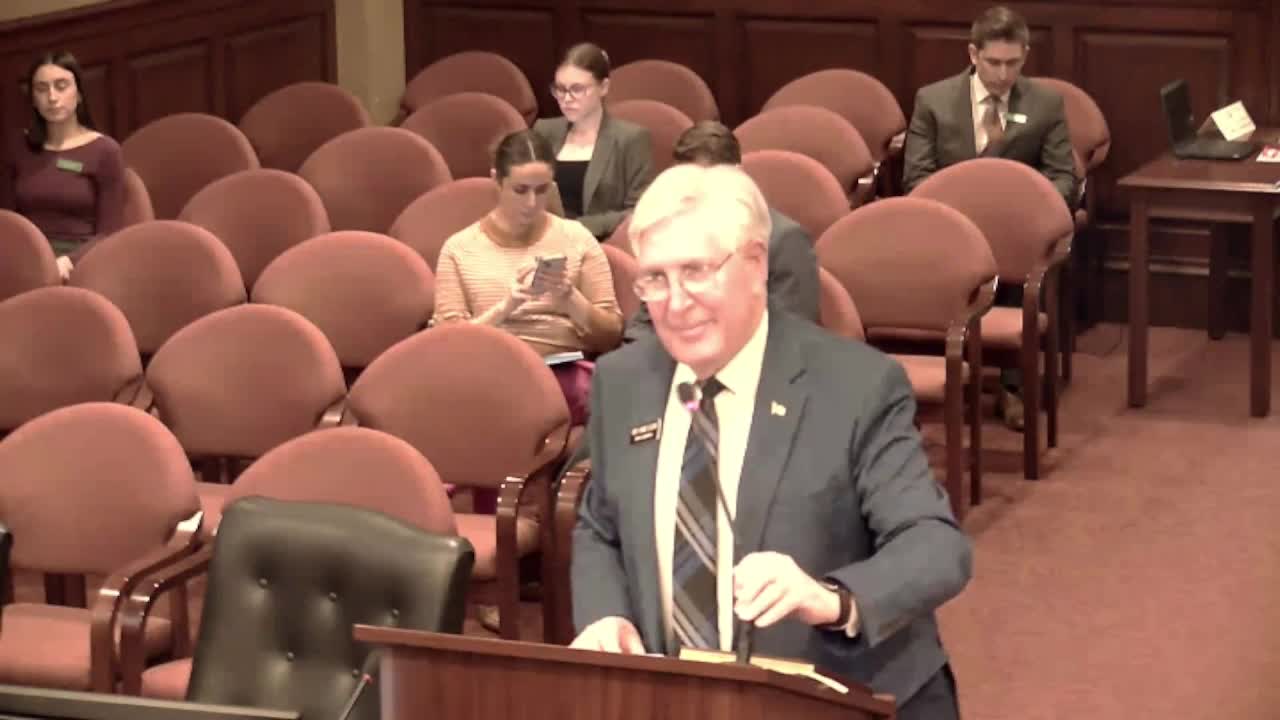
Representative Lance Clow, District 25 (Twin Falls), told the committee the bill addresses Idaho’s homestead exemption, which protects home equity from involuntary liens such as judgments. “Homeowners are each entitled to $175,000 of protection of their equity,” Clow said. He said the current statute treats married couples differently: married owners share a single $175,000 exemption, while two unmarried co-owners each may claim $175,000.
The bill’s first section would allow married co-owners to claim the exemption individually so that two owners would be able to claim two $175,000 exemptions, Clow said. The bill’s second section would change Idaho Code 55-1008 to carve out a narrow exception in bankruptcy to a one-year reinvestment requirement. Representative Alexandra Cavall, who said she is a bankruptcy attorney and represents District 24, told the committee that the second section responds to a Ninth Circuit decision, McAllister v. Wells, and to tensions between the one-year reinvestment rule in Idaho law and common mortgage underwriting rules that typically require borrowers to be two to four years removed from bankruptcy before obtaining a new mortgage.
Cavall explained the problem this way: Idaho’s statutes generally apply exemptions on an individual basis except the homestead. “By virtue of being married, they lose that,” she said of married homeowners under current law. She described the reinvestment rule in Idaho Code 55-1008 that protects up to $175,000 of proceeds from a forced sale for up to one year provided the homeowner reinvests the funds in a replacement homestead. Cavall said the Ninth Circuit’s McAllister decision allows courts to consider actions after the bankruptcy petition date, which can make the one-year reinvestment requirement effective in chapter 11 cases and make it difficult for debtors to replace a home within one year given typical mortgage waiting periods.
Because members of the committee and counsel differed on how the bankruptcy change would operate in practice, Representative Clow asked the committee to send the bill to the fourteenth order for possible amendment and to eliminate section 2 (the bankruptcy carve-out) from the bill. Senator Adams moved that the committee send House Bill 282 to the fourteenth order for possible amendment; Senator Berndt seconded. The committee approved the motion by voice vote. The committee also agreed that Senator Adams will carry the bill on the Senate floor.
The discussion distinguished two separate policy choices: (1) eliminating what supporters described as a marriage penalty in the homestead exemption by allowing married co-owners to each claim $175,000, and (2) the narrower bankruptcy provision asked to be removed from the pending bill so the revision to Idaho Code 55-1008 would not proceed on this measure. The committee did not adopt any change to state law during the meeting; it forwarded the bill for further amendment and floor consideration.
The bill drew technical legal testimony but no recorded roll-call tally on the committee vote was read into the record; the committee’s voice vote was announced as in favor. Staff and counsel noted the underlying statutes cited during testimony: Idaho Code 55-1002 and Idaho Code 55-1008, and speakers referenced federal bankruptcy law (11 U.S.C.) and the Ninth Circuit decision McAllister v. Wells.
Committee action now moves the bill into the amendment process; the record shows members sought to limit this committee’s change to the marriage-related homestead language while removing the bankruptcy carve-out for separate consideration.