Get Full Government Meeting Transcripts, Videos, & Alerts Forever!
Get email alerts on the Public School Funding topic
No spam. Unsubscribe anytime.
Idaho lawmakers review public school funding as attendance-based support units fall
Summary
Jared Tetrault, a Legislative Services Office budget analyst, told the Joint Finance‑Appropriations Committee on March 4 that Idaho’s move back to attendance‑based funding after the COVID enrollment policies is reducing state support units by about 200, producing lower statutory distributions even though total student headcount is similar.
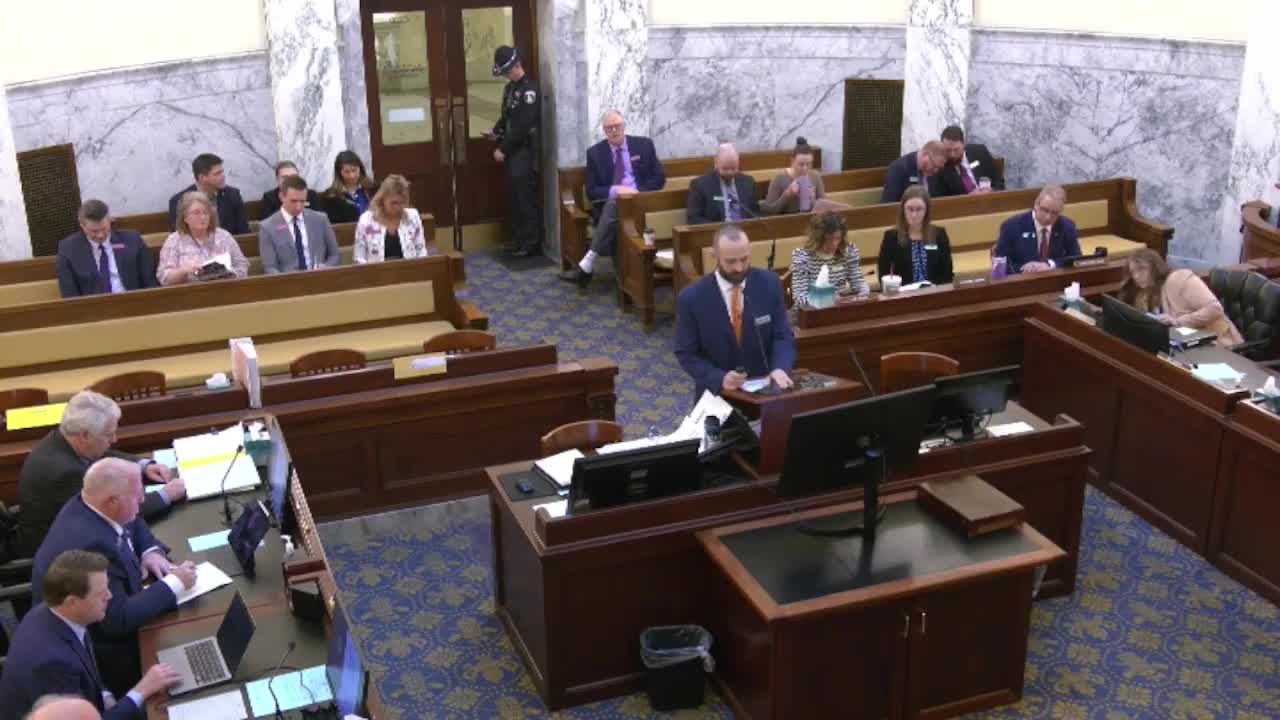
Jared Tetrault, deputy division manager with the Legislative Services Office Budget and Policy Analysis Division, told the Joint Finance-Appropriations Committee on March 4 that the public school support program serves about 115 local school districts and roughly 75 public charter schools and that the program’s statutory framework is in Idaho Constitution, Article IX, Section 1 and Title 33 of Idaho Code.
Tetrault said the state distributes most K–12 funding through support units and staff allowances and described how this year’s appropriation is being affected by a roughly 200‑unit decline tied to attendance counts. "During that time, attendance and enrollment were closer to 98, 99 percent, which would be expected. And then the switch back to attendance as required in Idaho law. And so as a result, post COVID is those percentages are closer to 94 percent," he said, explaining why fewer support units are funding allocations even though enrollment remains similar.
The reduction in support units is the primary reason the teachers division shows a $15.7 million decrease in the budget line tied to fewer units, Tetrault said, while teachers advancing on the career ladder produced a roughly $17.3 million increase that offsets much of that decline. He told the committee the average amount funded per support unit is about $147,000.
Superintendent Debbie Critchfield (State Superintendent of Public Instruction) and department staff described other drivers of the K–12 budget: salary-based apportionment (career ladder), discretionary funds, transportation, federal grants and health insurance allocations. Critchfield said last session the Legislature approved a 1% maintenance cost‑of‑living adjustment (CEC) then added a 2% supplemental CEC targeted to administrators and classified staff; she said the department and districts also continue to work through the phase-out of ARPA/ESSER one‑time federal dollars.
On federal COVID relief, Critchfield said many districts used ESSER dollars for personnel: "Around 80% of the districts did use those in some form for some type of salary or personnel," and she told the committee the state declined an option from the U.S. Department of Education to request an extension of ESSER spending. She described the federal funds as intended for learning‑loss work and said she asked districts to plan to phase out ongoing personnel costs funded by those one‑time dollars.
Committee members asked about health insurance and how the state allocation relates to districts’ actual costs. Tetrault explained health insurance for schools is allocated per staff allowance rather than by actual full‑time equivalent (FTE) payroll as with state employees; he said the committee could request state plan counts but that many district‑level data are self‑reported.
Lawmakers also pressed department officials on several proposed or requested items in the 2026 budget: a weighted student funding formula, a pupil‑transportation funding formula, and a special needs student fund (each identified as requiring legislation), plus a statewide optional student‑transportation routing software contract intended to improve route accuracy and reporting. Department staff said the routing‑software procurement is contingent on legislative action and that many small districts currently lack routing software because it is cost‑prohibitive.
On professional development and literacy spending, Critchfield said the department’s request would move certain professional‑development dollars into discretionary funding so local districts have more control, while a separate legislative proposal would fund coaches focused on K–3 literacy and phonics. Gideon Tolman, chief financial officer with the Department of Education, said the department selected Istation as the vendor for the Idaho Reading Indicator (IRI) after an RFP and said the budget includes additional funding for Idaho‑specific enhancements to the assessment and the data returned to schools.
Tetrault and the superintendent reviewed the composition of school funding by source: roughly 65% state, 24% local (levies/other local sources) and 11% federal, according to the superintendent’s figure presented to the committee.
The appropriation materials presented to the committee also show the Public Education Stabilization Fund (PSIF) is used to reconcile distributions when appropriations and actual distributions diverge; Tetrault noted last year the committee repurposed $105 million into discretionary distributions rather than letting it deposit into PSIF so that 100% of the appropriation went directly to schools.
For several items — the weighted student funding formula, transportation formula and a special‑needs fund — analysts told the committee statutory changes will be required before the committee can adopt related appropriation actions.
The committee did not record any formal votes on those bills or budget requests during the hearing; several items remain contingent on pending legislation before the Legislature.
Ending: Committee members asked the department to provide follow‑up data the committee requested: (1) counts of districts using routing software and how many could be served by a statewide contract; (2) breakdowns of federal funds used for professional development; (3) the number of employees covered by the state plan versus district allocations, if available; and (4) facility distribution details for the school district facilities fund.