Get Full Government Meeting Transcripts, Videos, & Alerts Forever!
Get email alerts on the Public Health topic
No spam. Unsubscribe anytime.
JFAC approves Public Health Services budget enhancements, directs several program transitions and reviews
Summary
The Joint Finance-Appropriations Committee voted to approve FY2026 enhancements for the Department of Health and Welfare’s Division of Public Health Services, adding positions and a mix of ongoing and one-time funds and directing reviews of program transitions and grant administration.
The Joint Finance-Appropriations Committee on March 12 approved FY2026 budget enhancements and a slate of language for the Department of Health and Welfare’s Division of Public Health Services, adding positions and funding while directing the department to study several program transitions and grant-management issues.
Alex Williamson, budget policy analyst with the Legislative Services Office, told the committee the division’s request bundled six enhancement areas and an additional governor’s initiative. The package included program restorations (suicide prevention, drug overdose prevention, Alzheimer’s and dementia programs, Fit and Fall Proof, WIC and TANF-related items), ARPA multi-year grant authority, a request to expand immunization capacity, and funding for home visiting and rural physician incentive efforts.
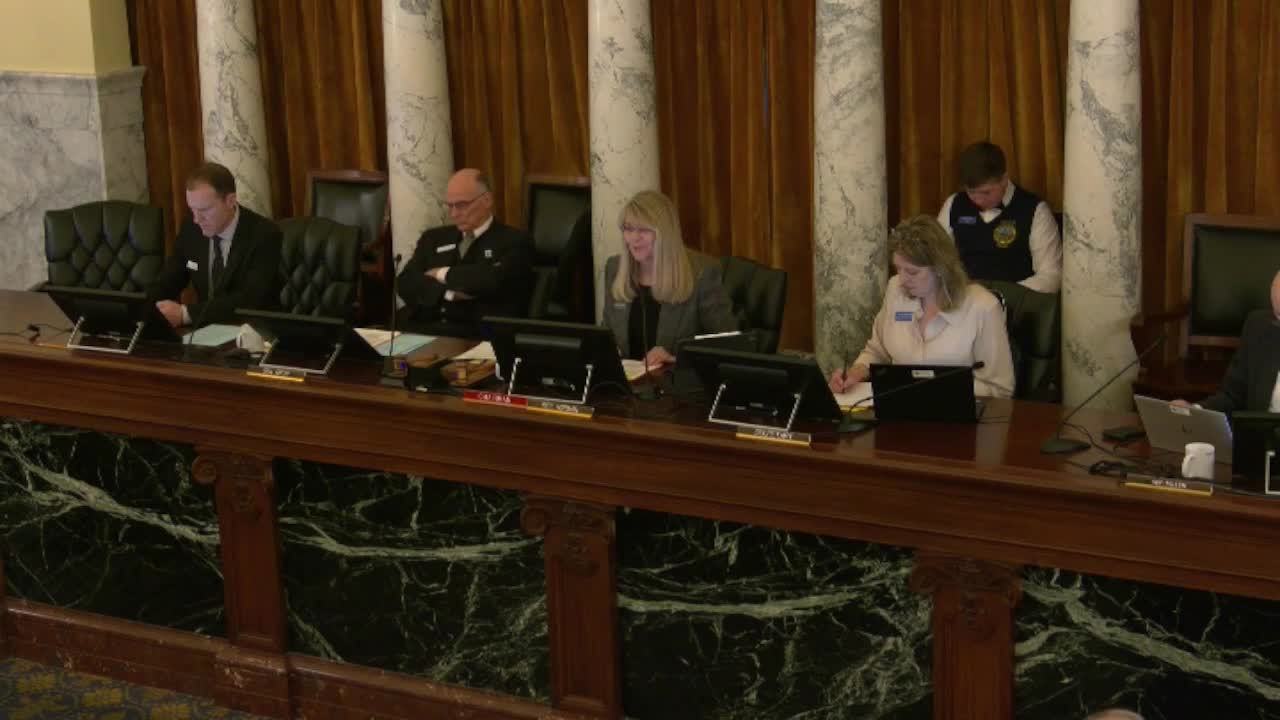
The committee adopted a substitute motion that adjusted some requests to one-time funding to allow further review by JFAC. Representative Furness moved the original enhancement package; Representative Tanner offered a substitute that moved the immunization assessment and home-visiting funds to one-time in order to allow the committee a deeper review. The substitute motion carried: 14 ayes, 4 nays, 2 absent and excused. The committee’s action carries a due-pass recommendation.
Members debated the merits of making line items ongoing versus one-time. Senator Sandra Wintrow objected to unanimous-consent approvals of several language sections during the discussion and cautioned that making prevention-focused programs one-time funding reduces predictability for local program hiring and delivery. “When you can’t have a predictable budget, you don’t know how you can hire,” Wintrow said during the hearing. Representatives who supported the substitute said converting to one-time funds gives JFAC a chance to review program structure and duplication across grants.
The committee also approved multiple language provisions tied to the appropriation. Those directives include requiring the department to notify legislative health committee chairs when applying or reapplying for federal grants; directing a review of pass-through clinical grants for potential transitions to federally qualified health centers or other safety-net providers; and directing the department to identify and plan to end any instances of double billing between federal grants and Medicaid billing. The committee approved language directing studies of the cost-benefit and transition steps for moving specific programs (drug overdose prevention, Alzheimer’s/dementia work, and Fit and Fall Proof) to other state offices or commissions.
On narrower program items, the committee added a governor-requested $500,000 ongoing for the rural physician loan-repayment incentive program within the broader package. During debate Representative Furness emphasized the program’s retention statistics and loan-repayment structure; she said the program helps pay loans up to $25,000 a year over four years and has historically high retention rates among participants.
The committee’s record shows it voted separately on some language items and program transition studies; most of those language approvals later carried by roll call or unanimous consent. The committee’s action produces due-pass recommendations and directs staff and the Department of Health and Welfare to return reporting as specified in the language attachments.
The committee will forward the package as a due-pass recommendation to the next steps in the legislative process and expects follow-up reports as directed in the adopted language.