Get Full Government Meeting Transcripts, Videos, & Alerts Forever!
Get email alerts on the Wildfire Insurance topic
No spam. Unsubscribe anytime.
House Business Committee introduces RS31831 to create wildfire-mitigation pool and industry board
Summary
The committee voted to introduce RS31831, a Department of Insurance-backed proposal to create an industry-run board and a mitigation/stabilization pool to help homeowners harden properties against wildfire and stabilize the insurance market.
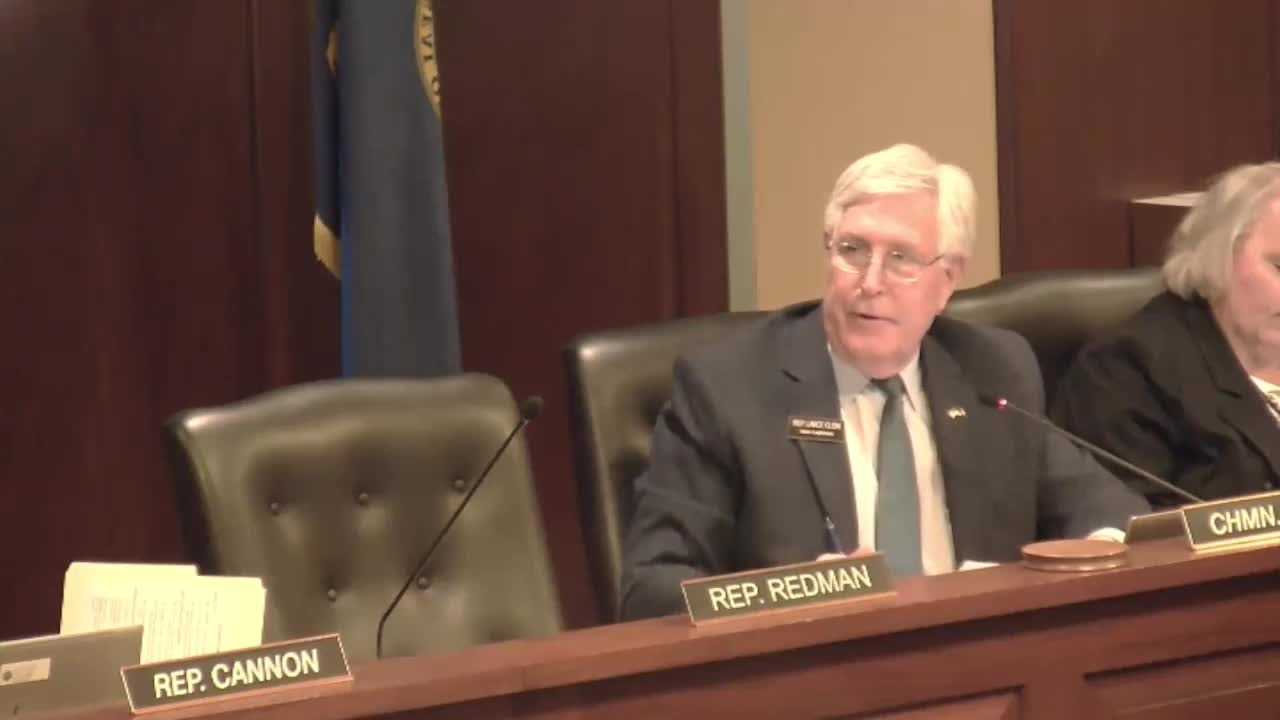
The House Business Committee on Jan. 15 introduced RS31831, a Department of Insurance proposal that would create a board and funding mechanisms to help homeowners harden homes against wildfire and to stabilize the homeowners insurance market, Dean Cameron, director of the Idaho Department of Insurance, told the committee.
The measure would pursue two main strategies: a mitigation grant program to help homeowners reduce wildfire risk at their properties (for example, by replacing roofs, clearing vegetation, or installing screens in eaves) and a separate, industry-driven stabilization mechanism the board could design if needed to keep insurers in the Idaho market, Cameron said.
The proposal responds to recent market disruptions and a severe 2024 wildfire season. "We burned nearly a million acres of wildfires," Cameron said, and added that Idaho lost "140 some structures, of which 41 of them were residences." He told lawmakers carriers have been tightening underwriting or exiting markets in other Western states and that Idaho has begun to see "contraction" in the marketplace.
Cameron told the committee the RS identifies six potential sources of funding. He described them as two categories: sources intended to fund homeowner mitigation grants and sources intended to support market-stabilization mechanisms. Examples cited in the hearing included a prospective diversion of a portion of future premium tax growth, a small existing cigarette-tax allocation that currently sits with the State Fire Marshal's office, and excess stamping fees collected through surplus-lines filings. Cameron said those stamping fees have increased as homeowners unable to obtain traditional policies have moved into surplus-lines markets.
On governance, Cameron said the board would be industry-run with nonvoting executive participation from the Department of Insurance and seats for fire officials; the board would be required to develop "actuarially sound" programs and could contract for actuarial services. He said an assessment authority was included only as a contingency to prevent the board from spending more than available funds and to provide a leverage point if the board overspent. "The industry will control the board," Cameron said. "If they overspend ... it's their skin in the game." He said the industry dislikes the assessment language but that it is the mechanism that would keep spending to available revenue.
Members questioned the fiscal note and the mechanics. Rep. Harris pressed the department on a fiscal note that stated "no negative impact" to the state; Cameron replied that contracting and administrative costs would be covered by the pool's revenues and reiterated the six sources described to the committee. Rep. Birch asked how grants would be distributed and whether means testing or a distinction between new construction and existing homes would be included; Cameron did not provide eligibility details during the introduction hearing and said the board and future rulemaking would shape program design.
The motion to introduce RS31831 was presented to the committee and passed. Three members asked to be recorded as voting no: Rep. Harris, Rep. Marmon and Rep. Raeser, who the clerk recorded as opposing the motion. The RS will return to the committee as a bill for fuller consideration and fiscal detail.
Because the draft language lets the board design stabilization tools, Cameron repeatedly emphasized the department intends to keep policy choices industry-driven and actuarially grounded, and he cited the state's earlier experience with a high-risk health insurance pool as a precedent for a board-driven program that reduced rates in the individual health market.
What’s next: The RS was introduced and will be scheduled for a formal bill hearing where the committee will review funding estimates, eligibility rules and any statutory changes needed to create the board and pool.