Get Full Government Meeting Transcripts, Videos, & Alerts Forever!
Get email alerts on the Aging Services Budget topic
No spam. Unsubscribe anytime.
Commission on Aging seeks modest inflation funding, plans to draw remaining ARPA aid before Sept. 30 deadline
Summary
The Idaho Commission on Aging told the Joint Finance-Appropriations Committee on Feb. 24 that it will use remaining ARPA and federal grant funds for one-time modernization projects and nutrition services and requested a small ongoing general-fund increase to cover inflation for FY2026.
The Idaho Commission on Aging asked the Joint Finance-Appropriations Committee on Feb. 24 for a modest ongoing general-fund increase and said it intends to draw down remaining ARPA funds before they expire on Sept. 30, 2025.
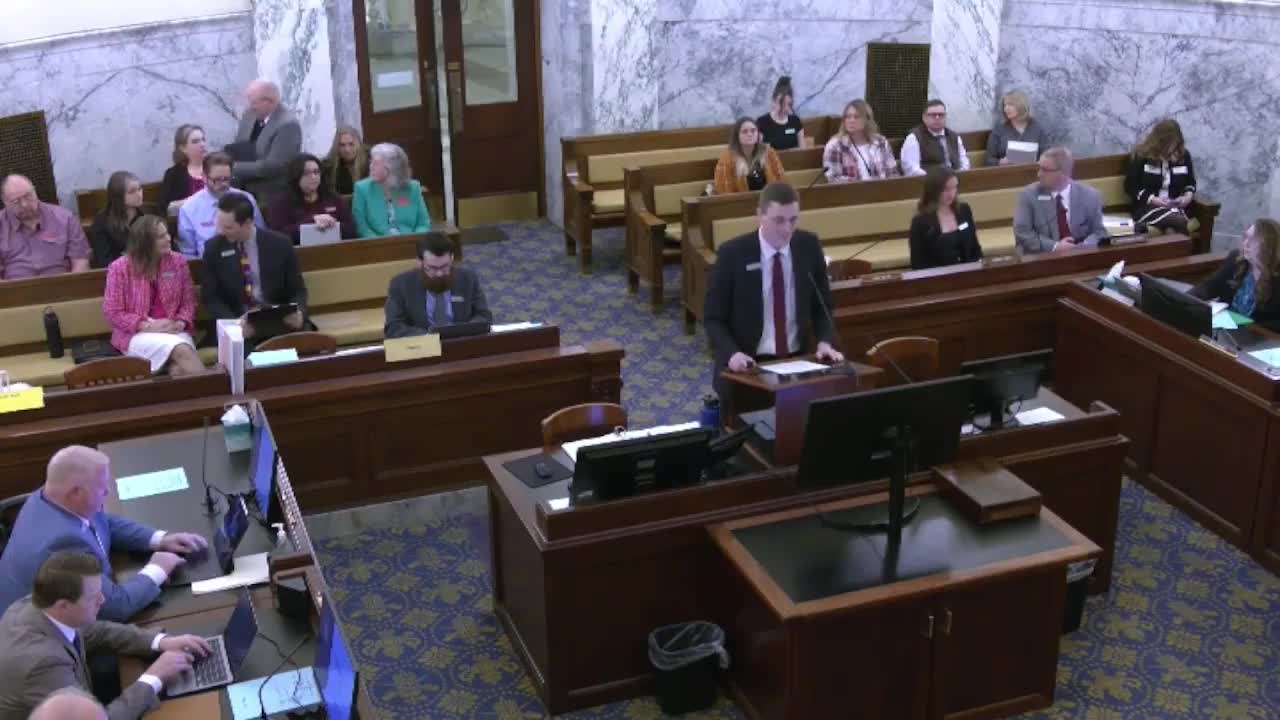
Colin McGurkin, a budget and policy analyst with Legislative Services, told the committee the commission “implements the Federal Older Americans Act and Idaho Senior Services Act” and that the agency’s direct services are delivered through six local Area Agencies on Aging (AAAs). He said the commission’s base budget and federal grants fund meal service, transportation, caregiver assistance and adult protective services and that the agency has 15 authorized full‑time positions with one vacancy.
The commission’s request for FY2026 aligns with the governor’s recommendation and includes an ongoing general‑fund increase of $162,600 to cover inflationary costs. McGurkin said about $155,000 of that request is for a 3% increase in trustee and benefit payments to the AAAs intended to cover rising labor, insurance and fuel costs; the remainder would cover operating inflation for the commission.
Director Judy Taylor, who introduced herself as the commission director, told the committee the agency has relied on one‑time federal American Rescue Plan Act (ARPA) awards since FY2022 for modernization projects and service enhancements. She said those dollars have funded meal programs, caregiver outreach, adult protective services enhancements and a pilot to support unpaid dementia caregivers. “I have heard from this body and actually from the governor’s office that one‑time money should be spent on one‑time need and or enhancements and should not be relied upon for ongoing programming,” Taylor said. “And you know that, I took that to heart because it just made sense. So we have followed that guidance to the T.”
McGurkin detailed the agency’s recent awards and expenditures: the commission spent about $16.7 million in FY2024 (roughly 88% trustee and benefit payments), used approximately $7.4 million of prior ARPA awards between FY2022–FY2024 and requested $1.8 million in FY2025 to use remaining ARPA balances before the Sept. 30, 2025 deadline. For FY2024 the commission also received a $5.2 million one‑time federal appropriation tied to ARPA and a $150,000 increase under CARES Act funds for one‑time adult protective projects.
In FY2025 the commission added one position (1.0 FTP) and about $76,700 ongoing general fund for a financial specialist and $805,000 ongoing general fund to AAAs for direct nutrition program funding, which the commission said helped reduce or eliminate home‑delivered meal wait lists. Taylor said the increase allowed the commission to raise meal rates by 25 cents per meal on July 1 and that, as of the Feb. 24 hearing, “we have no waiting lists in Idaho” for home‑delivered meals.
Committee members asked for clarifications about ARPA staffing and programs. Senator Cook asked whether ARPA had paid for Alzheimer’s‑related programming; McGurkin said he did not have a specific dollar amount and would follow up. Senator Zitterfeld and Representative Mitchell pressed whether programs funded by ARPA would end when the funds expire; Taylor reiterated the agency’s approach that one‑time funds were used for one‑time projects and said some items, such as memberships for adult protective services staff and extra respite hours, would be reduced or discontinued when ARPA funds end. Vicki Janzick, the commission’s project manager, explained that $25,000 of a proposed $50,000 one‑time operating allocation would be used to direct‑bill personnel time for contract monitoring and invoice processing to the correct federal grants rather than to other federal sources.
The presentation said the commission requested a one‑time federal appropriation of $500,000 to pay final invoices and draw remaining ARPA funds before the Sept. 30, 2025 expiration; McGurkin said about $450,000 of that would flow to AAAs for payments on older‑Idahoan supportive services, meal programs, caregiver assistance and modernization projects, and $50,000 would cover staff time and operating costs to process those invoices and contracts.
Taylor closed by emphasizing the commission’s mission to keep older Idahoans safe and healthy in the community through coordinated services and asked for support for the budget request.
The committee did not take an on‑record vote during the hearing; the items presented remained requests for the committee’s consideration.