Get Full Government Meeting Transcripts, Videos, & Alerts Forever!
Get email alerts on the Depredation Compensation topic
No spam. Unsubscribe anytime.
Temporary rule sets framework to compensate livestock owners for wolf and grizzly depredation under HB 592
Summary
A temporary rule implementing HB 592 establishes a process to submit claims and preliminary reimbursement parameters for livestock losses from wolf and grizzly depredation.
BOISE, Idaho — The department presented a temporary rule to implement House Bill 592’s framework for compensating livestock losses from wolf and grizzly bear depredation and the committee approved the docket.
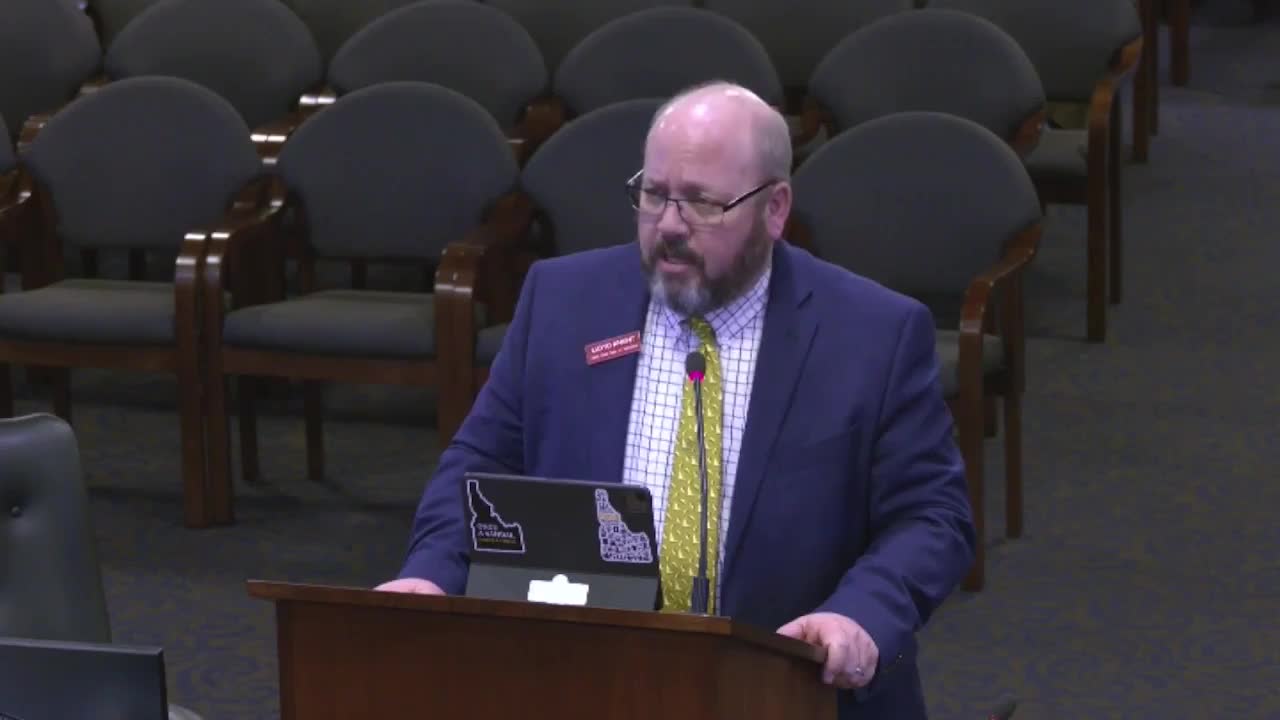
Deputy Director Lloyd Knight said the temporary rule provides definitions, application processes and preliminary reimbursement guidance so payments could be made for claims submitted before Dec. 31 (the Office of Species Conservation’s deadline used in existing programs). Knight said the department worked with the Idaho Department of Fish and Game and the Office of Species Conservation to get the temporary framework in place and expects to conduct more comprehensive negotiated rulemaking the next year.
Under the temporary rule language reviewed in the meeting, veterinary care reimbursement was set at up to 70% of market rates in keeping with other OSC reimbursement programs; Knight said the department used OSC’s common practices to structure the payout parameters. Committee members asked about response times for investigations; Knight said agencies aim to evaluate suspicious depredation reports promptly, often within 24–72 hours depending on access and workload, and that the state is exploring ways to enable county officials or other local staff to assist using standard protocols.
Representative Andrus moved approval of the temporary docket (2108201); the committee approved the rule by voice vote. Agency leaders said they will continue work to finalize longer‑term rules and interagency agreements.
The department emphasized the temporary rule was intended to allow compensation to be provided quickly in winter while the state convenes broader stakeholder discussions to set long‑term standards.