Get Full Government Meeting Transcripts, Videos, & Alerts Forever!
Get email alerts on the Chronic Wasting Disease topic
No spam. Unsubscribe anytime.
Idaho clarifies domestic cervid rules after two confirmed chronic wasting disease cases in private herds
Summary
Following two confirmed chronic wasting disease (CWD) cases in domestic herds, the committee approved rule changes clarifying definitions and sample requirements and discussed herd management options created by House Bill 591, including movement between facilities under common ownership while under quarantine.
BOISE, Idaho — The House Agriculture Affairs Committee approved rule clarifications for Idaho’s domestic‑cervid (domestic survey) program and heard a broad update on chronic wasting disease after the department confirmed two CWD cases in domestic herds in eastern Idaho.
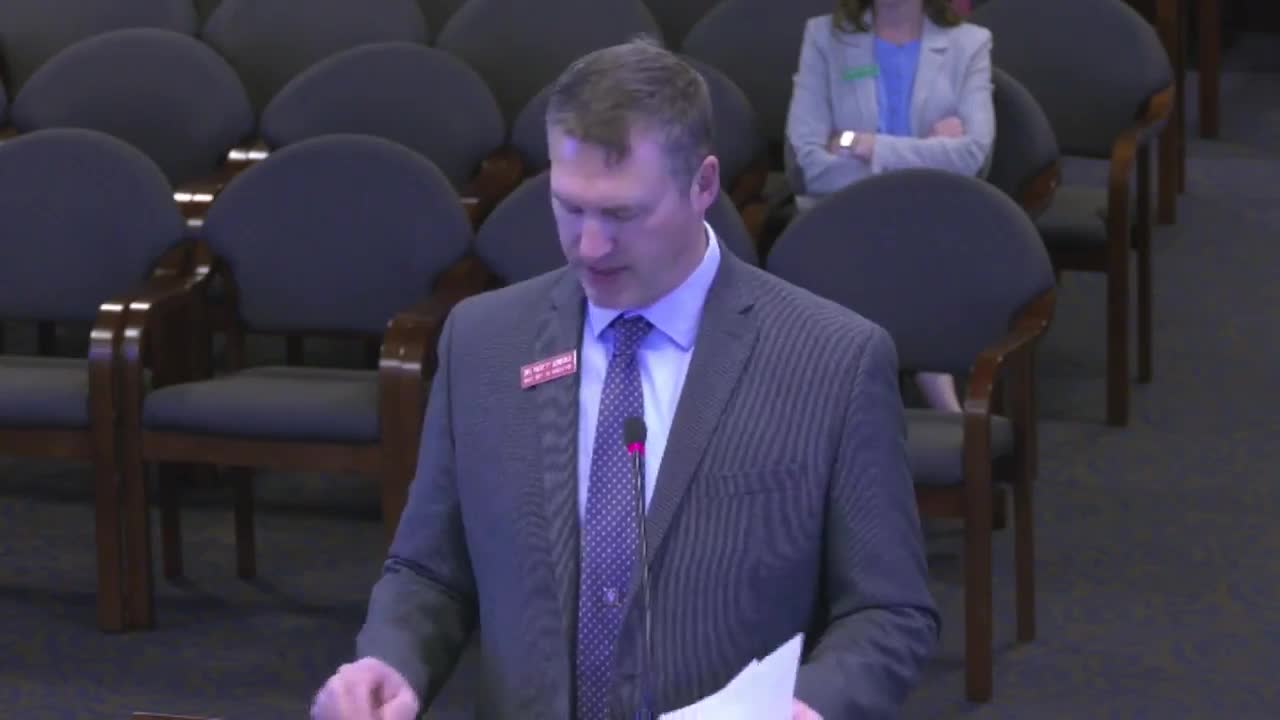
Scott Lively, administrator of the Division of Animal Industries and state veterinarian, presented docket 020419-2401, which the department said aligns rule language with House Bill 591 (2024) and clarifies definitions and specimen requirements. The rule changes removed duplicative definitions that are now in statute and updated the definition of an “official CWD test” to require both brain stem and lymph‑node tissue in post‑mortem testing.
Lively said Idaho had identified the first two domestic‑herd CWD positives in late 2024 and emphasized that both domestic investigations indicate likely domestic‑to‑domestic transmission rather than a confirmed wildlife‑to‑domestic transmission. He explained that an approved live test for CWD does not exist; diagnosis requires post‑mortem tissue, and the updated standard to collect both obex (brain stem) and lymph nodes improves detection.
Lively said House Bill 591 clarifies options for producers after a positive confirmation, including allowing animals to move between multiple facilities under common ownership while those facilities remain under quarantine. The stated purpose, he said, is to give affected producers more options so a confirmed positive is less likely to destroy a business; herd management plans will outline specific testing and monitoring expectations.
Committee members asked about testing frequency; Lively said HB 591 did not set a uniform percentage testing requirement and that testing expectations will be specified in individual herd management plans. He said import protocols remain rigorous — including five‑year herd history and testing for tuberculosis and brucellosis — and that the disease’s long incubation makes complete prevention difficult.
Representative Greger moved approval of docket 020419-2401; the committee approved it by voice vote.