Get Full Government Meeting Transcripts, Videos, & Alerts Forever!
Get email alerts on the Virtual Education Policy topic
No spam. Unsubscribe anytime.
Senate committee advances bill to tighten oversight of virtual schools, sends SB 1188 to 14th order
Summary
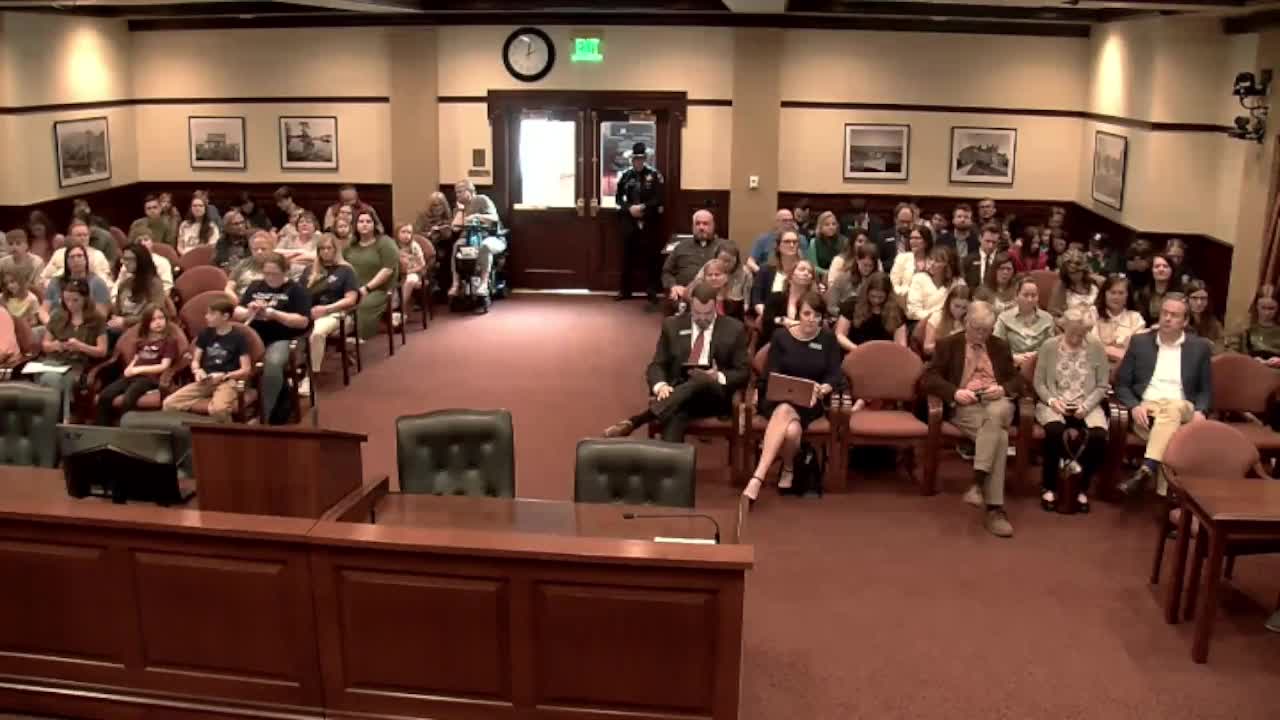
The Idaho Senate Education Committee voted to send Senate Bill 1188 to the 14th order for possible amendment after a hearing in which parents, virtual‑school leaders and charter advocates contested provisions that would change authorization and oversight of statewide virtual programs.
The Idaho Senate Education Committee voted to send Senate Bill 1188 to the 14th order for possible amendment after a contentious hearing that included parents, virtual‑school leaders and charter‑school advocates.
Senator Dave Lent, the bill’s floor presenter, told the panel the measure is intended to “define the lane” between traditional district-run virtual programs and statewide virtual charter providers and to clarify funding and oversight for virtual learning. “The intent is not to take away any of the learning opportunities that the students in our public system in Idaho currently have,” Lent said during his presentation.
Nut graf: Supporters and opponents agreed virtual learning has expanded since COVID and said policy changes are needed, but they disagreed on how to preserve parent choice and whether the Charter School Commission should gain more authority. Testimony included parents who said their children have thrived in Idaho Home Learning programs and charter‑school advocates who said the bill would increase state bureaucracy.
What the bill would do - Limit district-run virtual enrollment across district boundaries beginning July 1, 2025, under the draft Lent described for the traditional‑district portion of the bill. - Require that a virtual charter school be authorized only by the Charter School Commission (effect date described in the bill text as July 1, 2026 for the charter provision). - Require that contracts and amendments between a virtual school and its educational service provider be approved by the virtual school’s authorizer (a provision that drew particular concern from charter advocates and providers). - Set funding-related provisions discussed in the hearing, including a facilities funding floor of $400 per pupil for charters, and a ceiling on certain fees charged by the Charter Commission.
Key testimony and concerns Terry Sorensen, executive director of Idaho Home Learning Academy, told the committee she and the program’s authorizer, Oneida School District, had worked with bill drafters and that the bill “creates a transition year for us.” Sorensen said draft language aims to create a “level playing field” among different virtual providers but acknowledged the school had concerns about shifting authorization from Oneida to the Charter School Commission.
Karen McGee, a board member of the Coalition of Idaho Charter School Families and former chair of the Idaho State Board of Education, opposed the bill as drafted. “This bill, in my opinion, takes a step backwards. Repainting authority to the state and increasing bureaucracy and narrowing educational options for families,” she said, urging a slower, more open process.
Parents and providers described individual successes. A parent testified that her child with special education needs progressed several reading levels after enrolling in the virtual program; another parent said the program let her three children learn together. Braintree Educational Services’ executive director, Emily Bodley, said some of the bill’s previous language had been changed after stakeholder conversations and praised sponsors for listening.
Committee action and next steps The committee considered two procedural motions. A substitute motion to hold SB 1188 in committee failed. The committee then voted to send SB 1188 to the 14th order for possible amendment. The secretary announced the final tally as 7 yays, 4 nays and 2 absent (recorded in the hearing as “Seven‑four‑two”). SB 1188 is not enacted; the 14th‑order placement keeps the bill in the committee process for possible changes before a floor vote.
Why it matters Committee members and witnesses said the state has roughly 30,000 students using virtual programs of various kinds (district online platforms, statewide programs and virtual charters). Lawmakers and stakeholders said the bill attempts to reconcile funding and oversight differences between brick‑and‑mortar funding formulas and virtual instructional costs, and to set clearer authorizing responsibilities for statewide virtual providers.
What was not decided No final policy decision was adopted in the hearing. Several senators urged more stakeholder work and time to review the bill’s language; proponents said a year‑long implementation period is included so programs can transition if the bill becomes law.
The committee recorded a motion to send SB 1188 to the 14th order; lawmakers indicated they will consider amendments during the committee process before the bill would move to the full Senate.