Get Full Government Meeting Transcripts, Videos, & Alerts Forever!
Get email alerts on the Public School Support Budget topic
No spam. Unsubscribe anytime.
JFAC reviews public school support budget as attendance-driven "support units" fall, cutting state allocations
Summary
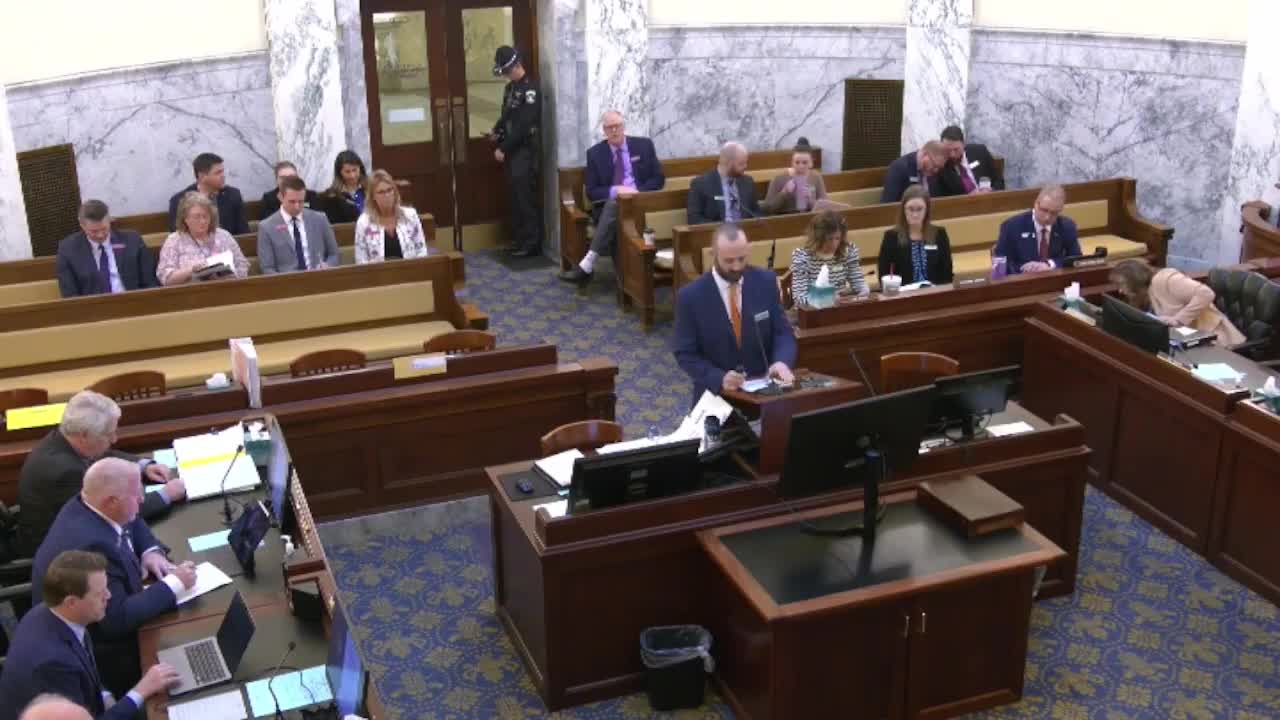
BOISE — The Joint Finance‑Appropriations Committee on March 4 heard an overview of Idaho’s public school support budget that committee analysts said will see smaller per‑district allocations because the state funds classroom "support units" using average daily attendance, not raw enrollment.
BOISE — The Joint Finance‑Appropriations Committee on March 4 heard an overview of Idaho’s public school support budget that committee analysts said will see smaller per‑district allocations because the state funds classroom "support units" using average daily attendance, not raw enrollment.
Jared Tetrault, deputy division manager in the Legislative Services Office Budget and Policy Analysis Division, told the committee that the state funds support units under Idaho Code Title 33 and that recent shifts back to attendance counts after pandemic-era enrollment counting reduced the number of funded units. "During COVID, the counting process changed from attendance to a hybrid of enrollment with an attendance component," Tetrault said. "And then the switch back to attendance as required in Idaho law...post‑COVID those percentages are closer to 94 percent." He and others said the result is an estimate of about 200 fewer support units for the coming year.
Why it matters: Idaho distributes most K‑12 funding through statutory formulas tied to support units. Fewer support units mean reductions in the state’s statutory allocations even if total student enrollment is unchanged. The committee was shown the "big sheet" summary of the public schools budget and told general fund support totals are in the billions while dedicated and federal sources make up smaller shares of the total.
Most important details: Tetrault summarized that the largest cost drivers in the public school support budget are the career‑ladder salary apportionment for teachers and administrators, discretionary allocations, health insurance, transportation and facilities. He gave a line‑level example showing population‑forecast adjustments: a roughly $15.7 million reduction tied to about 200 fewer teacher support units was offset by about $17.3 million for teachers moving up the career ladder, producing a modest net increase for the teacher category in the model shown to the committee. "These are not the actual dollars paid at the district level. This is what the state allocates and distributes," Tetrault said of salary‑based apportionment.
The committee heard that the Public Education Stabilization Fund (PSIF) acts as a reconciliation account: if the appropriation is short, withdrawals from PSIF can make up the difference; if the appropriation is larger than needed, the fund may receive deposits. Tetrault noted the committee had repurposed some one‑time funds last year to avoid depositing them in PSIF and that a one‑time repurposing of roughly $105 million had been distributed through discretionary channels.
On compensation adjustments, members were reminded of prior session actions: the committee previously approved a 1% maintenance cost‑of‑change (CEC) and later an additional 2% CEC for classified and administrative staff; subsequent actions raised CECs further in the current maintenance bill discussions. Tetrault also noted that an endowment shift request would move about $5.2 million from the general fund to endowment funds for a sustainable increase in endowment receipts.
Federal one‑time funds: Committee members and Superintendent Debbie Critchfield discussed the end of American Rescue Plan/ESSER federal funding. Critchfield said many districts used federal ESSER funds for personnel and warned some districts may have difficulty sustaining positions once federal funds ended. "Around 80% of the districts did use those in some form for some type of salary or personnel," Critchfield said, and she said the U.S. Department of Education offered a possible extension that she declined.
Facilities and other funds: Tetrault reviewed the school district facilities fund under House Bill 292, noting the fund's allowable uses include paying existing bonds or levies, or, if neither applies, maintenance or renovation. He said House Bill 374 (pending) would make that facilities fund a continuous appropriation if enacted and that the committee would need to consider whether to remove those dollars from the annual appropriation if HB374 passes. He also said lottery‑dividend estimates drive some dedicated fund appropriations and can vary year to year.
Questions from members focused on whether state allocations reflect actual employee health insurance costs — which are allocated per support unit rather than per actual employee — and on how rural districts are defined in Idaho code. Tetrault said state health insurance allocations are done by staff allowance (support unit) rather than district FTE and that Idaho defines a rural district in Title 33 by either students per square mile (under 20) or fewer than 20,000 residents in the primary county.
What the committee will do next: The presentation identified several policy proposals that will require separate legislation or committee action (student funding formula changes, a transportation funding formula, and a special needs student fund were listed as requiring legislation). Committee members requested follow‑up materials: district‑level distributions for the facilities funds, a breakdown of local versus state versus federal shares of school funding, and data on how many district employees actually receive state‑run health insurance vs. local plans.
Ending: Analysts and the superintendent said they would provide the requested district‑level distributions, staffing and health‑insurance data and related materials to the committee for use in upcoming appropriation decisions.