Get Full Government Meeting Transcripts, Videos, & Alerts Forever!
Get email alerts on the School Facilities Funding topic
No spam. Unsubscribe anytime.
Senate committee advances bill to revive and expand school facilities fund for rural districts
Summary
The committee voted to send House Bill 338 to the Senate floor with a due-pass recommendation. The bill would make available existing and newly allocated funds to help rural districts with facility replacement and repairs, change panel membership, and set repayment priorities and terms.
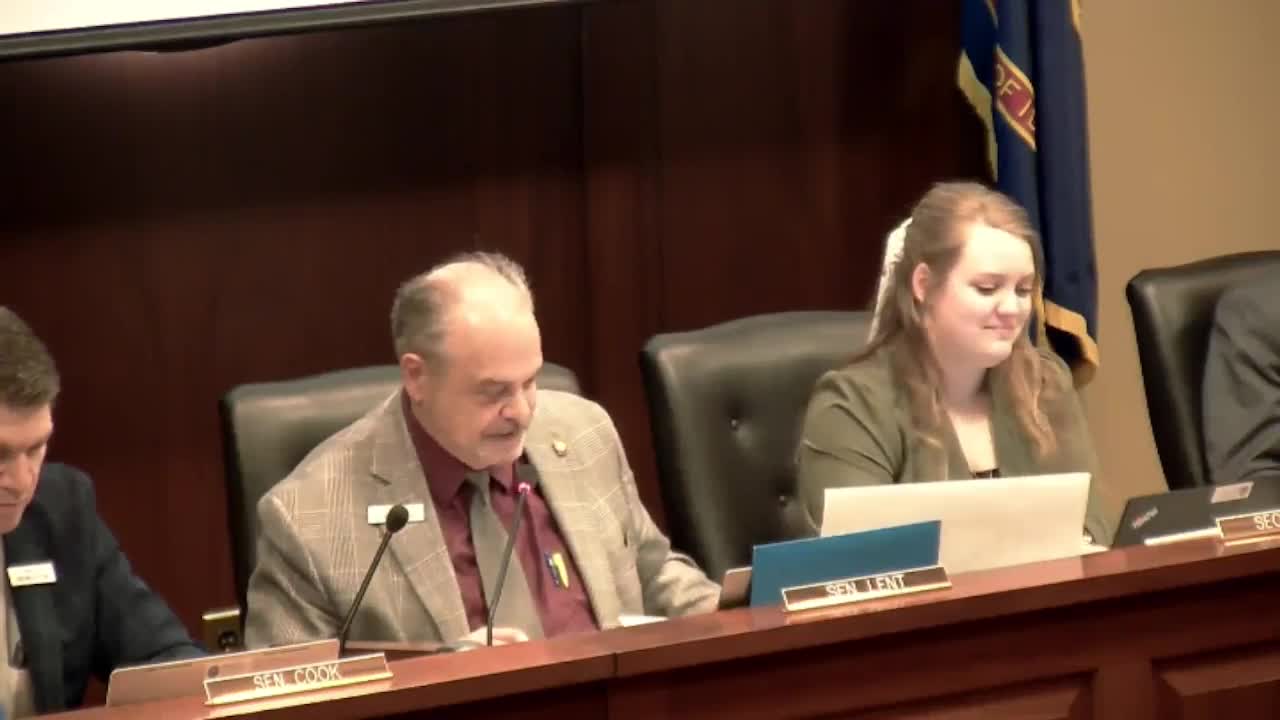
The Idaho Senate Education Committee voted to send House Bill 338 to the Senate floor with a due-pass recommendation after extended committee discussion and public testimony from rural communities.
Representative Doug Pickett, House Education Committee chair (Cassia, Oneida and Minidoka counties), described the bill as an effort to revive a largely unused Public School Facilities Cooperative Fund created after litigation in the mid-2000s. "That bill created what was known as the Public School Facilities Cooperative Fund, and it was funded to the tune of 25,000,000," Pickett said. He said the original fund saw little use partly because a condition of accessing funds required the state to appoint a district supervisor, which districts avoided.
Under the bill discussed in committee, lawmakers would make $25,000,000 available from an existing pot of funds and add $25,000,000 from the bond-levy equalization fund, creating a pool the sponsor described in testimony as roughly $50.5 million (25,000,000 existing + 25,000,000 new appropriation in sponsor's remarks). The bill aims to target primarily rural public school facilities that lack sufficient local bonding capacity.
Pickett outlined how the program would work: districts that have tried and failed to pass bonds could apply with a facility plan to a three-member panel; the bill would change panel membership to include the Superintendent of Public Instruction. The panel could approve, reject or modify plans. If a district had passed a bond but it proved insufficient, that district could also apply for additional funds. The bill exempts the first $5,000,000 of an approved plan from the historical requirement that the state appoint a district supervisor, intended to encourage districts to use the fund without accepting state supervision for smaller projects.
Rep. Sonia Galaviz (District 16) presented aggregated facility-assessment data collected after a May 2024 requirement for districts to submit condition assessments. Galaviz said that if all items identified for replacement in the next five years were funded, the state would need about $2.7 billion; the spreadsheet she provided ranks districts by a facility-condition index and shows districts with immediate replacement needs.
Testimony from rural districts illustrated local demand. Brianne Green, a member of the Salmon Schools Needs Assessment Committee, described Salmon School District's experience: after 13 failed bond attempts over 20 years, Salmon passed a $20 million bond in November 2023 but still faced a roughly $9 million shortfall for a needed PreK–8 facility. The community provided donated site work and a donated building; Green said the district plans to apply for funds under the bill and welcomed the prospect of partial forgiveness after 20 years.
Wendy Scobie, also from Salmon, urged lawmakers to ensure the loan-like fund is accessible to the districts that need it most and to monitor the program's effectiveness over time.
On repayment mechanics, Pickett said the plan retains the bond-levy equalization value index (a state average of property values, unemployment and average income) to tailor repayment obligations. Repayments would be amortized over up to 20 years at the state treasury's idle interest rate (sponsor referenced a current rate around 4–4.2 percent). The bill removes earlier language that would have authorized a state-imposed plant facilities levy and instead allows districts to use property tax incentive proceeds created under House Bill 292 to make payments.
Committee members asked detailed questions about priority of payments, plan development by the panel, and how districts should size bonds when future revenue and payment streams are uncertain. Sponsor and witnesses said the panel would work with districts to develop plans that show how payments would be made. The committee passed the motion to send the bill to the floor; the transcript records a voice vote and the motion carried without a roll-call tally.