Get Full Government Meeting Transcripts, Videos, & Alerts Forever!
Get email alerts on the Special Education Funding topic
No spam. Unsubscribe anytime.
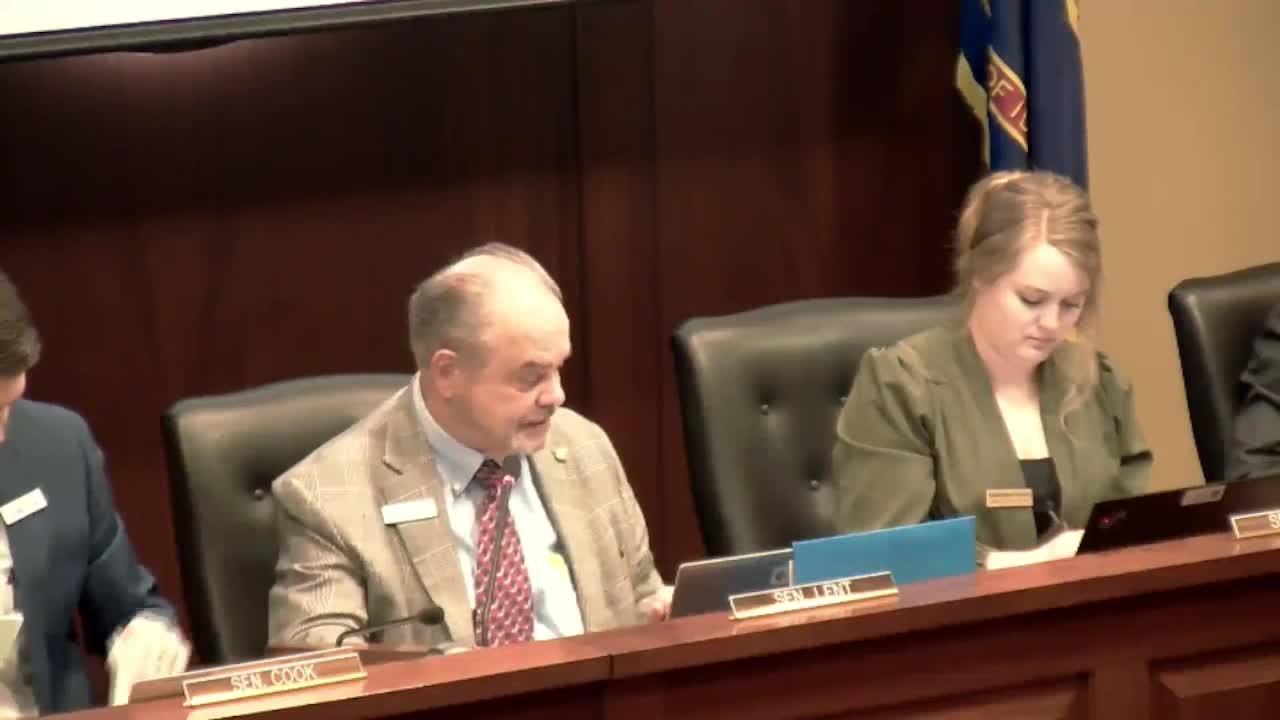
Committee sends bill creating high-cost special-education reimbursement fund to floor after 6–3 vote
Summary
House Bill 291 would create a state reimbursement fund to cover ‘‘high-need’’ special-education costs above $15,000 per student; proponents said districts face large, unpredictable costs and offered district examples, while opponents warned the fund could grow over time. The committee approved a due-pass recommendation 6–3.
The Senate Education Committee voted 6–3 to send House Bill 291 to the Senate floor with a due-pass recommendation. Representative Ben Furman introduced the bill and said it would create a state fund to reimburse school districts for ‘‘high-need’’ special-education costs that exceed $15,000 per individual student’s IEP (individualized education program).
‘‘This is specifically for reimbursement when the school has met all the other requirements that they can to educate these high needs students,’’ Representative Furman said, describing the proposal as a ‘‘last dollar cost mechanism’’ intended to relieve districts that unexpectedly face very large special-education expenses.
Supporters included district administrators who described steep, practical costs. Melinda Royer, elementary principal and special-education director in a district of about 850 students, said one student needs a one-on-one American Sign Language interpreter at a contracted rate that amounts to roughly $30,112 per year and is not reimbursable through Medicaid. ‘‘This bill would help cover the cost of providing these vital services and ensure that students who need an interpreter can fully participate in their education,’’ Royer said.
Julie Mead of Caldwell School District also testified in favor and detailed broader staffing and material costs tied to providing appropriate services for students with disabilities.
Opponents questioned cost and sustainability. Fred Birnbaum of the Idaho Freedom Foundation told the committee that state special-education funding already includes multiple sources and cited an Office of Performance Evaluations figure the witness summarized as an $82.2 million funding gap; Birnbaum warned that a small initial appropriation could grow into a much larger request in future years.
The bill sponsor said the proposal was in the governor’s budget request for $3 million and noted many other states maintain similar high-cost reimbursement funds. The sponsor emphasized that the fund would not replace existing special-education funding or change eligibility but would assist districts that have exhausted other funding avenues.
Roll-call on final disposition: the transcript records a roll-call with the following votes in favor: Senators Cook, Woodward, Burton Shaw, Ward Engelking, Selmer Roth and Lent; recorded nays were Senators Nichols, Carlson and Zito. The committee’s motion to send House Bill 291 to the floor carried 6–3.