Get Full Government Meeting Transcripts, Videos, & Alerts Forever!
Get email alerts on the Public Health Budget topic
No spam. Unsubscribe anytime.
Public health budget request seeks to restore programs cut after ARPA/CARES funding shifts
Summary
Officials told the Joint Finance-Appropriations Committee the Division of Public Health Services is asking to restore multiple ongoing programs and fund one-time data and infrastructure projects after pandemic-era federal funds wound down.
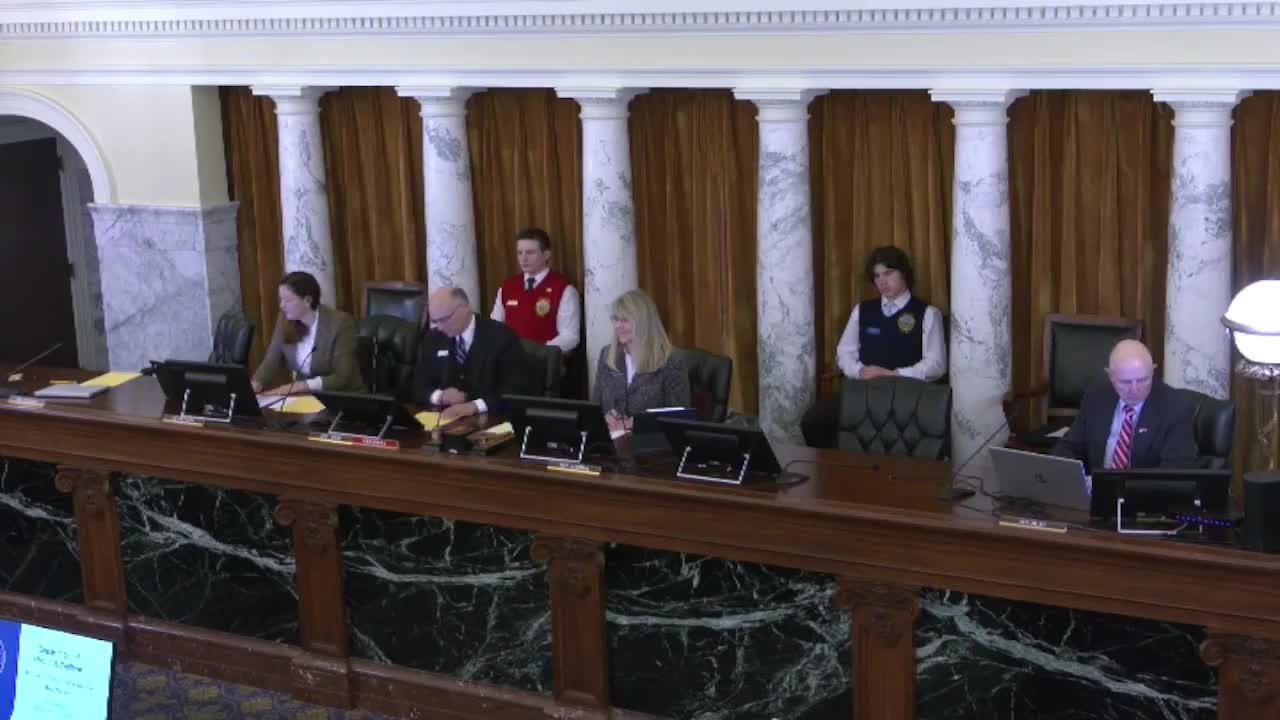
At a Joint Finance-Appropriations Committee hearing, state health officials outlined a budget request for the Division of Public Health Services that would restore several programs moved from ongoing to one-time funding after large CARES Act and ARPA grants wound down.
The department asked the panel to restore an array of ongoing programs and to approve one-time infrastructure and data modernization projects. Division manager Keith Bybee said public health is “a big one,” directing members to detailed pages in the budget book and to the agency’s SharePoint for program-level detail.
Why it matters: committee staff and the department described the 2025–26 budget as partly structural. Officials said the decline in pandemic-era federal grants caused a mismatch between prior appropriations and actual spending; the department has asked the committee to restore many programs to baseline so services now supported by expiring one-time money can continue.
The department said the division had 256.52 full-time-equivalent positions established and four vacancies as of Aug. 31, 2024, and that roughly half the division’s expenditures go out as trustee and benefit payments. Alex Adams, director of the Department of Health and Welfare, characterized the recent budget work as “a healthy exercise” of zero-based review and said the governor’s 2026 request reflects about a 6% year-over-year reduction from FY2025 once structural adjustments are accounted for.
Requested restorations and enhancements include: suicide prevention ($1,807,700 general fund and $195,000 federal), drug overdose prevention (restore about $2,820,200 and 4 FTE), refugee health screening (about $991,000 and 1.5 FTE), Alzheimer’s and dementia coordination ($275,200), the Fit and Fall Proof program ($140,000), diabetes and heart disease prevention ($1,063,700), HIV prevention ($957,300), oral health workforce support ($379,600), hepatitis surveillance and prevention ($599,200), and restoration of the WIC-related supplemental nutrition grant (about $6,944,600 ongoing). Committee materials also list a series of one-time projects for data and system modernization funded by federal grants; the packet referenced epidemiology and laboratory capacity (ELC) grants and other federal data modernization awards.
On one-time items, staff identified a set of ARPA and federal carryover requests totaling about $8,752,500; one multi-year communicable disease prevention grant request was $2,041,800 (to support 4.4 limited‑service positions). The department noted a prior technical correction, a cancer registry supplemental request that JFAC approved Jan. 17.
Officials described an immunization assessment request in the budget book: the division requests $2,500,000 ongoing from dedicated funds to support immunization access for children under 19; committee documents note that the fund’s appropriation was last increased by the 2014 Legislature. The Bureau of Vital Records and Health Statistics requested an ongoing $150,000 in receipt authority to support processing of more than 100,000 records a year.
Committee members pressed for program-level detail and for follow-up on data modernization work. Senator Cook asked for a post-hearing summary of prior data modernization projects and system upgrades before approving additional funding; Adams and staff agreed to provide a summary. Several lawmakers expressed interest in further examining whether certain functions should move to other agencies.
What did not change in the hearing: there were no committee votes recorded in this hearing; members asked for follow-up materials and said they would continue deliberations. Department officials asked members to work with analysts and agency staff between hearings on trailer legislation and appropriation details.
The department identified Division Administrator Elke Shaw Tullock and Chief Financial Officer Misty Lawrence among staff present to answer detailed questions. Adams said he would welcome conversations about whether specific programs belong better in other agencies but emphasized the department’s focus on prevention, vital records, laboratory surveillance, and public-health preparedness.
Looking ahead: committee members instructed staff to gather more information on data modernization projects, program performance measures, and the fiscal effects of restoring individual programs before final appropriations decisions.