Get Full Government Meeting Transcripts, Videos, & Alerts Forever!
Get email alerts on the Agricultural Research topic
No spam. Unsubscribe anytime.
University of Idaho agricultural research, extension briefed JFAC on facilities, staffing and digital literacy grants
Summary
Dean Michael Perella and University of Idaho officials described increases in personnel and infrastructure funding for the College of Agricultural and Life Sciences, requested faculty lines for viticulture and small fruits, and described extension efforts in adult computer literacy supported by ARPA and a pending FCC grant application.
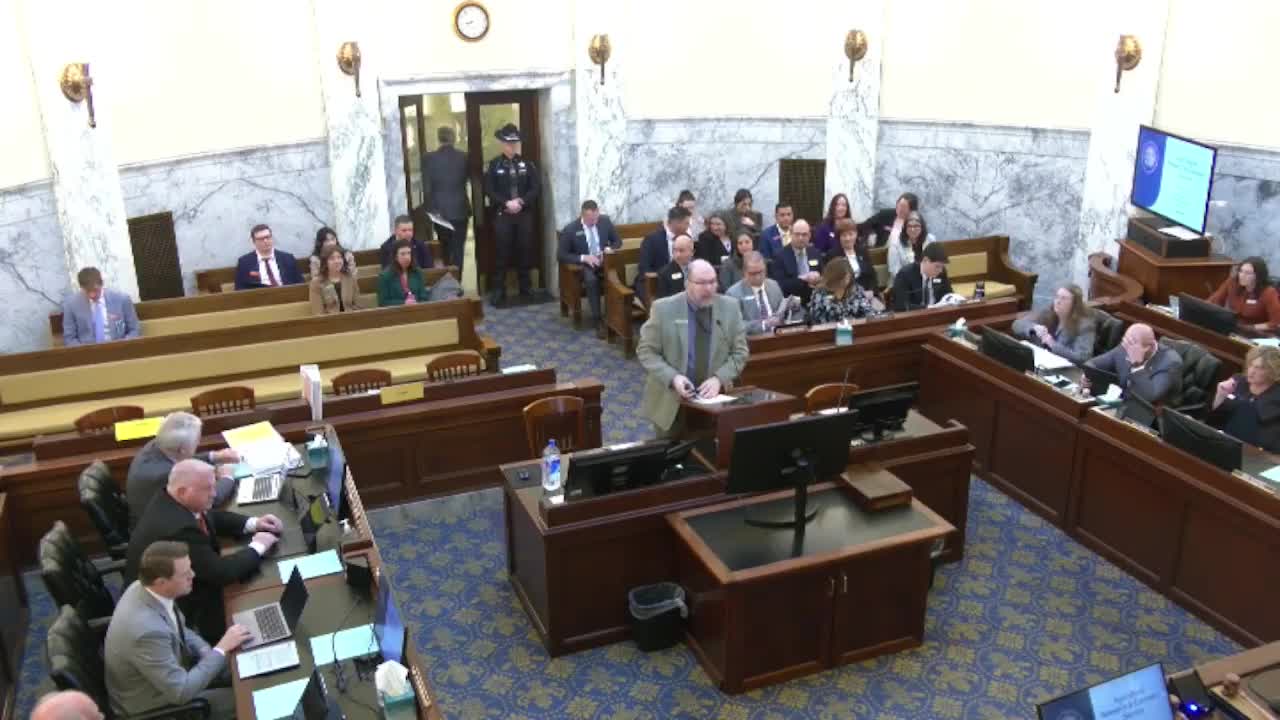
The Joint Finance‑Appropriations Committee on Feb. 10 received a briefing on the University of Idaho’s Agricultural Research and Extension Service and the College of Agricultural and Life Sciences (CALS), including facilities investments, faculty requests, and extension programs that target rural digital literacy.
Kevin Campbell, budget and policy analyst with the Legislative Services Office, summarized the service’s budget and noted the research arm manages 10 research and extension centers across the state and more than 14,000 acres for research and experimentation. He said personnel make up roughly 81% of the service’s expenditures.
Michael Perella, dean of the College of Agricultural and Life Sciences, introduced college leadership and told the committee he plans to retire in June after nine years as dean. Perella highlighted recent infrastructure investments — including the new Idaho Center for Plant and Soil Health at Parma — and asked lawmakers to sustain funding that allows the college to attract external grants and hire faculty.
What the college requested and why - FY2026 requests included $157,900 ongoing from the general fund for a viticulture and small fruits research faculty position. The college said the position would address grower needs on disease prevention, water and pest management, and post‑harvest storage for grapes and small fruits.
- The college also requested $250,100 for a portion of building maintenance costs at the Idaho Center for Agriculture, Food, and the Environment, described as a facility supported in collaboration with Idaho’s dairy industry to provide applied research.
Extension and adult computer literacy - Dean Perella and extension officials described extension’s statewide presence (42 of 44 counties and three recognized tribal communities) and emphasized extension’s broader mission that includes families, communities, youth (4‑H), agriculture and natural resources.
- Committee members discussed a FY2025 appropriation of $142,000 for adult computer literacy that had been funded through federal ARPA allocations. Perella said extension’s work addressing the “digital divide” in rural communities is a natural fit for extension’s mission of delivering practical skills and added that the college recently applied for an FCC grant; Perella said one University of Idaho‑led proposal that competed nationally was for about $13 million.
Outcomes cited by the college - Perella said extension logged more than 450,000 face‑to‑face contacts with Idahoans and engaged more than 75,000 youth in 4‑H programming last year. He also cited an estimate from extension programming that participants collectively realized roughly $47 million in annual savings or impact (Perella described the figure as a program impact estimate and said the college could provide more detail on the breakdown).
Facilities and staffing - Senators and representatives asked about the Parma research facility and maintenance costs. Perella noted recent investments replaced aging infrastructure and that the new Parma facility enables modern plant and soil research and helps the college compete for national grants.
Discussion vs. formal decisions - No formal votes were held. Dean Perella and his staff answered committee questions and committed to provide more detail where requested, such as documentation supporting extension’s program outcomes and any grant award details if federal funding is secured.
Dean’s remarks and transition - Perella thanked the legislature for sustained investment, noted CALS’ national ranking among agricultural colleges, and said last year’s change‑in‑employee‑compensation funding helped reduce turnover from 14% to 11%.
Ending - Committee members thanked Perella for his service and said they would pursue follow‑up information about the adult computer literacy work, ARPA‑funded initiatives, and the college’s request for viticulture and maintenance funding.