Get Full Government Meeting Transcripts, Videos, & Alerts Forever!
Get email alerts on the Workforce Education Budget topic
No spam. Unsubscribe anytime.
Idaho lawmakers press CTE on $10 million governor proposal as waitlists grow for welding, nursing
Summary
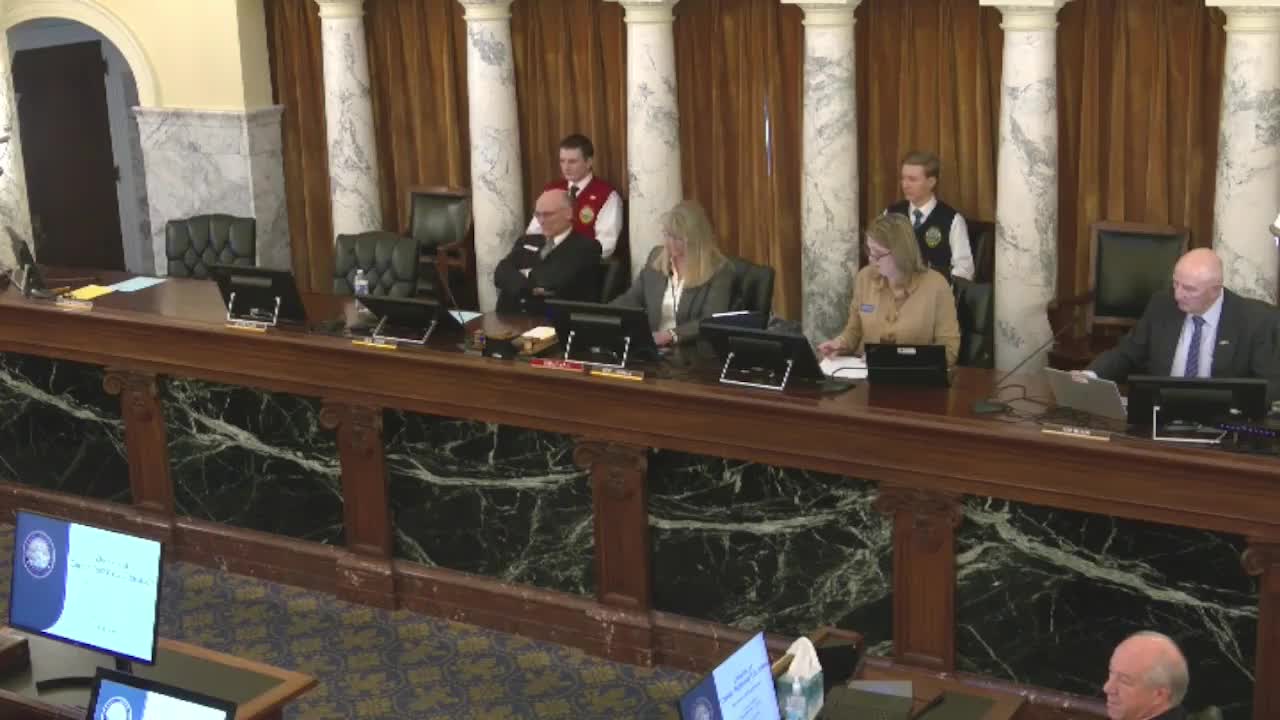
The Joint Finance‑Appropriations Committee on Feb. 10 heard an overview of the Division of Career Technical Education’s budget and FY2026 requests, including a $10 million ongoing recommendation from the governor to expand capacity in high‑demand CTE programs such as welding and nursing.
The Joint Finance‑Appropriations Committee on Feb. 10 heard an overview of the Division of Career Technical Education’s base budget and FY2026 requests, including a $10 million ongoing recommendation from the governor to expand capacity in high‑demand CTE programs such as welding and nursing.
Kevin Campbell, a budget and policy analyst with the Legislative Services Office, told the committee CTE’s budget has grown by roughly $16.6 million over five years and highlighted a mix of ongoing and one‑time appropriations in recent years, including a $5 million ongoing appropriation for CTE readiness in middle and high schools and one‑time appropriations of $10 million and $5 million for secondary program investments and postsecondary equipment respectively.
Joshua Whitworth, executive director for the State Board and interim administrator for the CTE division, told lawmakers demand for CTE programs “is massive” and said waitlists remain for several programs. “We are seeing large demand across the entire career technical education ecosystem,” Whitworth said. He said welding and nursing were among the oversubscribed programs the division is monitoring.
Why it matters: Committee members said the $10 million ongoing recommendation is an unusually large, recurring request and sought detail on how funds would be targeted, how the division would ensure oversight, and whether industry would be required to match dollars under the proposal. Whitworth described the governor’s package as a grant‑style approach that would prioritize programs tied to employer demand and expected industry participation in matching funds.
What CTE requested and the governor recommended - FY2026 requests noted by Campbell and Whitworth included: $664,000 ongoing from the general fund for additional instructors in capacity‑constrained technical college programs; $125,400 for a business‑industry engagement manager; $50,000 for adult education and literacy; and other authority for federal grants. Whitworth said the governor recommended $10,000,000 ongoing to build capacity in high‑demand CTE programs.
- Recent past appropriations discussed included $509,300 for staff and administration, $581,800 for new instructional staff at technical colleges, $434,800 for firefighter training equipment, $5,000,000 ongoing for readiness in middle and high schools, and one‑time appropriations of $10,000,000 (secondary CTE) and $5,000,000 (postsecondary equipment and one‑time investments).
Committee questions and CTE responses - Oversubscription and capacity: Representative Bruce Miller asked whether constraints were primarily facilities or faculty. Whitworth replied both are limiting factors, saying: “There are requirements for the number of faculty per number of students. So as that jumps, not only do you reach that constraint on the facility side, you also reach the constraint on the faculty side.” He offered to provide a list of oversubscribed postsecondary programs and said the division can follow up with secondary specifics.
- Business‑industry engagement manager: Representative Judy Price asked what the engagement manager would do and how the role differs from the Workforce Development Council. Whitworth and subsequent CTE staff said the proposed manager would be embedded with school districts to tie local businesses directly to programs (for example, to facilitate donations of equipment or apprenticeships). Whitworth described the Workforce Development Council’s role as broader strategy and said the new manager would “embed down in with that local district” to support rural and smaller districts.
- Grant design and industry matching: Representative Furness and others pressed for detail on how the $10 million would be distributed and overseen. Whitworth said the envisioned approach would require industry engagement and matching commitments before awards are made, and that the division planned a multi‑year, demand‑driven grant cycle with reporting back to the committee on outcomes.
- Hazmat and Motorcycle Safety funds: Committee members flagged fund balances. Campbell described the Hazardous Materials and Waste Enforcement Fund, the Displaced Homemaker Fund (funded by a $20 fee on divorces and used for career training at Centers for New Directions), and the Motorcycle Safety Fund (revenues from driver’s licenses, motorcycle registrations and training fees). Senator Berkey and Representative Tanner asked about negative balances and reporting; Whitworth said staff would validate reporting and follow up with the committee, noting some funds are used by multiple agencies and underspending or reporting issues may explain anomalies. On the motorcycle fund, Whitworth said demand for training appears to be increasing and the division would review fee structure and expenditures to align balances with program delivery.
- Adult education and workplace English: Tracy Bent, chief administrative officer for CTE, clarified the Workplace English program “focuses heavily on adult basic education but also, individuals that English is not their first language as well,” and is intended to teach workplace English skills that help people enter the workforce. Bent said participants could include people served at workforce training centers and programs working with the Department of Corrections.
Discussion vs. formal decisions - The committee did not take a vote on CTE budget items during the hearing. The session recorded questions and commitments to follow up; Whitworth and analysts committed to providing lists of oversubscribed programs, additional detail about the $10 million distribution plan and matching requirements, and clarification on fund reporting for the hazmat and motorcycle safety funds.
What officials said about outcomes and oversight - Whitworth emphasized results and reporting: the proposed grant model would require industry involvement and the division would monitor performance and report whether awards reduced waitlists in oversubscribed programs.
Ending - Committee members repeatedly asked for written detail to support the $10 million ongoing request before floor consideration. Representative Furness said the line item required “a lot of homework” and that specific, defensible allocations and outcomes will be necessary for legislative debate.
Speakers quoted in this article are drawn from the JFAC transcript of the Feb. 10 hearing.