Get Full Government Meeting Transcripts, Videos, & Alerts Forever!
Get email alerts on the Pardons Parole Compensation topic
No spam. Unsubscribe anytime.
Idaho parole commission seeks higher pay as commissioners report unpaid prep work and resignations loom
Summary
The Commission of Pardons and Parole requested statutory pay increases for appointed commissioners, and the commission’s executive director said many commissioners spend multiple unpaid days preparing for hearing calendars and that several long‑tenured commissioners are expected to depart by year‑end.
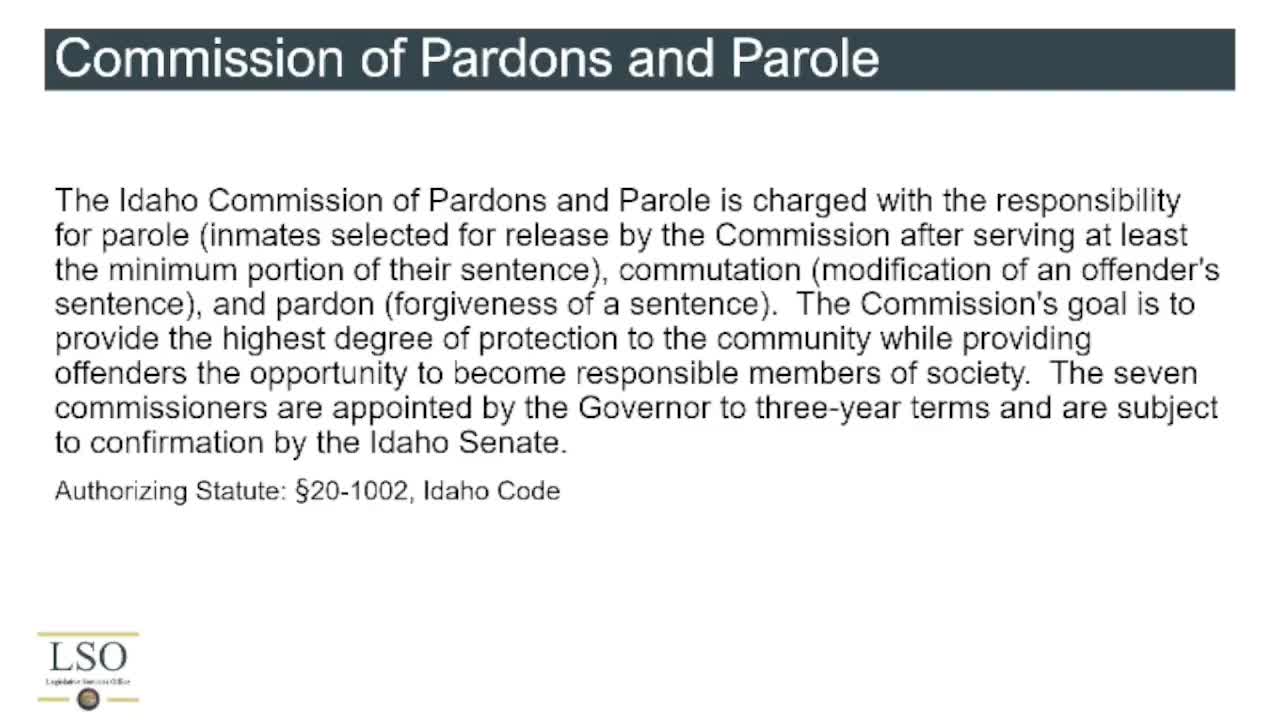
The Idaho Commission of Pardons and Parole asked the Joint Finance Preparations Committee for legislative authority and funding to raise commissioner pay from $300 to $400 per hearing day, citing recruitment and retention concerns and unpaid preparation work commissioners currently perform.
Noah Peterson, budget and policy analyst with the Legislative Services Office, outlined the commission’s FY2026 enhancement request, which would require a legislative change to the relevant section of Idaho code. Peterson said commissioners last received a pay increase in 2017 and that the governor is recommending funding for the request if the statute is amended.
Executive Director Christine Starr, who has served about three months in the role, told the committee commissioners typically hold hearings three weeks each month and are paid only for hearing days. She said commissioners receive hundreds of pages of materials for each hearing day and perform roughly 26 hours of unpaid preparation per hearing week — “about 3.25 days that they're not compensated for,” Starr said — work the commission says is necessary to reach reasoned decisions.
Starr told the committee she expects to lose more than half the commission by December and described the pay increase as a short‑term step toward a larger review of the commission’s model and staffing. “I see this request to increase the commissioner’s pay as honestly more of a band aid to a much, much larger issue,” Starr said. She said the commission will assess decision‑making frameworks, transparency and whether a different model would better ensure public safety, victim services and consistent parole decisions.
The governor’s recommendation includes a partial fiscal impact estimate should the statutory change pass. Committee members discussed the workload and the importance of allowing commissioners time to prepare thorough files but did not take immediate action on the pay proposal during the hearing.