Get Full Government Meeting Transcripts, Videos, & Alerts Forever!
Get email alerts on the Transportation Construction Funding topic
No spam. Unsubscribe anytime.
Lawmakers consider supplemental and reappropriation changes as ITD faces $600M in contracted work
Summary
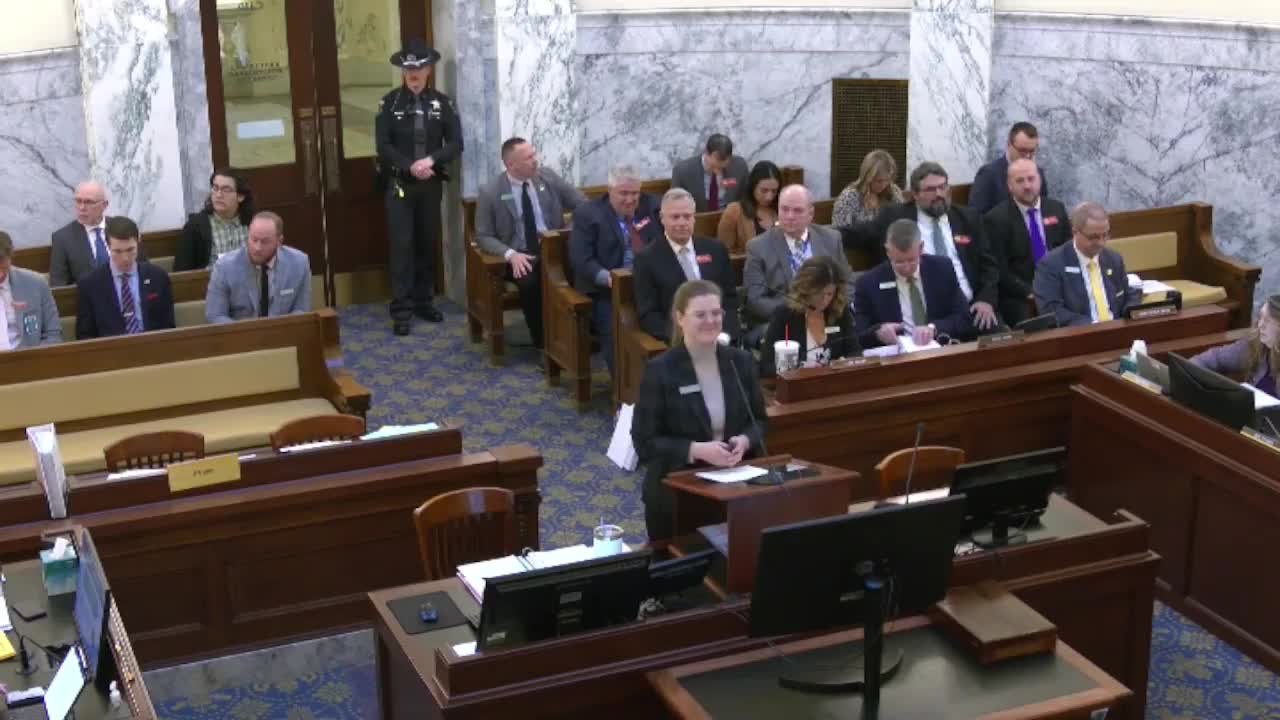
At a Joint Finance‑Appropriations Committee hearing, Idaho Transportation Department leaders told legislators they need supplemental spending authority and changes to reappropriation limits to finish multi‑year road projects already under contract.
Idaho lawmakers heard that the Idaho Transportation Department (ITD) needs immediate spending authority to complete contractor payments on large, multi‑year highway projects already under contract.
At the Joint Finance‑Appropriations Committee hearing, Brooke Dupree, budget and policy analyst with the Legislative Services Office, presented ITD’s contract construction budget and described funding sources including strategic initiatives transfers, GARVEE bonds and federal highway funds. Dupree told the committee ITD estimates a $60 million supplemental for the current fiscal year — $10 million from the State Highway Local Fund and $50 million from the State Highway Federal Fund — to cover obligations that exceed current appropriation.
The need stems from a long pipeline of multi‑year construction contracts, officials said. Director Scott Stokes, director of the Idaho Transportation Department, warned that the department has experienced tight spending authority windows on large projects: “we came dangerously close to this last fiscal year in FY '24 of running out of spending authority,” he said.
Dave Tolman, ITD chief administrative officer, told the committee, “As of the end of FY 24, our obligated unspent construction program was a little over $600,000,000 across multiple funding sources.” Tolman said that amount represents projects already contracted or otherwise committed where the department lacks sufficient appropriation to make final payments under the current reappropriation cap.
What the department asked for
ITD’s fiscal‑year 2026 request includes multiple construction‑related items: an ongoing $57,276,000 capital outlay request tied to increased federal funding under the Infrastructure Investment and Jobs Act (IIJA); an additional $55,000,000 ongoing capital request split between federal and local state highway accounts; and a requested $99,704,000 one‑time general‑fund transfer for safety and capacity projects (historically split roughly 60% to ITD, 40% to local governments). ITD also asked for a $212,000,000 one‑time general‑fund transfer for road and bridge maintenance, with ITD’s share and local shares specified in the budget documents.
ITD asked the committee to remove a legislative appropriation that currently overrides the code’s continuous appropriation for the Strategic Initiatives Program Fund. If the committee does that, ITD says the fund’s cash transfer could be spent under the fund’s continuous appropriation rather than requiring a separate, year‑by‑year dedicated appropriation.
Why legislators pressed for detail
Members asked whether the supplemental would pay for new projects or only for payments on projects already under contract. Director Stokes and staff said the primary goal of the supplemental and the reappropriation authority request is to ensure ITD can make payments on existing multi‑year contracts and avoid delaying contractor payments during months of peak payout.
Representative Tanner asked whether the requests were for cash‑flow authority or new projects; Stokes answered that the supplemental is largely to complete payments on underway projects. Tolman added that the $600 million figure reflects “construction dollars that are under contract or obligated committed, that we don't have the appropriation for.”
Background on financing mechanisms
Committee materials reviewed by members described these funding vehicles: - GARVEE (grant anticipation revenue vehicle) bonds sold to accelerate construction and repaid with federal funds and state sales tax allocations; current outstanding GARVEE debt was listed in the budget materials. - TECM (Transportation Expansion and Congestion Mitigation), funded by a 4.5% diversion of sales tax, with a floor and ceiling that affect how much is available for state vs. local projects. - Strategic Initiatives Program Fund, which under statute is continuously appropriated; ITD asked the committee to leave that continuous appropriation available instead of overriding it with a one‑year appropriation.
Committee next steps and oversight
Lawmakers asked ITD for more detailed, itemized cash balances and an accounting of which contractor payments would be covered by the supplemental. Several members said they wanted follow‑up documentation showing which contracts and payment schedules would draw on any added appropriation. ITD staff offered to provide further breakdowns of current obligated balances and timing of projected outflows.
Ending
With the construction program described as heavily obligated and many projects already in mid‑contract, ITD urged the committee to consider supplemental spending authority and a higher or more flexible reappropriation limit to avoid payment delays. Lawmakers signaled they would request additional documentation before deciding whether to change the reappropriation cap or add the requested supplements.