Get Full Government Meeting Transcripts, Videos, & Alerts Forever!
Get email alerts on the Childcare topic
No spam. Unsubscribe anytime.
Senate committee sends bill to floor that would let providers set childcare ratios, draws sharp testimony
Summary
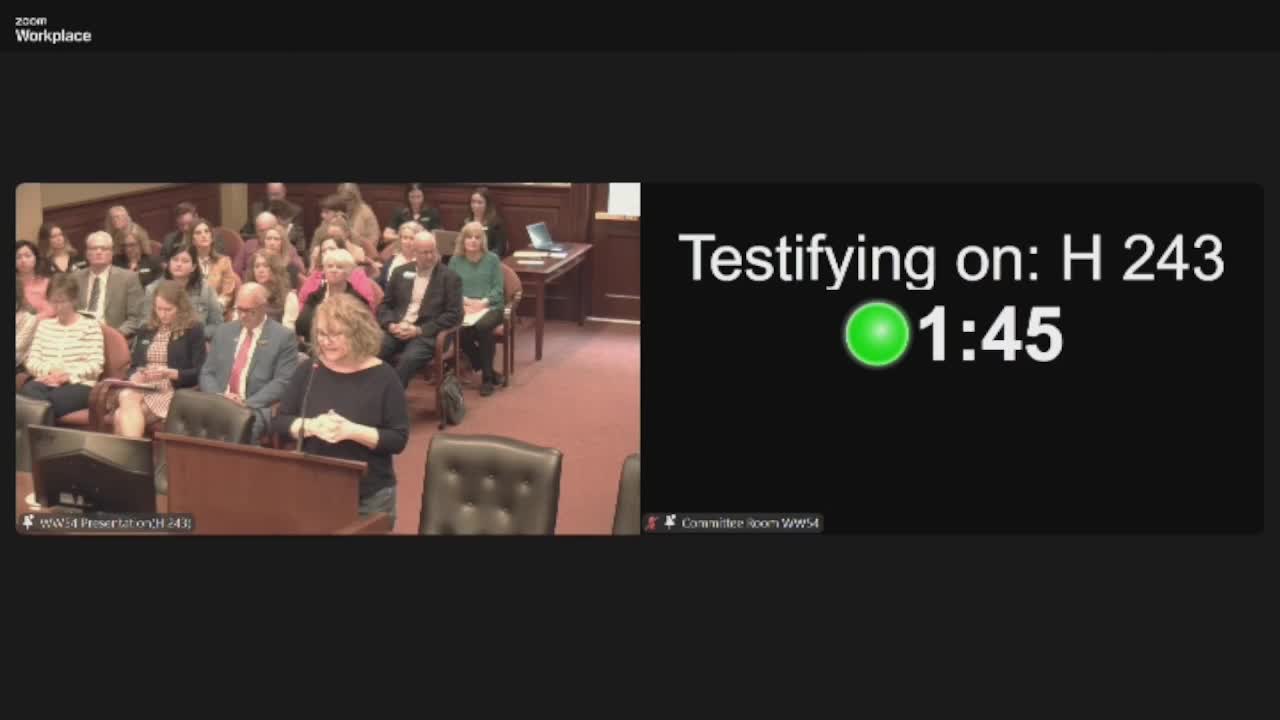
The Idaho Senate Health and Welfare Committee voted to send House Bill 243 to the Senate floor with a "do pass" recommendation after hours of conflicting testimony on whether the bill would ease Idaho’s childcare shortage or endanger children by loosening staff-to-child ratios and preempting local rules.
The Idaho Senate Health and Welfare Committee voted to send House Bill 243 to the Senate floor with a "do pass" recommendation after testimony both for and against a measure that would move childcare ratio-setting from state rule into provider-determined policy and repeal some local childcare ordinances.
Representative Rod Furniss, R‑District 31, the bill sponsor, told the committee the bill would "help providers the Idaho way by reducing onerous regulations and helping parents and students find affordable daycare," arguing deregulation would expand capacity and help the state's workforce. "This bill is about increasing workforce numbers by increasing childcare spots," Furniss said.
Supporters told the committee the bill preserves safety requirements while removing prescriptive numeric ratios from statute. Kate Oz of Kestrel West, who spoke for the bill, said the proposal "does not eliminate ratios" but instead requires each facility to adopt a child‑to‑staff ratio "appropriate to ensure health, safety, and welfare of all children in attendance" and to make that policy available to parents. Oz also described changes that would move some department rules into statute and set a six‑month window for applicants to complete licensing applications.
Opponents argued the measure would roll back essential protections. Christine Tiddens, executive director of Idaho Voices for Children, said the bill "strikes Idaho's current child to staff ratio from statute and rule and ... replace[s] the responsibility of establishing ratios in the hands of individual providers." She warned that making ratios flexible could increase rates of abuse, neglect and fatalities. Several childcare providers and advocates gave similar testimony: "This bill will directly lead to injuries and even deaths," said Sabrina Dunn, owner of Little Beans, an in‑home childcare in Kuna. Providers described chronic understaffing and low wages and said mandatory ratios are a baseline safety standard.
The committee also heard emotional testimony recounting a fatality. Mark Kirby testified in opposition on behalf of his family, saying an investigation into the death of his nephew found the provider exceeded applicable child‑to‑staff ratios and failed to follow safe‑sleep and supervision practices. "HB 243 is attempting to repeal current child to staff ratios and reduce supervision requirements both of which if properly followed may have prevented the death of my nephew," Kirby said.
Law enforcement and local officials urged caution about removing local oversight. Roger Shy, chief of the Pocatello Police Department, described enforcement actions in his city and said licensed providers value local licensing officers as a resource. Kathy Grismeyer, director of policy and government affairs for the city of Boise, said Boise has pursued local incentives and reforms to support in‑home providers and that she was "concerned with a fiscal note of 0" and how the state would absorb the city's licensing workload if local ordinances are preempted.
Proponents from policy groups argued that the bill uses market incentives to expand licensed capacity. Nicholas Kleinworth, policy director at the Idaho Freedom Foundation, said "the answer is actually more deregulation and flexibility within the industry," and Chris Cargill of the Mountain States Policy Center said regulators should not be allowed to erect barriers that keep willing providers from entering the market.
Votes at a glance: House Bill 243 — Motion to send to Senate floor with "do pass" recommendation (moved by Senator Leddy; seconded by Senator Keiser). The committee chair announced the motion passed by voice vote; the transcript records that some senators recorded "no" votes (including Senator Wintrow and Senator Blaylock); the transcript does not include a complete roll‑call tally.
What the bill would do and what stays in place: according to staff and the sponsor, HB 243 would (1) move several rule provisions (including an enhanced definition of "supervision") into statute; (2) remove numeric staff‑to‑child ratios from statute and require facilities to adopt and publish an appropriate ratio policy; (3) allow the Department of Health and Welfare to transition rules into statute by 2026; (4) repeal certain local childcare ordinance authority in cities that currently impose additional local requirements; and (5) keep criminal‑history checks, background checks, misdemeanors for unlicensed operation and other listed safety requirements in code. Kate Oz said the bill "does not change whether or not you have to have a background check" and that federal funding would continue to carry federal requirements for providers who accept subsidies.
Committee members asked whether the bill relaxed or tightened supervision language. Oz said the bill enhances the statutory definition of supervision by requiring providers to be "within sight or normal hearing and near enough to render immediate assistance" for children 5 and younger, and to use judgment for older children, while retaining stricter sight‑and‑sound standards for water or off‑site activities.
Next steps: HB 243 will be scheduled for consideration on the Senate floor. The committee hearing record contains extensive testimony from childcare providers, parents and local officials both supporting and opposing the bill; proponents emphasized capacity and market choice, while opponents emphasized child safety, the value of local oversight and the need for a studied approach.
Ending: With the committee's "do pass" recommendation, the bill advances to the full Senate. The transcript does not record a subsequent floor date or any amendments; committee members who requested further study urged stakeholders to negotiate changes before floor action.