Get Full Government Meeting Transcripts, Videos, & Alerts Forever!
Get email alerts on the Ems Transfer topic
No spam. Unsubscribe anytime.
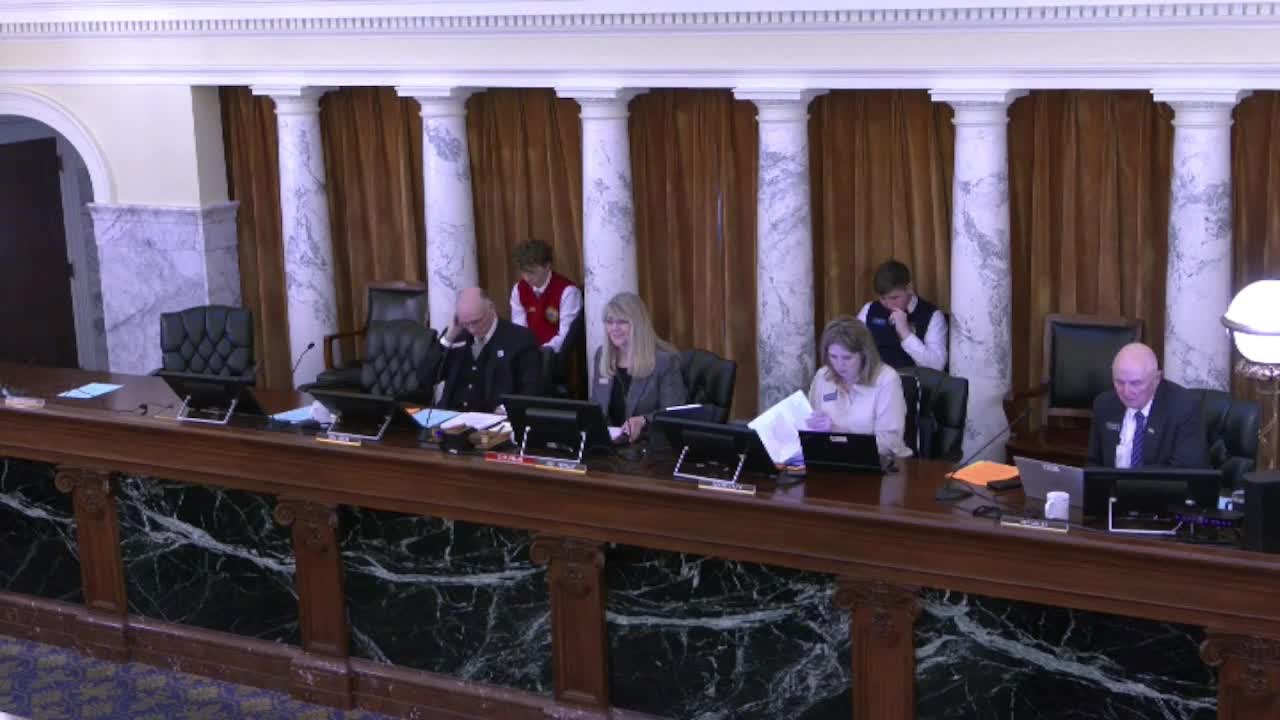
Committee advances EMS transfer work but several transfer motions failed to reach Senate majority
Summary
The committee considered trailer language and appropriations to move Emergency Medical Services (EMS) from the Department of Health and Welfare to the Military Division per HB206. Multiple associated motions were debated; some votes failed to receive a Senate majority and will be handled further by the Senate per committee procedure.
Members of the Joint Finance-Appropriations Committee reviewed the appropriation changes and trailer language tied to House Bill 206, which would transfer the Emergency Medical Services (EMS) budgeted program from the Department of Health and Welfare to the Idaho Military Division.
Legislative analysts explained the rationale for the transfer: the Military Division includes the Office of Emergency Management and public-safety communications and already manages activities such as back-up dispatch and HazMat responses. Committee discussion framed the relocation as aligning EMS with an operational, mission-focused unit under the Adjutant General and creating parity in rules for EMT certification in relation to neighboring states.
The committee considered a reduction motion to remove EMS budget authority from DHW and transfer the preparedness-and-response portion of the EMS budget into a different DHW program; that motion was recorded but did not carry a Senate committee majority and, per committee procedures discussed on the floor, will be transmitted to the Senate. Members then considered motions to create the EMS program in the Military Division and to provide transition funding, including one-time dedicated funds and ongoing personnel, and to fund a part-time medical director position.
Several of those motions passed on the House side but failed to obtain the affirmative majority in the Senate committee at the time of the votes. The chair explained that the two chambers are handling failed motions differently this session: when a motion fails in the Senate committee, the House may still record its action and forward the matter; the committee agreed to follow that process and to send letters or the matters to the Senate as appropriate.
Senator Bierke, who moved an initial reduction and transfer motion, said the change is part of a broader EMS restructuring and will be followed by additional rule and statutory work to limit barriers to certification and to standardize field treatment protocols. One motion included a transfer amount and staffing changes (the reduction motion listed a total reduction near $7.46 million and a transfer of 6.2 FTP and $5,877,500 federal funds for preparedness and response); later motions to establish EMS in the Military Division requested about $7.2 million from mixed fund sources and added approximately 30.84 FTP in new program staffing in the military division budget request.
Committee members also approved a smaller request for a part-time medical director and related funding for medical control over protocols, though the recorded vote again did not secure the Senate committee’s affirmative majority at that time and was to be forwarded for Senate action.
What’s next: The bill and associated appropriations will continue through the legislative process. The committee directed staff to coordinate transmittal of the contested motions and language to the Senate for additional consideration; if HB206 becomes law the Military Division will assume EMS responsibilities and the department and division will execute the funded transitions in the budget year.