Get Full Government Meeting Transcripts, Videos, & Alerts Forever!
Lawmakers hear how support‑unit counts, CECs and one‑time federal money shape Idaho public school budget
Summary
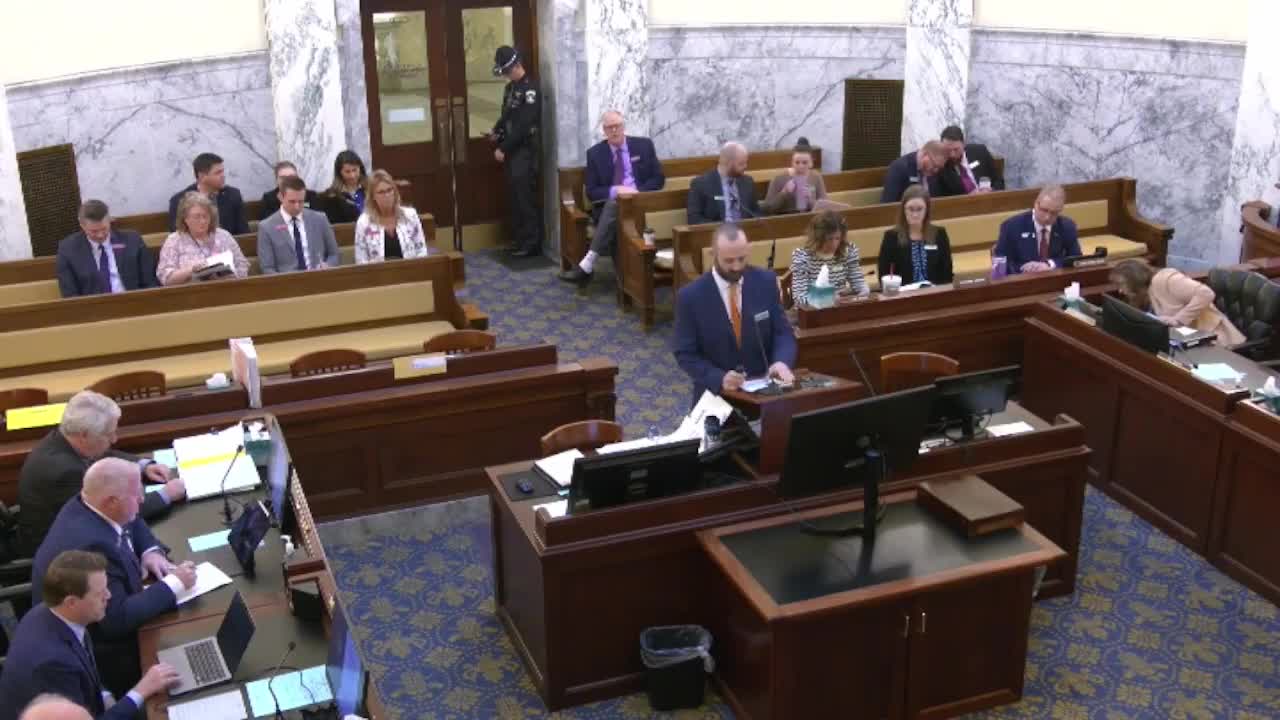
At a March 4 Joint Finance‑Appropriations Committee hearing in Boise, Legislative Services Office analyst Jared Tetrault and Superintendent Debbie Critchfield briefed lawmakers on how attendance‑based support units, change‑in‑employee‑compensation adjustments and remaining federal dollars are shaping the public school support budget.
At a March 4 Joint Finance‑Appropriations Committee hearing in Boise, Jared Tetrault, deputy division manager with the Legislative Services Office Budget and Policy Analysis Division, and Debbie Critchfield, Idaho Superintendent of Public Instruction, briefed lawmakers on the public school support program and the budget drivers that will shape next year's appropriations.
Tetrault told the committee the public school support program serves about 115 local school districts and roughly 75 public charter schools, and that most state K‑12 distributions are determined by statutory formulas found in Title 33 of Idaho Code and the Idaho Constitution (Article IX, Section 1). He summarized program structure, saying the program is budgeted across divisions including teachers, student support, facilities, central services and the Idaho Digital Learning Academy.
The briefing focused on a few mechanics that will affect next year's appropriation: support‑unit calculations based on average daily attendance, salary‑based apportionment (career ladder), discretionary funds, and the Public Education Stabilization Fund (PSIF). Tetrault explained that the state funds 1.55 full‑time equivalent positions per support unit and that the statewide average per support unit is about $147,000. He said attendance counts, not raw enrollment, determine support units for distribution.
Why it matters: support‑unit counts and statutory formulas determine how the state's roughly multi‑billion dollar education appropriation is split among districts and charters. Small shifts in attendance or support‑unit divisors can move millions between line items and affect local district budgets.
Major budget drivers and recent changes Tetrault and Critchfield discussed three specific drivers lawmakers should note: -…
Already have an account? Log in
Subscribe to keep reading
Unlock the rest of this article — and every article on Citizen Portal.
- Unlimited articles
- AI-powered breakdowns of topics, speakers, decisions, and budgets
- Instant alerts when your location has a new meeting
- Follow topics and more locations
- 1,000 AI Insights / month, plus AI Chat