Get Full Government Meeting Transcripts, Videos, & Alerts Forever!
Get email alerts on the Education Funding topic
No spam. Unsubscribe anytime.
Lawmakers hear how support‑unit counts, CECs and one‑time federal money shape Idaho public school budget
Summary
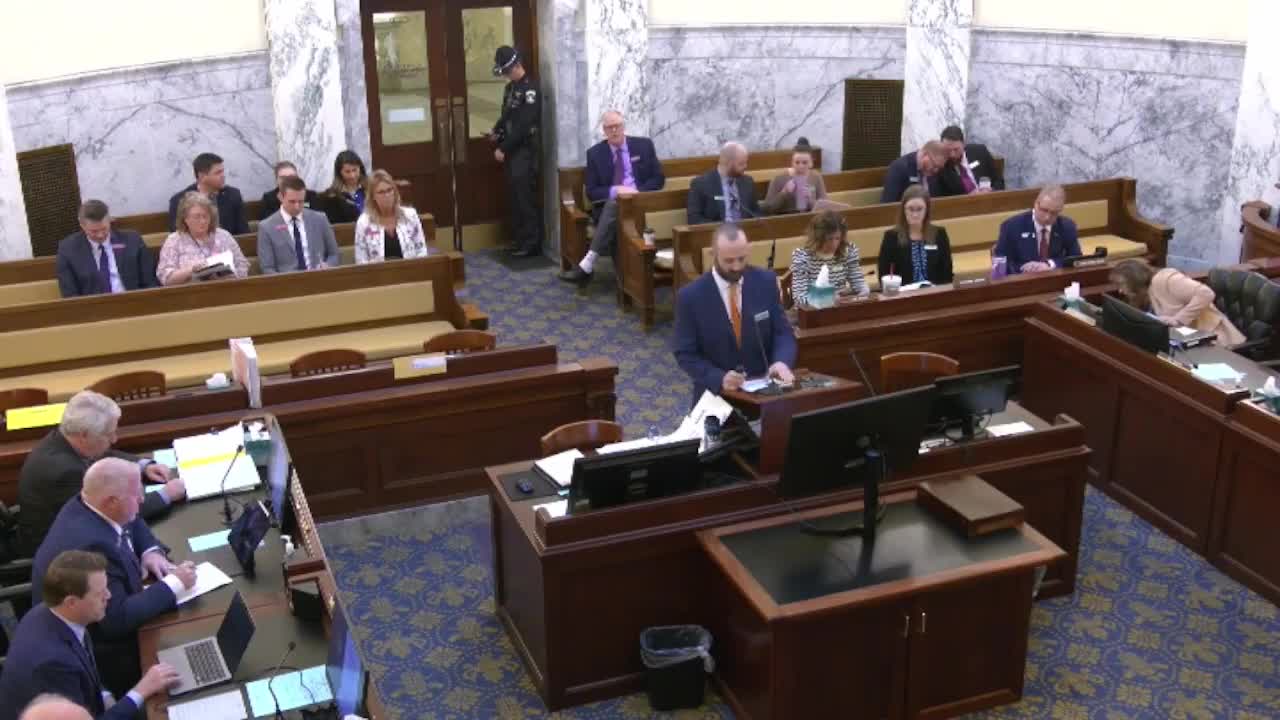
At a March 4 Joint Finance‑Appropriations Committee hearing in Boise, Legislative Services Office analyst Jared Tetrault and Superintendent Debbie Critchfield briefed lawmakers on how attendance‑based support units, change‑in‑employee‑compensation adjustments and remaining federal dollars are shaping the public school support budget.
At a March 4 Joint Finance‑Appropriations Committee hearing in Boise, Jared Tetrault, deputy division manager with the Legislative Services Office Budget and Policy Analysis Division, and Debbie Critchfield, Idaho Superintendent of Public Instruction, briefed lawmakers on the public school support program and the budget drivers that will shape next year's appropriations.
Tetrault told the committee the public school support program serves about 115 local school districts and roughly 75 public charter schools, and that most state K‑12 distributions are determined by statutory formulas found in Title 33 of Idaho Code and the Idaho Constitution (Article IX, Section 1). He summarized program structure, saying the program is budgeted across divisions including teachers, student support, facilities, central services and the Idaho Digital Learning Academy.
The briefing focused on a few mechanics that will affect next year's appropriation: support‑unit calculations based on average daily attendance, salary‑based apportionment (career ladder), discretionary funds, and the Public Education Stabilization Fund (PSIF). Tetrault explained that the state funds 1.55 full‑time equivalent positions per support unit and that the statewide average per support unit is about $147,000. He said attendance counts, not raw enrollment, determine support units for distribution.
Why it matters: support‑unit counts and statutory formulas determine how the state's roughly multi‑billion dollar education appropriation is split among districts and charters. Small shifts in attendance or support‑unit divisors can move millions between line items and affect local district budgets.
Major budget drivers and recent changes Tetrault and Critchfield discussed three specific drivers lawmakers should note: - Attendance vs. enrollment: Attendance returned as the basis for distribution after temporary COVID-era changes. Tetrault and staff explained attendance percentages fell from near 98–99% during the pandemic hybrid counting period to roughly 94% afterward; that decline has reduced funded support units by about 200 statewide, a drop that produces multi‑million dollar decreases in several line items. "Current law requires that attendance be the component for distributions, not enrollment," Tetrault said. - Change‑in‑employee‑compensation (CEC) and career ladder: The committee approved a 1% maintenance CEC in one earlier action and later added another 2% for certain staff; differences between the agency request and the governor's recommendation were driven largely by the margin for health insurance changes and whether 1% or 5% CEC assumptions were applied. Tetrault also explained the career ladder remains a primary cost driver for teacher salary allocations and movement on the ladder produces additional funding needs. - One‑time federal and special funds: The briefing covered remaining federal pandemic funds and ARPA/ESSER balances. Tetrault said the public school budget still included about $99.9 million of ESSER/ARPA‑related funding in the current year and that prior supplemental decisions repurposed roughly $105 million through discretionary distributions rather than depositing it into PSIF.
Funding totals and fund sources Tetrault showed the committee a high‑level summary "big sheet" that separates general, dedicated and federal fund sources. For the current planning year he presented general fund totals in the multi‑billion range (general fund totals shown in the hearing materials were in the neighborhood of $2.65 billion to $2.8 billion, dedicated funds roughly $277 million and federal funds in the mid‑$200 millions). He also described dedicated funds that feed school distributions, including endowment, lottery, timber and other public school income funds.
Facilities and school district facilities fund The committee discussed House Bill 292 (2024) and the onetime school district facilities fund established last session. Tetrault said House Bill 374, if approved, would make the facilities fund a continuous appropriation and would require committee consideration about removing those dollars from the regular appropriation. Committee members asked for district‑level distributions and 10‑year project plans; Tetrault said facility distributions are available in the fiscal facts publication and that the department had district plans on file.
Central services and proposed enhancements Tetrault identified several items proposed as enhancements or subject to separate legislation: a statewide weighted student funding formula, a pupil transportation funding formula (with the transportation bill scheduled for a later hearing), a special needs student fund (he said the special needs bill was scheduled in House Education), a statewide student transportation routing software contract, professional learning communities, the Idaho Reading Indicator and a data dashboard/report card. He told the committee the transportation software request is intended to give smaller districts and charters access to routing tools that could reduce miles and better reflect actual bus costs.
Questions from committee members covered topics such as how CECs were calculated, what portion of school funding comes from local levies (Critchfield said roughly 24% of school revenues come from local sources, with the state providing about 65% and the federal government about 11%), and whether the state can report how many district employees are not covered by the state health plan (Tetrault said that data is not readily available unless employees are on the state plan; otherwise such information is self‑reported by districts).
Discussion, directions and next steps Discussion points included the statutory basis for distributions, the effect of attendance measurement changes on unit counts, and whether to move specific line items into discretionary funding to increase local control. Tetrault told the committee some proposals require legislation before the committee could appropriate funds or change statutory per‑unit amounts. The committee requested district‑level facility distribution data and a breakdown of federal professional development dollars.
The committee will consider the bills tied to the funding formulas as they come through their respective hearings; several legislators were told the transportation funding bill would be heard the following day and the committee would take up any statutory changes once the bills advanced.
Sources and provenance The article summarizes the budget briefing delivered by Jared Tetrault and the question and answer exchange with Superintendent Debbie Critchfield and other committee members at the March 4 Joint Finance‑Appropriations Committee meeting. Excerpts from the presentation and Q&A were used to capture attendance‑vs‑enrollment explanations, support‑unit impacts, and the list of pending statutory items.
Ending Committee members said they will continue to review the pending bills and requested additional district‑level materials before making final appropriation decisions. The panel also indicated it will set a statewide revenue number at a subsequent meeting that will affect final appropriation choices for public schools.