Get Full Government Meeting Transcripts, Videos, & Alerts Forever!
Get email alerts on the Drug Policy topic
No spam. Unsubscribe anytime.
Senate committee advances bill to set $300 mandatory minimum fine for marijuana possession
Summary
The Idaho Senate Judiciary and Rules Committee voted to send House Bill 7 to the Senate floor with a "due pass" recommendation after hours of testimony from law enforcement, veterans, medical professionals and advocacy groups about public-safety and medical concerns.
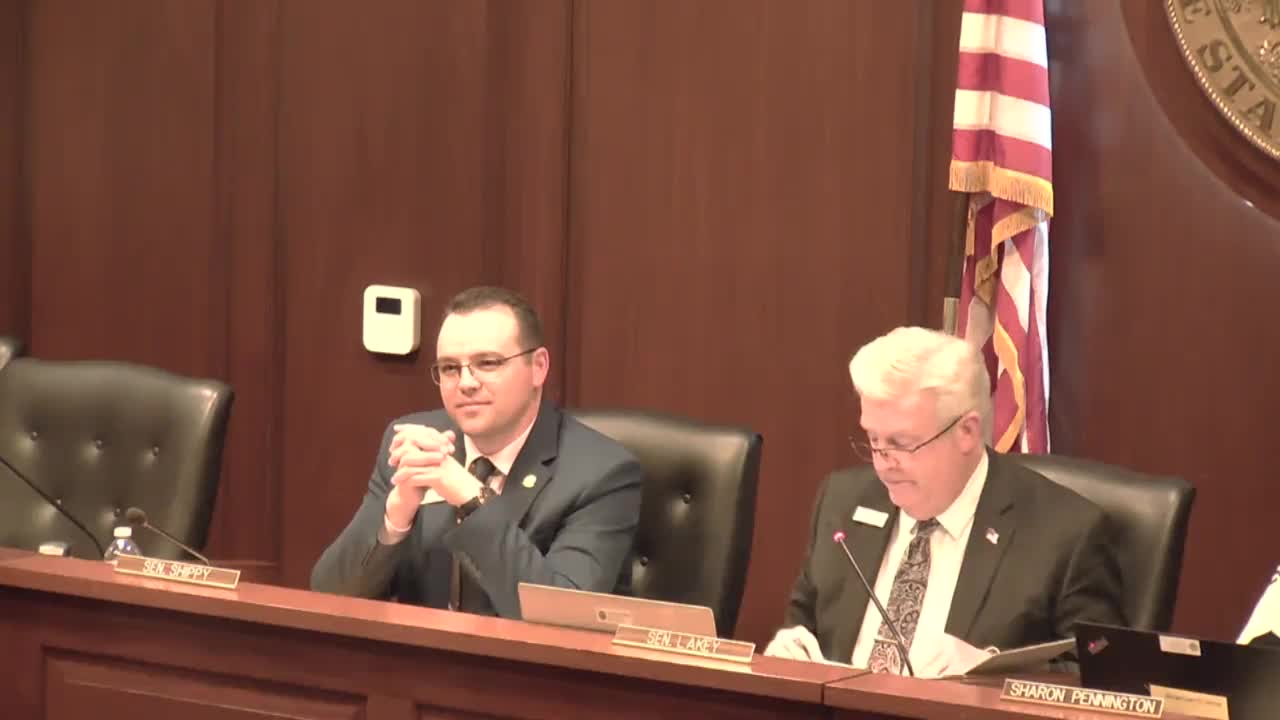
BOISE — The Senate Judiciary and Rules Committee on Thursday voted to send House Bill 7 to the Senate floor with a due-pass recommendation. The bill would establish a $300 mandatory minimum fine for misdemeanor possession of marijuana.
Supporters described the bill as a deterrent that preserves Idaho's stricter drug penalties compared with neighboring states. Representative Bruce Skaug (R-District 10), sponsor of the House-passed measure, told the committee the bill "sets that minimum" for possession and that it was a compromise after prior proposals. "We're just asking today to put a floor on that fine, to be a bit more of a deterrent," Skaug said.
The bill drew extended public testimony and a wide range of views. Law-enforcement witnesses, advocacy groups and conservative organizations urged passage, citing public-safety and community impacts they associate with legalization elsewhere. Opponents — including veterans, a physician and civil-liberties advocates — warned the mandatory minimum would disproportionately affect low-income people, homeless residents and sick patients who currently obtain cannabis across state lines for symptom relief.
Committee chair Senator Lakey opened the public hearing and set three-minute testimony limits. Chief Rex Ingram, president of the Idaho Chiefs of Police Association and chief of police in Caldwell, said a $300 mandatory minimum would help maintain public order and warned the committee against trends he described in some neighboring states. "I urge you to consider the implementation of a mandatory minimum fine of $300 for marijuana possession as a means not only to deter this behavior but also to maintain the law and order that Idahoans value here," Ingram said.
Those opposing the bill raised different concerns. Joseph Evans, an officer with KIND Idaho who identified himself in committee testimony as involved with the decriminalization initiative gathering signatures, said the combined direct and opportunity costs associated with current misdemeanor processing (community service, probation, monitoring and court costs) already can amount to several thousand dollars. "Give the judges the discretion," Evans told the committee, arguing that judges should retain ability to set fines based on individual circumstances.
Dr. Mark McConnell, a critical-care physician at the Boise VA Medical Center, said many veterans he treats use cannabis to manage pain, PTSD and chemotherapy side effects. "If marijuana were legal, I'm sure many of my colleagues would prescribe it over other pain medications," McConnell said, urging lawmakers to consider a medical exemption if the Legislature pursues tougher penalties.
Other proponents included the Idaho Sheriffs Association, represented by Ada County Sheriff Matt Clifford, and the Idaho Freedom Foundation, represented by Fred Birnbaum. Birnbaum said Oregon’s measure 110 and related policy changes did not produce intended benefits and pointed to statistics he said showed higher overdose and crime rates after decriminalization. "We should not lessen penalties," Birnbaum said, while also acknowledging his organization's usual opposition to mandatory minimums when those include jail time.
Several witnesses and committee members referenced studies and media reports presented during testimony; committee members did not adopt any new statutory medical-exception language during the hearing. Representative Skaug and multiple witnesses framed the bill as a fine-only change that does not add jail time or increase the statutory maximum penalties for possession.
After roughly an hour of public testimony and discussion among senators, Senator Ricks moved to send the bill to the Senate floor with a due-pass recommendation; Senator Foreman seconded the motion. The committee passed the motion by voice vote. Senator Melissa Wintrow requested to be recorded as voting "nay." The committee did not take a roll-call vote on the motion during the hearing record.
The committee hearing also included related procedural items and separate requests-to-print (RS) matters, but House Bill 7 drew the most public turnout and extended testimony.
What’s next: House Bill 7 now moves to the full Senate for consideration. The committee record shows the panel recommended passage to the floor; the Senate will decide whether to further debate or amend the measure.
Sources: testimony and remarks recorded in the Idaho Senate Judiciary and Rules Committee hearing transcript.