Get Full Government Meeting Transcripts, Videos, & Alerts Forever!
Get email alerts on the Education Funding topic
No spam. Unsubscribe anytime.
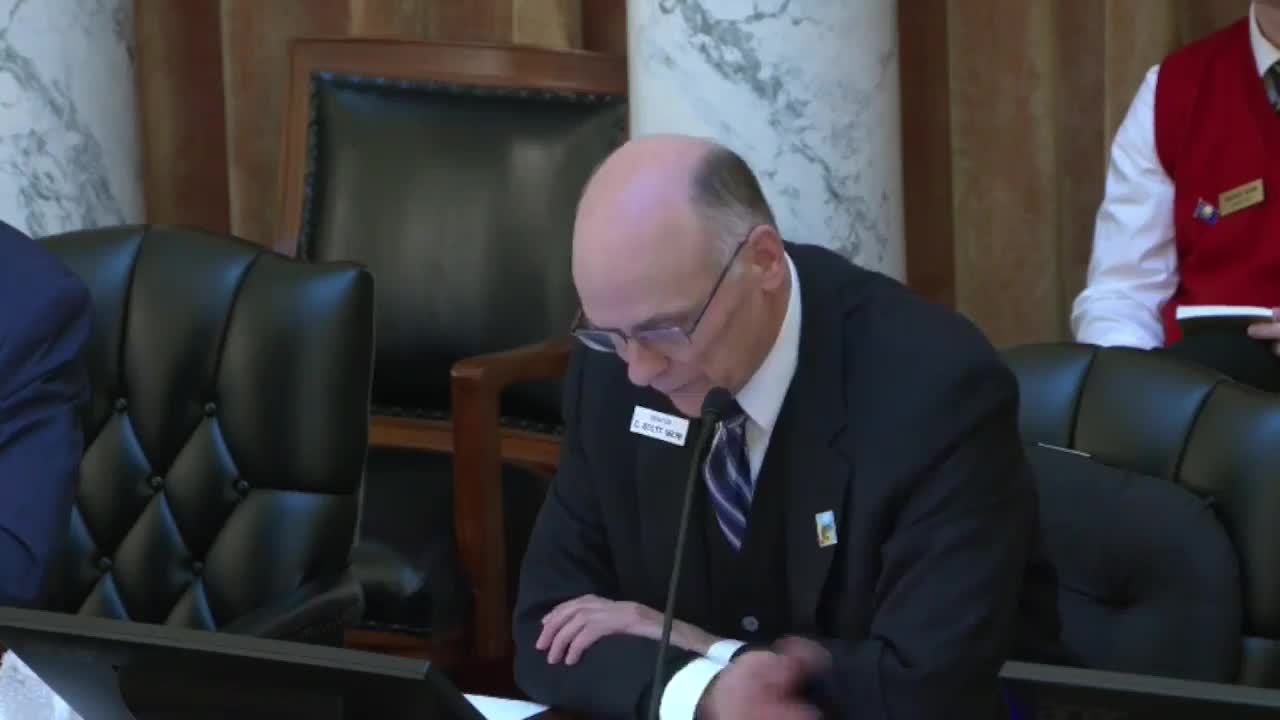
House Education Chairman Doug Pickett urges sustained funding, warns of rural school funding gap
Summary
Representative Doug Pickett told the Joint Finance-Appropriations Committee on March 7 that Idaho has substantially increased K–12 funding over the past decade but that rural districts still face large unmet needs for facilities, special education and transportation.
Doug Pickett, chairman of the Idaho House Education Committee, told the Joint Finance-Appropriations Committee on March 7 that Idaho has increased K–12 spending but must protect funding for small rural schools. "Over the past 10 years, the public education K–12 budget has doubled from $1,400,000,000 to $2,800,000,000," Pickett said, and he credited the Legislature with raising teacher pay and expanding benefits in recent years. "Idaho's average K–12 teacher pay has increased to nearly $63,000 this school year, representing a 42% increase over the past decade." Pickett said the state should balance investment in career and technical education with continued emphasis on core academic subjects. He told the committee that community colleges’ career and technical education (CTE) programs are "significantly oversubscribed" and face capacity and instructor-recruitment problems because private-sector wages compete with public employers. The House education chairman pressed the committee to remember the distinct cost structure of rural districts and to avoid applying purely student-based averages that could underfund small schools. "Rural school students deserve higher levels of per-student funding for critical things, like special education, transportation, facilities, teacher recruitment and retention," he said. Pickett offered several statewide funding gap figures cited in his remarks: an estimated $3 billion statewide facilities funding gap, roughly $83 million needed for special needs, $5 million to retool teachers in phonetics-based early literacy instruction, and $35 million for outcome-based funding. He also noted that the Joint Legislative Oversight Committee would shortly receive a report from the Office of Performance Evaluations on K–12 characteristics and funding. On federal funding, Pickett told the committee his panel expects any new federal school money to come in forms such as block grants and urged the funds be used "toward their intended purposes" rather than repurposed at the federal level. The remarks preceded questions from committee members, several of whom highlighted the role community colleges play in CTE and thanked Pickett for his perspective.