Get Full Government Meeting Transcripts, Videos, & Alerts Forever!
Get email alerts on the Anti Slapp topic
No spam. Unsubscribe anytime.
Senate committee advances anti‑SLAPP bill to protect Idaho speakers from meritless lawsuits
Summary
The Senate Judiciary and Rules Committee voted to send Senate Bill 1,001 — a Uniform Law Commission anti‑SLAPP measure — to the floor with a due‑pass recommendation after testimony from legal experts, speech advocates and local residents about expedited court review to prevent lawsuits used to chill public participation.
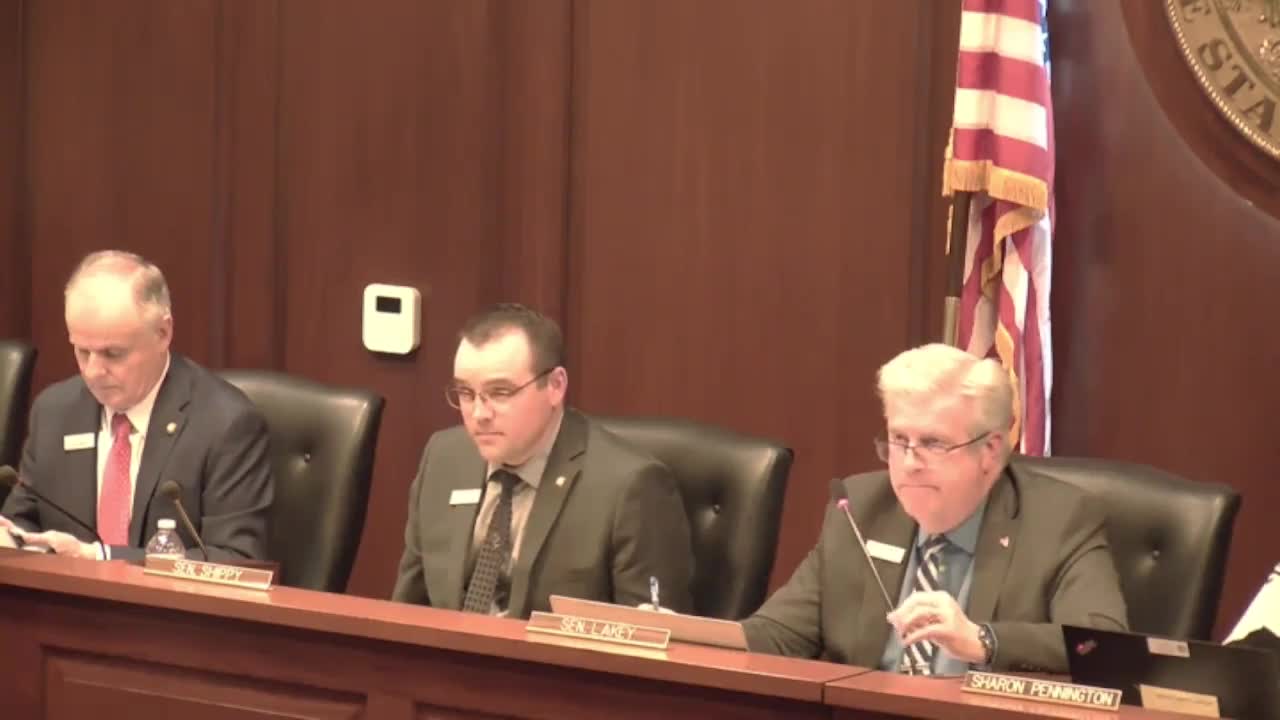
The Idaho Senate Judiciary and Rules Committee voted to send Senate Bill 1,001 to the Senate floor with a due‑pass recommendation after a public hearing that included legal experts, advocacy groups and private citizens.
Senator Brian Lenny, R‑Nampa, told the committee SB1001 would create an “efficient mechanism for the quick resolution of SLAPP lawsuits,” saying the bill gives judges an early tool to dismiss sham suits aimed at silencing public participation. He said Idaho is one of only a small number of states without such protections and framed the bill as a free‑speech safeguard.
The bill implements the Uniform Public Expression Protection Act (UPEPA) drafted by the Uniform Law Commission. Caitlin Wolf, testifying remotely for the Uniform Law Commission, told the committee that “if somebody is slapped by one of these sham lawsuits, they can file a motion with the court that freezes the lawsuit...so there can't be discovery” while an expedited hearing decides whether the case should continue. Wolf and others described the statute as an early‑review procedure that does not eliminate discovery entirely if a judge decides a case should proceed.
Catherine Hartley, attorney for the Pacific Justice Institute, said anti‑SLAPP statutes “are effective in protecting free speech” and protect speakers — especially those who take unpopular positions — from expensive, protracted litigation designed to chill speech. Ken McClure of the Idaho Liability Reform Coalition described the bill as a way to “separate wheat and chaff” by allowing early judicial screening and staying discovery while the question is decided.
Resident Matthew K. Jensen described repeated legal threats he has received for online speech and said the bill would reduce the risk that regulated court process becomes a means to punish speakers through litigation costs. The Idaho Conservation League and a coalition of reporters and civil‑liberties groups also testified in favor.
Committee members clarified that SB1001 does not change the substantive elements of defamation or other claims; it creates an early procedural mechanism for dismissal where a judge finds a complaint legally insufficient on its face or where there is no genuine dispute of material fact. Committee members also discussed judicial discretion to allow limited discovery in close cases and noted earlier coordination with Idaho Supreme Court administrators during drafting.
A motion to send SB1001 to the Senate floor with a due‑pass recommendation was made and seconded; the motion carried on a voice vote.
The committee record shows broad, bipartisan testimony in support from the Uniform Law Commission, conservation and free‑speech advocates, business groups, and private citizens; witnesses said the bill is modeled on statutes adopted in other states and is intended to reduce frivolous litigation costs while preserving meritorious claims.