Get Full Government Meeting Transcripts, Videos, & Alerts Forever!
Get email alerts on the Construction And Safety Rules topic
No spam. Unsubscribe anytime.
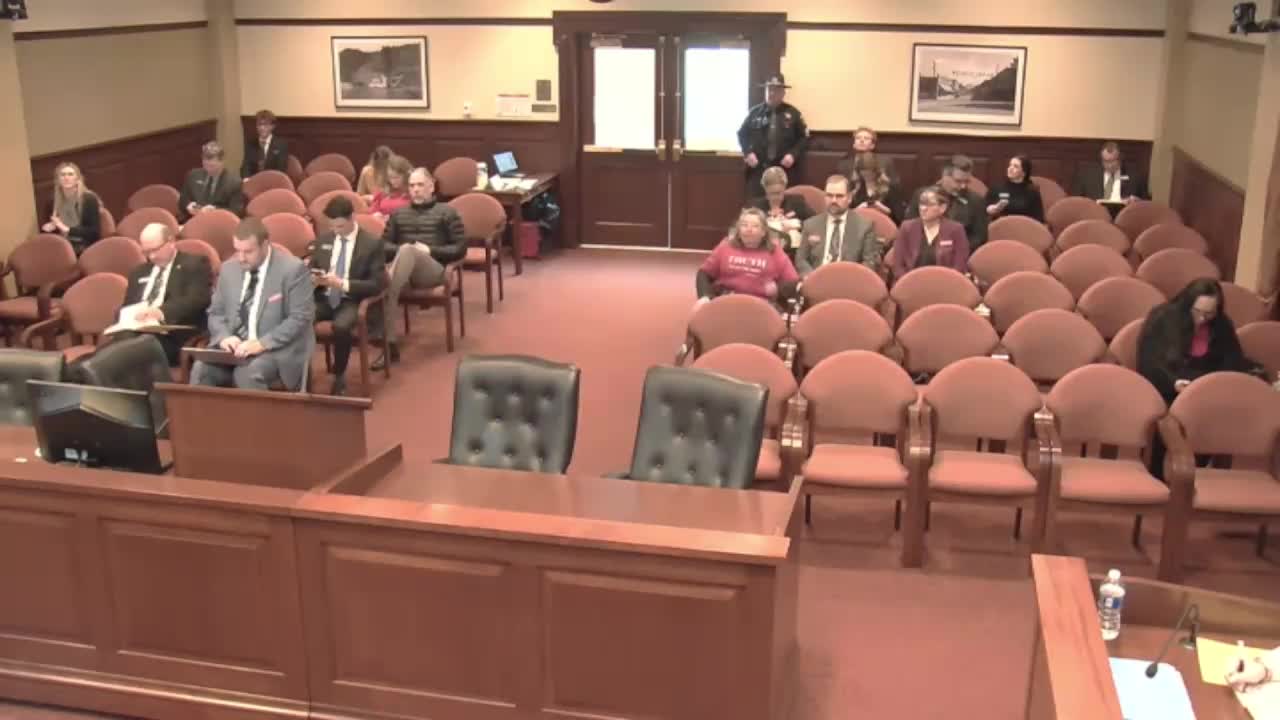
Idaho Senate Commerce committee advances construction choice-of-law bill, updates safety and licensing rules
Summary
The Senate Commerce Committee voted to send Senate Bill 1006 to the floor with a due-pass recommendation and approved several rule dockets affecting elevator safety, school building inspections, logging safety rules and the damage-prevention board; a separate resolution, RS31866, was sent to print.
The Idaho Senate Commerce Committee on an undated meeting day advanced a bill that would require construction projects in Idaho to be governed by Idaho law and approved administrative rule changes affecting elevator standards, school building safety inspections, logging safety rules and damage-prevention oversight.
Senate Bill 1006, which proponents described as a "choice-of-law" backstop for private construction contracts, was sent to the Senate floor with a due-pass recommendation after brief testimony and a voice vote by the committee. Todd Leahy, State Senator for District 23, told the committee the measure is intended to prevent out-of-state choice-of-law provisions in contracts for projects built in Idaho: "If the project is being built here in Idaho then it's subject to Idaho law and subject to Idaho jurisdiction," Leahy said.
The committee also approved RS31866, a revision tied to last year’s House Bill 490 that clarifies when fingerprint-based criminal background checks are required for counselors and therapists. Senator Mark Harris (Legislative District 35) said the resolution would make those checks discretionary "only when the Division of Occupational and Professional Licenses determines that it's necessary," explaining that the fingerprint requirement had been tied to an interstate compact that did not pass.
Why it matters: SB1006 would limit attempts by contract drafters to force Idaho construction projects into out-of-state litigation or arbitration by reaffirming Idaho law and jurisdiction for projects located in the state. The rule changes affect industry practices (elevator and school building standards), frontline safety guidance (logging), and how the damage-prevention board handles complaints and technology oversight.
Details of votes and next steps: Committee motions on the bills and rule dockets passed by voice vote; the committee recorded movers and seconders for motions but did not record roll-call tallies in the transcript. The transcript shows motions to send RS31866 to print (moved by Senator Burnt; second Senator Guthrie) and to send SB1006 to the floor with a due-pass recommendation (moved by Senator Nichols; second Senator Ward Engelking). The committee then approved four rule dockets presented by the Division of Occupational and Professional Licenses: elevator program rules, the school building safety chapter, the logging safety chapter, and rules for the state damage-prevention board. The committee adjourned after approving the dockets.
Quotes and testimony: Sean Shupak, director of government affairs for the Idaho Associated General Contractors, testified in support of SB1006, saying, "Idaho construction projects should follow Idaho law. I would urge your support on Senate Bill 1,006." Justin Touchstone, Trades Program Director for the Division of Occupational and Professional Licenses, described updates to elevator rules as a consolidation and modernization of incorporated codes (ASME/ANSI references) intended to reduce regulatory burden while maintaining safety. Amy Lorenzo, bureau chief for the Division of Occupational and Professional Licenses, summarized an extensive rule review of the logging safety chapter and described the approach as removing obsolete or advisory language while keeping the chapter a practical on-site resource: the rules "serve as the sole source and sole resource when they're in the woods on how to keep themselves and their staff safe," she said.
Logging rules: The committee approved a comprehensive revision of the Idaho minimum standards for logging safety. Amy Lorenzo said the revisions remove outdated terminology and advisory language, streamline requirements such as operating plans and certain equipment specifics, and preserve the chapter’s instructional figures that crews use in the field. Lorenzo said the logging program does not license operations and that inspectors use site visits and follow-up inspections rather than routine permitting; she told the committee the program does not assess civil penalties or generate revenue through fines.
Elevator and school-building rule updates: Justin Touchstone told the committee the elevator program completed a code-cycle update and removed duplicative or obsolete provisions, clarified that audio communication requirements are mandatory while some visual communication can be optional, and updated ASME/ANSI references to current editions. The school building safety chapter was updated primarily to align code references and simplify language; Touchstone said the chapter is brief and consensus remains on the definition of imminent safety hazards.
Damage-prevention board rules: The committee approved revisions to the damage-prevention rules that, among other changes, remove a requirement that complainants identify specific Idaho code sections when filing complaints and delete provisions the board judged outside its enforcement practice—such as oversight of the adequacy of facility owners’ technology. Amy Lorenzo said the changes were intended to make complaint filing more user-friendly and reflect advances in locating and damage-prevention technologies.
What the record shows: The transcript records motions, seconds and voice approvals; it does not contain roll-call vote tallies. Several senators commented in support of the construction choice-of-law bill and the regulatory updates aimed at reducing outdated language in rule chapters. Members of the construction industry and the Division of Occupational and Professional Licenses staff provided the technical presentations and testimony. The committee sent SB1006 to the Senate floor with a due-pass recommendation and sent RS31866 to print; the approved rule dockets will proceed under the division’s administrative process.