Get Full Government Meeting Transcripts, Videos, & Alerts Forever!
Get email alerts on the State Revenue Forecasting topic
No spam. Unsubscribe anytime.
Legislative panel recommends more cautious revenue estimates than governor for FY2025–26
Summary
The Economic Outlook and Revenue Assessment Committee told the Joint Finance-Appropriations Committee it recommends lower general fund revenue totals than Governor Little’s budget and asked legislators to be cautious about appropriations above the committee’s figures.
The Joint Finance-Appropriations Committee on Friday accepted a report from the Economic Outlook and Revenue Assessment Committee recommending lower general fund revenue projections than those used in Governor Brad Little’s budget.
The EROC committee recommended $5,990,000,000 in general fund revenues available for appropriation for fiscal year 2025 and $6,400,000,000 for fiscal year 2026. Those figures are below the governor’s recommendations; the governor’s forecast presented in the budget document showed higher totals for both years.
Why it matters: Article VII, Section 11 of the Idaho Constitution requires the state to balance appropriations within available revenue. The EROC committee’s role is to judge the reasonableness of executive branch revenue projections; its lower medians signal a more cautious baseline for the legislature’s appropriation work and a suggestion to avoid budgeting above those amounts without clear justification.
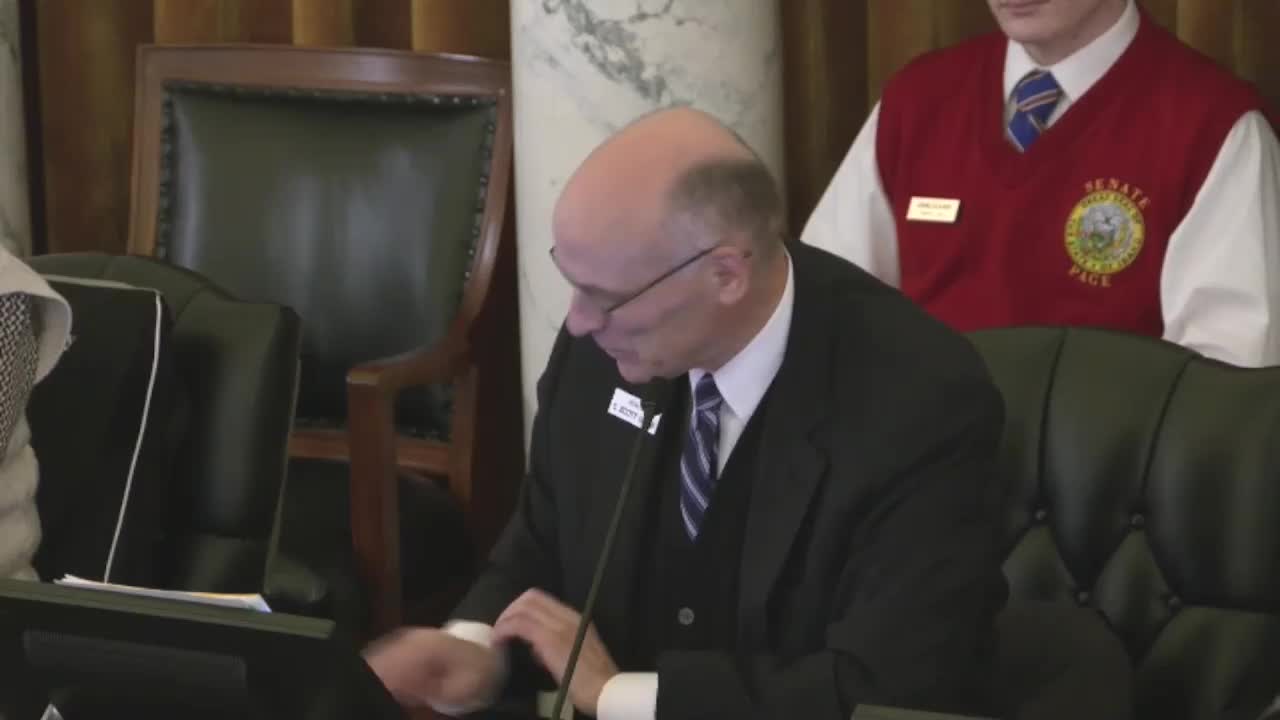
The committee’s co-chair, Senator Kevin Cook, said EROC reviewed business, tax and financial data and heard expert testimony before concluding that a more conservative revenue baseline was appropriate. “Accordingly, it is this committee’s role and mission to provide advice to you about the reasonableness of such revenue projections,” Cook said on the record when presenting the report.
Representative Jeff Ehlers, the committee’s other co-chair, thanked members and staff for their work and described the recommendation as the product of that review. The committee’s report contrasts its median projections with the governor’s numbers; for example, the committee’s median was several percent below the governor’s median for the years shown in the presentation.
The presentation and the committee’s report also noted economic uncertainty tied to Federal Reserve policy and the upcoming presidential election as reasons to be cautious. “The committee recognizes economic uncertainty related to the impact of the Federal Reserve Bank addressing inflation and recent presidential election,” Cook said.
Formal action: Co-chair Horman moved to accept the EROC report; Senator Woodward seconded. The committee approved the motion by unanimous consent with no objections recorded.
What the committee did not do today: The acceptance was of a report of findings and recommendations. JFAC members and staff said subsequent budget hearings and markups will use the chosen revenue baseline as they set appropriations.
Ending note: The EROC recommendation will be one input among others as JFAC considers program maintenance and enhancement budgets in the coming week. The committee emphasized that appropriators should “be cautious in making appropriations above the committee’s revenue recommendation.”