Get Full Government Meeting Transcripts, Videos, & Alerts Forever!
Get email alerts on the State Budget topic
No spam. Unsubscribe anytime.
Legislative analysts present FY2025–26 budget outlook showing $700 million structural surplus and $338 million projected year-end cash
Summary
Keith Bybee, Legislative Services Office division manager, told the Joint Finance-Appropriations Committee the governor's recommendations for FY2025 and FY2026 leave the state with an approximate $700 million structural surplus and a projected FY2025 ending cash balance near $338 million.
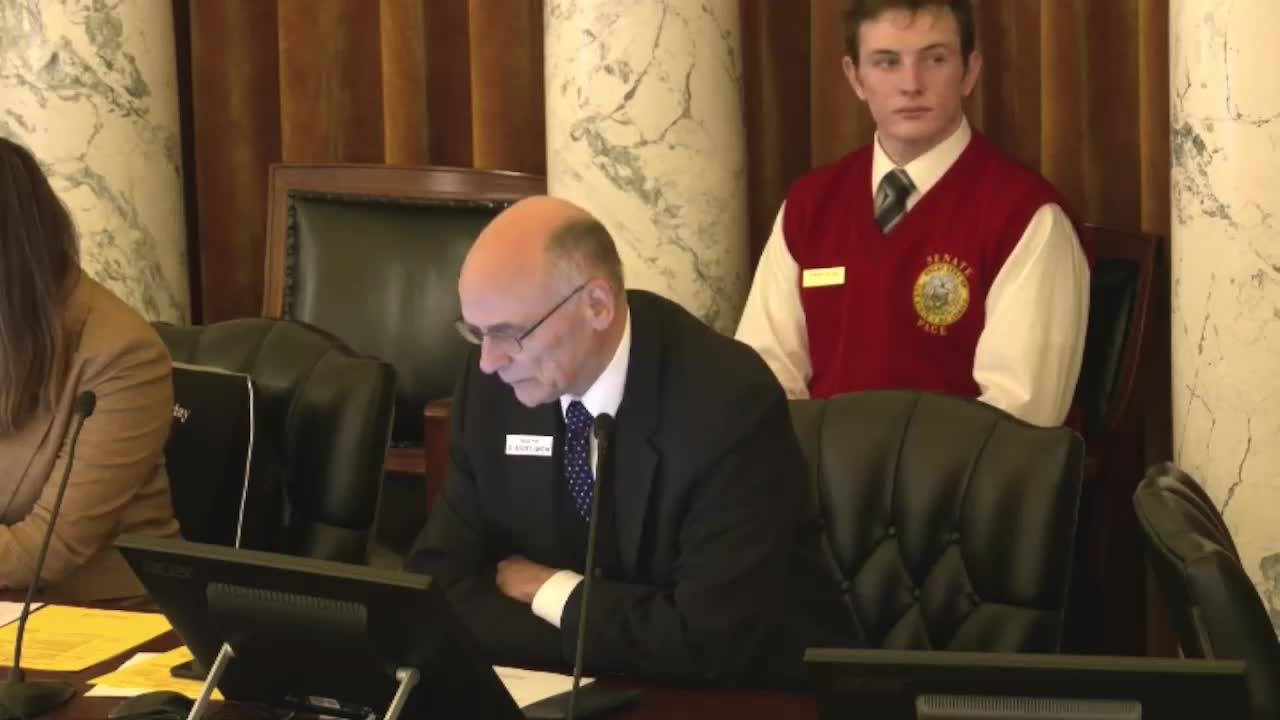
Keith Bybee, division manager for budget policy analysis at the Legislative Services Office, briefed the Joint Finance-Appropriations Committee on the state's FY2025 and FY2026 budget outlook, describing revenue projections, planned transfers, and the governor's recommended appropriations.
Bybee said the state's revenue history shows an unusual COVID-era spike and a new higher baseline driven in part by population and personal-income growth. He noted the governor's recommendation projects general fund revenues and expenditures that preserve what he described as "a structural balance" of about $700 million over the short term. "If a budget is a statement of your values, your previous legislatures have done you a big favor," Bybee told the committee.
The nut graf: the governor's recommended general fund picture for FY2025 and FY2026 leaves the state with one-time and ongoing choices: maintain the structural surplus for tax relief, direct funds to ongoing programs, or use cash for one-time spending. Bybee highlighted the cash reconciliation behind those choices and the major transfers the governor proposes.
Most important facts first: the governor's recommendation presented to JFAC shows program-maintenance general fund spending near $5.4 billion for FY2026 and total recommended general-fund appropriations of about $5.65 billion (a 7.4% increase year over year) after enhancements of roughly $242 million. Bybee said the governor's baseline revenue forecast used in that proposal is materially higher than last fall's forecast (the governor's baseline showed about $5.9 billion in ongoing revenues in one place and a total available amount of roughly $6.36 billion when statutory changes are included). He reported a projected FY2025 ending cash balance of approximately $338 million under the governor's plan.
Supporting details and transfers: Bybee walked the committee through the cash-reconciliation report (front-end pages of the legislative budget book). He identified historically authorized transfers and current proposals that reduce net general-fund cash: about $578.9 million in transfers out under the governor's recommendations (including transportation transfers and $60 million for fire suppression deficiency warrants) offset in part by a $62.8 million transfer into the general fund tied to the closeout of the old bond-levy equalization program. He described reappropriation and executive carry-forward mechanics, noting roughly $16 million of reappropriations on the general fund and about $44.4 million of executive carry-forward obligations.
Revenue forecasting and risk: Bybee and other staff emphasized the committee will confront tradeoffs between tax relief and ongoing spending. He said revenue projections still reflect uncertainty from national and state economic conditions and the lingering effects of federal pandemic-era aid. On the forecast classifications discussed, staff described baseline, optimistic and pessimistic scenarios as probability-based estimates used to frame risk for this committee.
Program and functional-area highlights: Bybee said the governor's budget increases the natural-resources functional area by about 12.2% (driven by a $40 million fire-suppression proposal and remaining ARPA-related federal appropriations for Water Resources and DEQ) and shows a larger percentage increase for the state public defender program. He noted the recommended total state budget across all funds is approximately $14.39 billion (39% federal, 39% general fund, 22% dedicated funds).
Committee process: Bybee told members the next steps include detailed agency hearings beginning with Health & Welfare and subsequent work groups to set program maintenance and to consider enhancements. He highlighted the budget book pages and the decision-unit structure staff will use to present options in working groups.
Ending: Bybee answered members' questions on specific items raised, including the bond-levy equalization closeout tied to House Bill 521, executive carry-forward mechanics, and where interest earnings on cash appear in reconciliations. He offered to provide follow-up detail on several specific items the committee requested.