Get Full Government Meeting Transcripts, Videos, & Alerts Forever!
Get email alerts on the Procurement Rules topic
No spam. Unsubscribe anytime.
Senate State Affairs Committee accepts rewrite of Idaho purchasing rules, removes 'invitation to negotiate'
Summary
The Senate State Affairs Committee accepted pending rulemaking Docket 38-0501-2401 from the Division of Purchasing, a comprehensive rewrite that removes the "invitation to negotiate" (ITN) process and reorganizes procurement rules to align language with cited Idaho code sections.
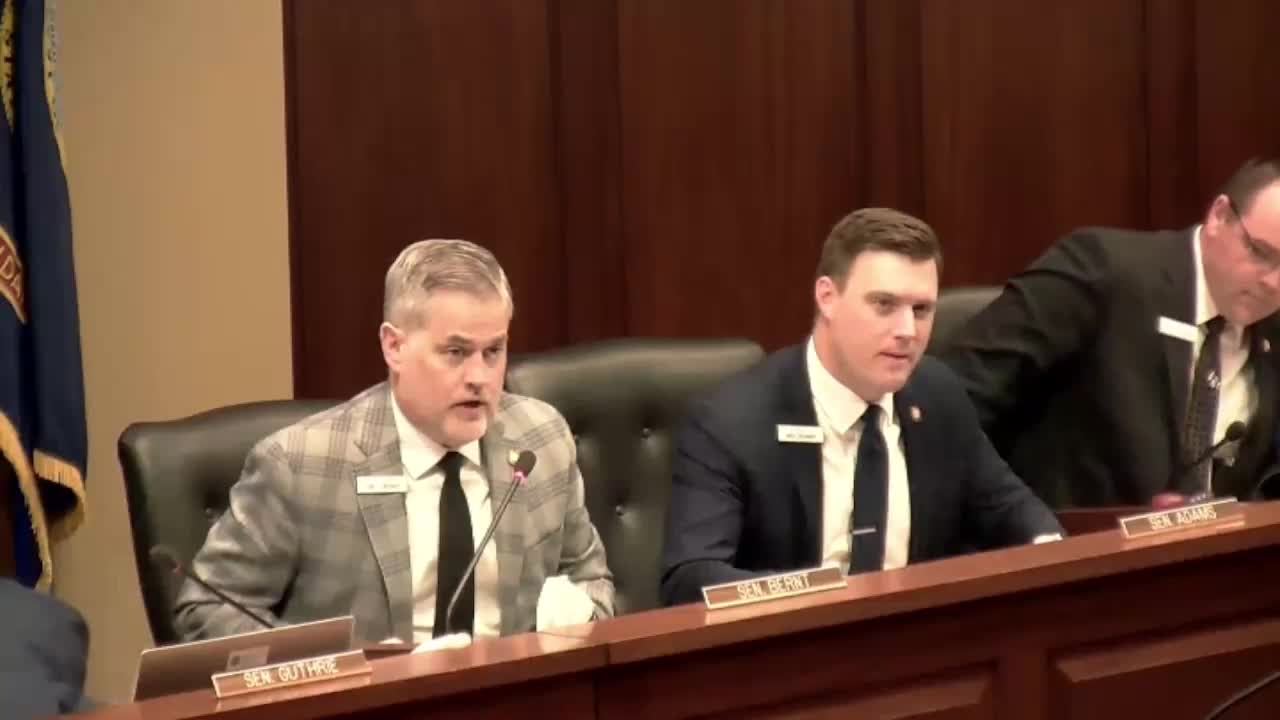
At a meeting of the Idaho Senate State Affairs Committee, the panel accepted Docket 38-0501-2401, a comprehensive rewrite of the rules governing state purchasing that removes the invitation-to-negotiate, or ITN, process and reorganizes procurement language to better align with statutory authority.
The rule rewrite, presented by Valerie Bollinger, administrator of the Division of Purchasing in the Department of Administration, is intended to remove ITNs from rule, tie provisions more clearly to statute and simplify or remove explanatory language. "We began our review and development of the pending rule in front of you with three overarching goals: to remove the ITN process from rule as intended by the legislature, to review and ensure that the rules were firmly based in authority granted by statute and aligned with statutory intent, and to use the opportunity for further cleanup," Bollinger said during the committee hearing.
Why it matters: the changes affect how the state solicits and awards contracts and aim to narrow exemptions from competition, clarify evaluator responsibilities and improve public access to procurement information. Bollinger told the committee the division provided a statutory crosswalk and held negotiated rulemaking, a public hearing in November and outreach to stakeholders; she said the division received a few questions but no formal opposition.
Key details: the rewrite removes definitions and references to competitive negotiation and ITNs, moves the tie-responses section and narrows the use of price agreements by placing them in the exceptions section, and simplifies language about evaluation and responsibility criteria. Bollinger said the pending rule ties specific sections to Idaho code, including repeated references to "Idaho code section 679210" and to qualifications in what the transcript records as "Idaho code section 679 206." She said the division provided the committee secretary with a crosswalk mapping each rule change to code authority.
Bollinger outlined agency staffing and scope to explain the division's capacity: the division's budget office has a staff of about seven who prepare the executive branch budget; revenue forecasting is handled by two employees; procurement finance and policy/regulatory units cover the remaining work. She said the division will overhaul its website after the legislative session to improve transparency and access to rules and budget data.
Committee discussion was limited to clarifying questions. Senator Den Hartog asked for historical context about how ITNs entered the rules; a participant identified as Moyer said the ITN language went into effect in 2019. Senator Shippey asked about stakeholder feedback; Bollinger replied the division held meetings, posted the proposed rule and contacted interested lobbyists and said it received clarification questions but no formal opposition.
The committee voted to accept Docket 38-0501-2401 by voice vote; no opposing votes were recorded in the hearing transcript. The accepted rule will appear in the pending rulebook (the division indicated the docket begins on page 65 of the committee packet) and the division plans further website and transparency work following session.
The committee recorded the acceptance of the rule by voice vote and moved on to other business.