Get Full Government Meeting Transcripts, Videos, & Alerts Forever!
Get email alerts on the State Liquor Division Budget topic
No spam. Unsubscribe anytime.
Idaho State Liquor Division outlines budget, seeks targeted IT and staffing investments
Summary
The Idaho State Liquor Division told the Joint Finance-Appropriations Committee it distributed $118.3 million in FY2024, has seen fund balances fall since the pandemic, and requested one-time IT and retail investments and modest hourly increases for temporary store clerks to address high turnover.
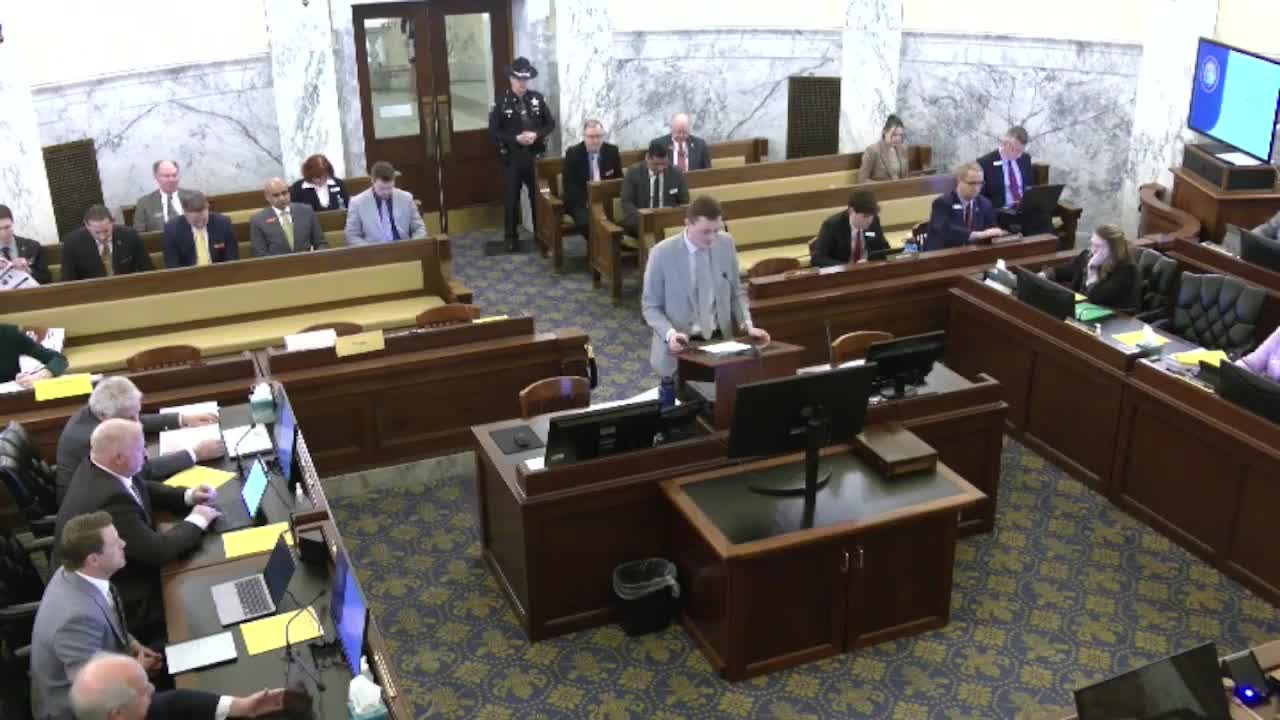
Kelvin McGurkin, a budget and policy analyst with the Legislative Services Office, presented the Idaho State Liquor Division’s FY2024 financial summary and FY2026 budget requests to the Joint Finance-Appropriations Committee.
McGurkin told the committee the division distributed $118.3 million in FY2024. That total included a 2% surcharge on liquor sales that provided about $6.7 million to the court services fund; after the division accounts for operating costs and required fund balances, available funds are split so roughly half is distributed to cities, counties and magistrate courts (about $56.3 million) and the remainder is used for fixed statutory distributions, Peace Officer Standards and Training, and transfers to the general fund.
The division reported $319.1 million in total sales in FY2024, with operating costs representing about 63% ($202 million) and reported net income of $116.6 million. McGurkin said the division’s free fund balance declined from about $38 million in FY2022 to $14 million in FY2024, attributing the decline to higher-margin direct-to-consumer COVID-era sales that have since been spent down.
Andrew Arulinandam, director of the Idaho State Liquor Division, and staff answered committee questions about the division’s personnel and proposed spending. The division’s FTP (full-time position) cap is 257.25, with roughly 210 full‑time retail positions, about 185 part‑time store clerks (not included in FTP counts), and 106 contract liquor stores. The division reported a filled FTP rate of about 93% and typically spends about 96% of appropriated personnel dollars.
The division requested several FY2026 appropriations: $131,400 in ongoing dedicated funds (including $57,400 to raise temporary retail staff from $15.00 to $15.45 per hour and $72,000 for shrink‑wrap costs under a new freight contract); one‑time requests to implement document management software recommended by OITS; $200,000 for 70 network security firewalls and 70 managed switches to complete a network modernization that moves stores from DSL/T1 to cellular connectivity; $100,000 to upgrade the agency website to meet Web Content Accessibility Guidelines; and $980,300 in one‑time replacement items for retail stores (about $775,000) and warehouse motorized equipment and two modified fleet vehicles (about $205,000). The division also requested $235,000 for IT and security replacement items (batteries, servers, store security systems).
Director Arulinandam explained the $100,000 website request by saying the agency consulted an accessibility expert and compiled multiple items that must be fixed to avoid exposure to lawsuits brought by private attorneys who monitor public websites for ADA compliance: “There are indeed other items. I don’t have the exact list. We did consult with an expert, and he gave us a list of items that we would need to upgrade to be in full compliance,” he said.
Committee members questioned whether incremental pay increases for temporary store clerks would reduce turnover. Arulinandam said a prior hourly increase (to $15) reduced annual turnover from roughly 140% to about 84%, but he cautioned that pay is only one factor: “We don’t want to be too presumptuous to say that just an increase will solve all our problems,” he said. Tony Farah, the division’s chief deputy and CFO, clarified that temporary store clerks are state employees (not hired through an outside temp agency) and that they do not receive automatic statewide change‑in‑employee‑compensation (CEC) adjustments; targeted line‑item enhancements are the division’s vehicle to raise those rates.
Committee members also discussed contract stores in rural areas. The director said contract stores receive product from the division and the contractor supplies and pays store labor; placement of stores reflects market and population analyses so the division tries to avoid opening stores that would fail financially.
The presentation included performance and budget breakdowns the analysts noted are available in the Legislative Budget Book (LBB) agency pages. McGurkin and the director said the requested one‑time investments are intended to modernize store infrastructure and shore up IT security and accessibility.
The director concluded by thanking the committee and stressing the division’s role as a revenue‑generating and customer‑facing state agency.
Ending: The committee did not take any formal votes on the Liquor Division’s requests during the hearing; analysts directed members to the LBB for detailed line‑item tables and statutory distribution formulas referenced in the presentation.