Get Full Government Meeting Transcripts, Videos, & Alerts Forever!
Get email alerts on the Personnel Compensation topic
No spam. Unsubscribe anytime.
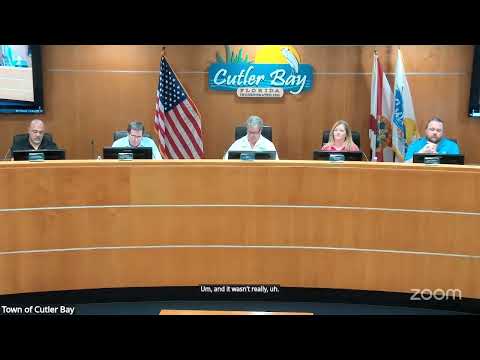
Cutler Bay councilors debate changing employee COLA formula, discuss caps and timing
Summary
At a May 21 workshop, Vice Mayor Mike Callaghan urged the council to change how the town calculates cost-of-living adjustments (COLA), proposing a return to the Consumer Price Index used by Social Security and a cap for high earners; other council members urged keeping the Miami‑Dade modifier to retain staff and protect recruitment.
Vice Mayor Mike Callaghan proposed revising the Town of Cutler Bay’s method for calculating employee cost‑of‑living adjustments during a council workshop on May 21, saying the town’s current approach produces higher percentages than Social Security and is difficult to explain to residents on fixed incomes.
Callaghan said the town’s COLA calculation was moved in 2017 from the national urban Consumer Price Index (CPI) used by Social Security to a Miami‑Dade/Broward/West Palm Beach regional modifier when Resolution 17‑30 codified COLA in the budget process. “I’m not suggesting at all that COLA be removed,” Callaghan said, but he urged reverting to the standard urban CPI and adding a cap on COLA payments either by salary range or a fixed dollar threshold.
Why it matters: Council members said the change affects hiring and retention as well as the town budget and political messaging to residents who receive Social Security. Councilmember Duncan and others argued that using the South Florida modifier better reflects local costs and helps the town retain employees.
Discussion highlights
- Calculation method: Callaghan said COLA in Cutler Bay has been based on the Miami‑Dade regional modifier since Resolution 17‑30 (2017) and recommended returning to the national urban CPI used by Social Security. He also proposed fixing an annual reference month — August — so the town has a single published figure before budget season.
- Caps and alternatives: Callaghan proposed a cap that would stop COLA once an employee’s pay exceeded a dollar threshold rather than excluding employees who have reached a pay range maximum. Councilmember Ramirez recommended considering a fixed bonus in place of a percentage or a longevity step every five years to reduce budget volatility while keeping retention incentives. Councilmember Lord said many employees are long‑tenured and cautioned that capping COLA could “punish our long‑term and, actually, all our employees.”
- Local market vs. Social Security: Councilmember Duncan said Cutler Bay’s payroll is small (61 employees, 42 full‑time) and argued the Miami‑Dade modifier reflects the local market, noting that COLA costs have averaged about 0.57% of the operating budget over seven years.
Direction and next steps
The council did not vote on changes at the workshop. Members asked staff to provide corrected historical COLA figures (the presentation contained a year‑shift error) and agreed to let Vice Mayor Callaghan work with staff to draft a proposed resolution that would specify the calculation month and other details. Mayor Tim Mirabaugh summarized the outcome: the council would continue discussion later and expected a staff‑drafted resolution for formal consideration.
Speakers
- Mike Callaghan, Vice Mayor, Town of Cutler Bay (government) - Tim Mirabaugh, Mayor, Town of Cutler Bay (government) - Councilmember Duncan (government) - Councilmember Lord (government) - Councilmember Ramirez (government) - Ralph Casal, Town Manager, Town of Cutler Bay (government)
Authorities
- resolution 17‑30 (town resolution referenced by Vice Mayor Callaghan; 2017 codification of COLA in Cutler Bay budget process) - Town charter (COLA provision for town council referenced)
Clarifying details
- Proposal elements discussed: revert COLA calculation to the national urban CPI (the Social Security index); add a cap tied either to a salary range maximum or a fixed dollar threshold; fix the reference month for calculation (August suggested) to align with budget timing; treat merit pay separately. - Town staffing counts cited during discussion: 61 total employees, 42 full‑time, 19 part‑time; 59 employees eligible for COLA (as stated by Councilmember Duncan).
Community relevance
- Geographies: Town of Cutler Bay, Miami‑Dade County - Impact groups: town employees, active adults/seniors receiving Social Security, taxpayers
Meeting context
- Engagement level: extended workshop discussion, multiple councilmembers spoke, staff involvement (finance history requested), unresolved policy change — next steps assigned to Vice Mayor Callaghan and staff - Implementation risk: medium (would require resolution amendment and budget adjustments)
Provenance
- topicintro: {"block_id":"575.68","local_start":0,"local_end":120,"evidence_excerpt":"Thank you very much, mister mayor... provide some clarity direction on on cola."} - topfinish: {"block_id":"8286.19","local_start":0,"local_end":40,"evidence_excerpt":"...I'll let the vice mayor see if he wants to draft up a resolution for us to consider."}
sections:{"lede":"Vice Mayor Mike Callaghan proposed revisions to the town's cost‑of‑living adjustment policy at a May 21 workshop, urging a return to the national Consumer Price Index and recommending a cap for high earners.","nut_graf":"Council members debated fairness to long‑service staff, local cost differences in Miami‑Dade County, and ways to limit budget volatility; no ordinance or resolution was adopted but the vice mayor will draft language for council consideration.","ending":"Council members asked staff for corrected historical COLA figures and agreed to take the vice mayor's draft up at a later meeting for formal action."},