Get Full Government Meeting Transcripts, Videos, & Alerts Forever!
Get email alerts on the Street Safety Vision Zero topic
No spam. Unsubscribe anytime.
BLA says traffic crashes cost SF about $2.5 billion over five years; departments and advocates call for new Vision Zero policy
Summary
At a May 19 Land Use and Transportation Committee hearing, the Budget and Legislative Analyst reported that traffic collisions imposed roughly $2.5 billion in economic costs to San Francisco between 2018 and 2022 (adjusted to 2024 dollars). Public health, SFMTA and SFPD discussed data, tools and enforcement; advocates and residents urged the city
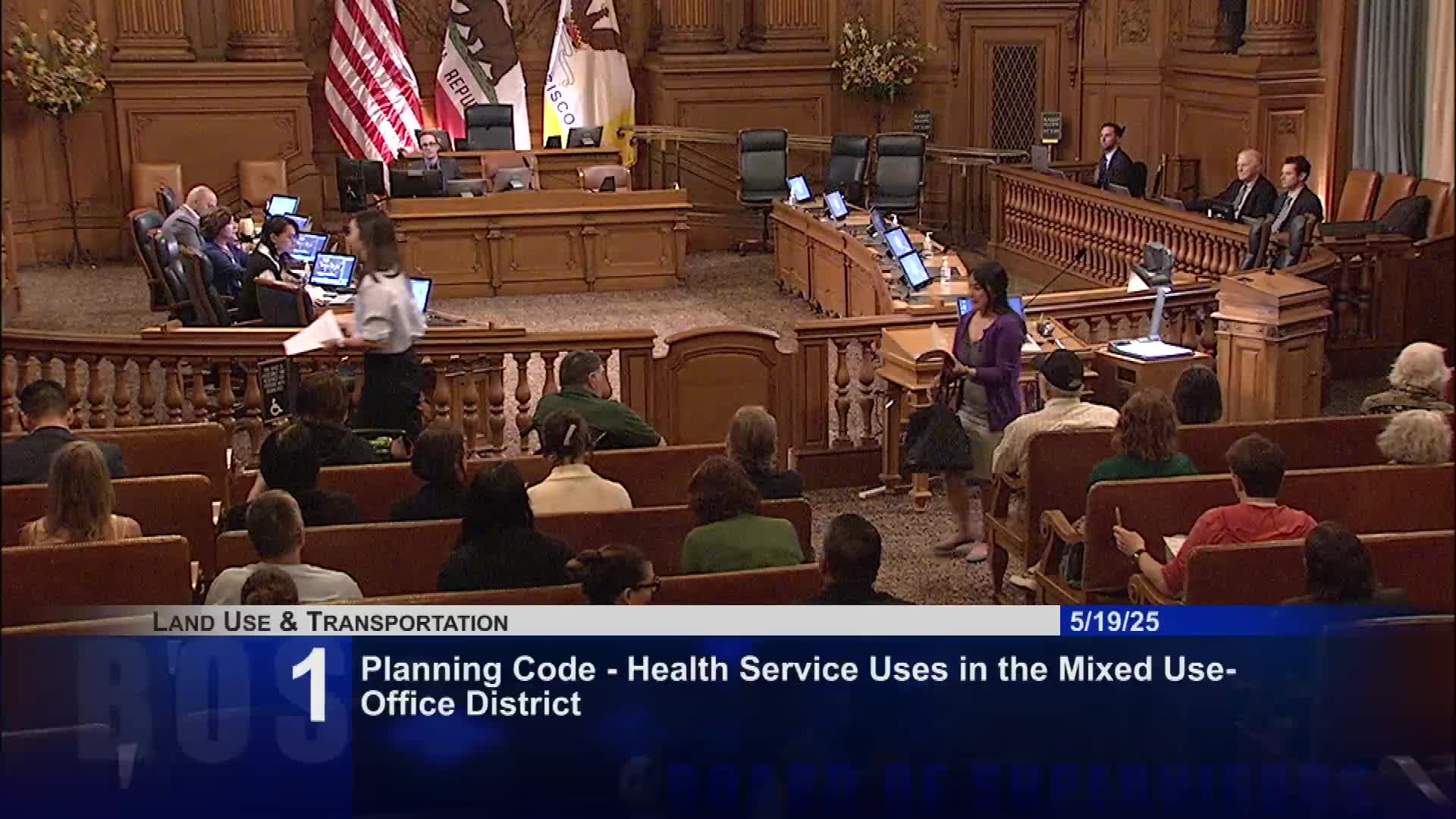
The Land Use and Transportation Committee of the San Francisco Board of Supervisors held a May 19 hearing on street safety and the economic impacts of traffic collisions, receiving a report from the Budget and Legislative Analyst (BLA), presentations from the Department of Public Health (DPH), the San Francisco Municipal Transportation Agency (SFMTA) and the San Francisco Police Department (SFPD), and testimony from community groups and residents urging a renewed Vision Zero policy.
Fred Brusso of the BLA said the office used a national National Highway Traffic Safety Administration (NHTSA) methodology to estimate unreported crashes and translate national cost categories to San Francisco. Using reported crash data and the NHTSA adjustment ratios, the BLA estimated 92,799 total crashes in San Francisco between 2018 and 2022 (including unreported events) and total economic costs of roughly $2.14 billion for that period, which the office adjusted to about $2.5 billion through 2024 to reflect cost-of-living changes. The BLA also identified city settlements and judgments of approximately $61.4 million from 2020–2024 related to traffic collisions involving city vehicles, plus about $243,500 in settlements tied to the city’s street design and infrastructure.
Iris Hsu, lead epidemiologist for Vision Zero at DPH, presented fatality and severe-injury trends and demographic patterns from the department’s 2023 annual fatality report and the biannual severe injury report. DPH data show pedestrians are the most vulnerable road users — representing 50% or more of traffic fatalities since 2014 — and seniors were overrepresented among fatalities in 2023 (seniors accounted for 38% of traffic fatalities while representing 18% of the city’s population). DPH said 65% of 2023 traffic fatalities occurred on the Vision Zero High Injury Network (VZHIN) and 44% of the network’s miles are in regional equity priority communities.
Shannon Hake and Kimberly Leung of SFMTA described the agency’s engineering and programmatic tools: quick builds (low-cost paint-and-post treatments), left-turn calming, signal timing changes, pedestrian head starts, and automated enforcement. SFMTA said quick-build projects have reduced vehicle speeds by up to 20% at treated locations and that crashes involving people on bikes fell by about 25% while pedestrian-involved crashes fell by more than a third in some evaluations. SFMTA reported 18 automated speed cameras active issuing warning violations (rising to 26 in the coming days and 33 authorized sites under the pilot) and said it operates about 19 red-light camera intersections. The agency described a “follow the paving” practice to implement Vision Zero treatments when streets are repaved, and it urged ongoing data-driven evaluation of projects.
Captain Peter Shields of SFPD’s Traffic Enforcement Division described enforcement priorities and operational constraints. He said traffic-specific staffing has fallen: the department previously had approximately 80 officers dedicated to traffic enforcement and currently has 16. SFPD described a directed enforcement model and a rotating WAVES enforcement program (short, surprise enforcement shifts at high-injury locations) and said it coordinates with SFMTA and DPH data when deploying enforcement.
Public comment featured residents, pedestrian-safety advocates and neighborhood groups calling for a renewed, time-bound Vision Zero policy with clear interagency accountability and an adoption timeline. Multiple speakers urged the Board and mayor to adopt a new Vision Zero policy by July 30 and a detailed implementation plan by September 30, citing the recent spike in fatalities (42 deaths in the previous year) and the distribution of serious injuries on the city’s High Injury Network. Community groups including Walk San Francisco and Walk SF-affiliated representatives urged immediate action on proven, low-cost tools (quick builds, speed cameras, daylighting) and better interagency reporting.
The chair moved to file the hearing; the motion passed on a roll-call vote (Vice Chair Chen — I; Supervisor Mahmood — Aye; Chair Melgar — Aye). Committee members asked the departments to improve data reporting and interagency coordination and indicated a desire to pursue a new Vision Zero policy and a time-bound plan.