IT requests $hundreds of thousands in capital, security and staffing needs for FY2026
Loading...
Summary
Rockwall County IT presented FY2026 budget requests including replacement of end-of-life storage, network refreshes, a multi-factor-authentication rollout to meet CJIS guidance, new security monitoring (SIEM), evidence cloud storage and a proposed personnel reclassification/addition estimated at $76,000.
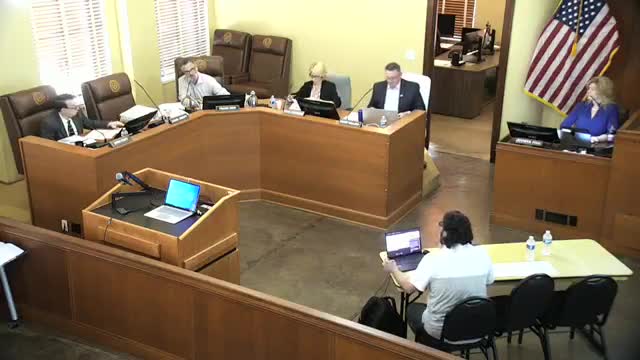
Rockwall County IT director Brian Crenshaw told the commissioners court during its June 16 budget workshop that the department’s FY2026 request centers on several end-of-life hardware replacements, new cybersecurity services tied to Criminal Justice Information Services (CJIS) guidance, and a modest staff reorganization.
Crenshaw listed capital options for the county’s core storage array (the SAN). He said the county currently uses two array “boxes” purchased in 2020 and 2021, with about 30 terabytes of physical capacity now and roughly 20 terabytes used. Options presented were to pay annual support (about $7,000 per device, or roughly $14,000 a year total) and defer purchase; to purchase both replacement arrays now for about $155,000; or to stagger replacement (one next year, one the year after). The quoted replacement capacity is about 40 terabytes per unit, Crenshaw said.
Other capital items included 17 edge switches priced at about $5,800 each (a roughly $102,000 line item), replacement of 33 wireless access points due in 2027 (roughly $32,000), and audiovisual upgrades for the commissioners court projector and video distribution (about $19,000). Crenshaw also showed quotes to replace five Liberty Hall screens (vendor quote about $25,000) but noted commissioners could defer that work this year.
On cybersecurity, Crenshaw said a recent CJIS audit pushed the county toward system-level multifactor authentication (MFA) for Windows logins, not just for Office 365. He presented two vendor approaches: an on-premises solution (Imprivata) that would integrate badge readers for fast user switching and cost more up front, and a cloud-first option (Cisco Duo) that uses phone-based pushes or calls. Crenshaw said estimated ongoing costs for a countywide rollout (scaled from a 100-user example) would be roughly $42,000 per year for Imprivata and about $24,000 per year for Duo; he noted countywide deployment could push Imprivata “sneaking up on $50,000 a year.”
Crenshaw also recommended annual penetration testing and presented a quote from a vendor he trusted (he said the county paid about $18,000 for a 2024 pen test and sought a more thorough vendor for 2026). He asked the court to budget for a SIEM (security information and event management) service — Splunk was cited as an example — with a cloud subscription at roughly $25,000 per year to provide 3–6 months of rolling logs and real-time alerting.
The county phone system is near end-of-life for adding licenses, Crenshaw said. He presented multiple paths: a short-term “buy extra licenses” option (50 additional licenses estimated to buy time), an on-prem replacement option that would cost about $190,000 (or $275,000 for a more redundant configuration) and a cloud-hosted phone option with a lower upfront hardware cost (about $37,000) but higher ongoing monthly fees (roughly $3,600/month), which he projected could cost nearly $800,000 over 10 years.
Evidence storage tied to the district attorney’s intake system also drew extended discussion. Crenshaw showed annual growth in evidence uploads rising from about 550 gigabytes in 2019 to roughly 22 terabytes in 2023, and he said the county is approaching petabyte-scale concerns if trends continue. He proposed a hybrid approach that moves older or “cold” closed-case material into Wasabi cloud storage; he asked the commissioners to include about $17,500 in the IT budget for Wasabi storage and said the DA’s office would include an additional $14,000 in its budget to expand closed-case cloud storage (the DA’s request would buy about 336 terabytes in that model, Crenshaw said).
On maintenance agreements, Crenshaw noted savings from switching backup vendors (Rubrik replacing Avtech saved about $10,000 annually) but flagged rising costs in vendor support (for example, Cisco Smart Net increases due to more devices under support). He also described endpoint detection and response (MDR Blackpoint) and the county’s ongoing cloud and Microsoft license needs.
Staffing: Crenshaw asked to reclassify and reorganize the IT team so Colter (currently doing sysadmin work) would move fully to a systems-administrator role, Justin would be promoted to a support manager role, and the department would add one technician. He showed an estimated fully loaded personnel impact of about $76,000 for those adjustments (he said Erica/HR would confirm exact loaded costs). Crenshaw argued the county’s network and cloud footprint, plus a rising ticket count (from about 3,600 to about 4,200 per year), create sustained demand for additional senior infrastructure capacity.
Why it matters: Commissioners must weigh a mix of one-time capital purchases, ongoing subscription and support commitments and a personnel request as they craft a budget that balances short-term expenditures and long-term operational risk. The CJIS-driven MFA requirement and the growth in evidence storage each tie IT capital and operating budgets to county public-safety and criminal-justice obligations.
What’s next: Crenshaw asked commissioners to consider the trade-offs — buy now versus patch-and-defend — for major items such as the SAN and phone system; to accept a recurring security subscription for SIEM and pen testing; and to approve the proposed personnel reclassification and one additional technician if the court is comfortable with the loaded $76,000 impact.