Get Full Government Meeting Transcripts, Videos, & Alerts Forever!
Get email alerts on the Compensation Reclassification topic
No spam. Unsubscribe anytime.
Wausau committee approves reclassification of assessment department jobs over dissent about broader wage study
Summary
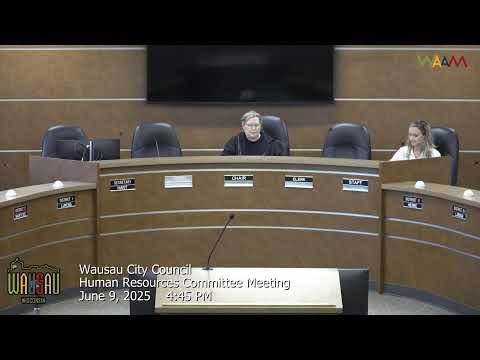
The Wausau Human Resources Committee approved reclassifications for several positions in the city assessment department on June 9, 2025, by a 4–1 vote after debate over whether to pursue a comprehensive citywide compensation study.
The Wausau Human Resources Committee on June 9 approved reclassifications for multiple positions in the city assessment department, voting 4–1 to accept the HR director’s recommended grade and step changes.
The HR director (name not specified) told the committee that a 2023 compensation review covered only 53 of the city’s roughly 124 unique job titles and that many job descriptions lack clearly identified compensable duties. “The job descriptions are really the impetus of all compensation studies,” the director said, arguing that limited data led the prior consultant to “slot” the assessor position instead of placing it in a data-driven grade.
The director recommended slotting the city assessor at a higher grade and implementing a lattice of changes across assessment roles. Specific recommended changes discussed included moving the assessor to a Level 5, updating the level-2 position to grade 16, raising the deputy assessor to level 12 (commensurate with the deputy finance director), moving one property appraiser from step 10 to step 11 and another from step 9 to step 10, and leaving the assessment technician unchanged.
Committee members asked whether the committee should adopt mid-range or maximum pay ranges. The HR director opposed starting anyone at the maximum to avoid “redlining” base pay and said the recommended changes preserve steps for future growth. Several members supported the immediate reclassifications as corrective measures for internal equity; one member said the assessor position “appeared well below that of the other department heads.”
At least one committee member objected to approving individual reclassifications before conducting a citywide market compensation study. That member cited the 2023 Gallagher report’s recommendation that the city conduct a comprehensive market compensation study every three to five years and urged the committee to include a full study in the 2026 budget cycle rather than approve piecemeal adjustments. The same member said they would “vote against this” and later followed through on that vote.
Committee members who supported the changes said a comprehensive study would take time and that the recommended reclassifications address immediate inequities and risks tied to the assessor role, including potential costs when personnel are not qualified for the position.
Procedural items earlier on the agenda included approval of the May 12, 2025, minutes (motion recorded as moved by Martins, seconded by Killian; approved unanimously) and the May 2025 human resources report, which the committee placed on file.
The motion to accept the assessment department reclassification passed 4–1. The transcript records the vote as “4 to 1” but does not provide an individual roll-call for that motion in the public record.
The committee’s debate repeatedly returned to two themes: (1) the need to correct apparent internal pay inequities in the assessment function now, and (2) the committee’s broader obligation to commission a comprehensive compensation study and to ensure job descriptions are improved before a citywide study is run.
The committee’s action changes pay-grade structure for several assessment department positions but does not itself appropriate new funds; budgetary effects and implementation timing were discussed as items for the budgeting process.
Members indicated they would consider a request for a full compensation study in the 2026 budget cycle, with the expectation that an RFP and consultant selection would occur in 2026 and a study’s recommendations would be implemented in subsequent budgets if approved.