Get email alerts on the Air Quality topic
No spam. Unsubscribe anytime.
Michigan regulators propose housekeeping updates to Part 10 stack‑testing rules
Summary
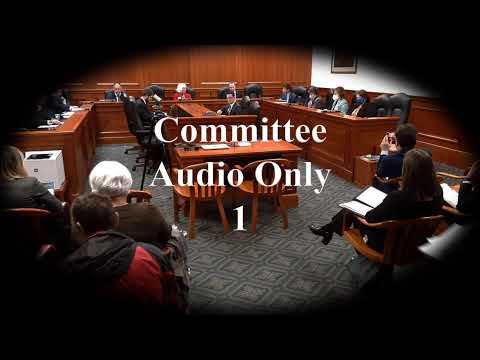
The Department of Environment, Great Lakes and Energy on Thursday told the Joint Committee on Administrative Rules that proposed updates to Part 10 of Michigan’s Air Pollution Control Rules are largely administrative and meant to align state rules with federal standards.
The Department of Environment, Great Lakes and Energy on Thursday told the Joint Committee on Administrative Rules that proposed updates to Part 10 of Michigan’s Air Pollution Control Rules are largely administrative and meant to align state rules with federal standards.
Sydney Hart, legislative liaison for the Department of Environment, Great Lakes and Energy, said the package clarifies how intermittent testing and sampling are conducted and updates references to technical guidance. "The changes before you today are largely administrative and clarifying," Hart said. "While modest, they are important for aligning our rules with current testing protocols and federal Clean Air Act requirements."
The department described Part 10 as the portion of Michigan’s air rules that governs intermittent stack testing and sampling and said those procedures are referenced across the broader air pollution control rules. Tom Shanley, Air Quality Evaluation Manager, said the department observes about 300 stack tests per year and that most stack tests pass, though some tests reveal compliance problems that require follow‑up.
The revisions described by EGLE staff fall into several categories: updated references to current technical publications; consolidation and clarification of the department’s authority over performance testing; clearer definitions and timing for performance test notifications and the start of a stack test; and clarified references for testing protocols used in the automotive industry. Hart said stakeholder engagement began in late 2019 and that the department convened a work group including environmental consultants, industry representatives, academics and environmental organizations.
The department said it held a public hearing—both virtual and in person—on March 20 and received one written public comment from Consumers Energy. Hart told the committee Consumers Energy’s comments led to adjustments such as removing outdated permit‑to‑operate terminology, aligning temperature references with U.S. Environmental Protection Agency standards, and updating language on gasket materials and thermometer calibration methods. She also said Consumers Energy requested allowing testing under alternate operating conditions, a request the department declined because the rules already provide flexibility.
Committee members pressed EGLE staff on specifics. Representative Wozniak asked whether asbestos gaskets remain standard; Shanley said industry practice does not use asbestos gaskets and that the rule text was updated to reflect current materials and terminology. Committee members also asked whether Michigan’s standards are stricter than federal requirements; Shanley replied that state requirements align with federal requirements rather than being uniformly more stringent.
Hart and Shanley characterized the changes as housekeeping and not imposing new compliance requirements on industry. "We're not implementing any new regulations or requirements on industry or anyone else for that matter," Representative Johnson, summarizing the department’s testimony, said during questioning.
The department concluded by saying the package modernizes regulatory language, aligns state rules with federal guidance and supports consistent implementation across Michigan. No formal vote or committee action was recorded during the hearing.
The department said it would answer follow‑up questions if the committee requested additional technical details.
AI generated
The text on this page is AI generated. Summaries, highlights, analysis, and video transcripts are all produced from the original source material.
AI can make mistakes, so if you spot one, and we will fix it for everyone.
Note: the source content is unaltered by us. Any content source we link to, be it a video, an audio recording, or a document, is presented exactly as its publisher released it. That publisher is usually a government body, sometimes an individual official or another organisation.