Get Full Government Meeting Transcripts, Videos, & Alerts Forever!
Get email alerts on the Human Services Budget topic
No spam. Unsubscribe anytime.
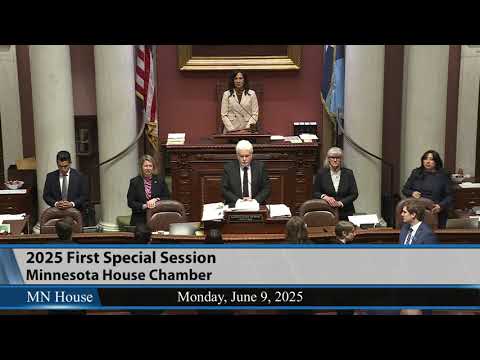
House passes human services omnibus with $1.1B target reductions; sponsors cite compromise and safeguards
Summary
The Minnesota House passed House File 3, a human services omnibus with spending, rate changes and program‑integrity measures designed to meet a roughly $1.1 billion reduction target.
The Minnesota House passed House File 3, a human services omnibus package that was the result of a bipartisan, bicameral working group. Chair Noor and co‑chair Schumacher led the floor explanation: sponsors described a package that both adds targeted spending (workforce contract funding, substance use disorder rate changes, a proposed 50‑bed civil commitment facility) and advances program‑integrity and cost‑containment measures to meet a roughly $1.1 billion reduction target over the next four years.
Sponsors emphasized the difficulty of the work and framed the package as a compromise aimed at reducing the growth in program spending while protecting core services. New spending items in the package include funding for negotiated wage and training provisions for personal care and caregiver staff (SEIU contract implementation), increases for certain substance use disorder residential rates (some tied to Medicare benchmarks), funding for a 50‑bed structure described as the Miller Building (approximately $20 million for construction as discussed on the floor) and investments in respite and child‑focused services.
On the reduction side, conferees adopted a package of program‑integrity measures, caps on inflation indexing for certain waiver and nursing home rates (an urban CPI cap of 4% was cited), documentation requirements and tighter criteria for some rate exceptions in developmental disability services, and new work groups with county, tribal and provider participation to identify further long‑term savings. The bill phases out certain legacy payment programs and includes contingent reductions if specified work‑group targets are not met.
Lawmakers openly debated the fairness of targeting those with disabilities and the elderly for savings. Critics on the floor argued the cuts place the largest burden on people with disabilities and that many frontline providers remained financially vulnerable. Sponsors said the objective was to spread reductions while avoiding wholesale wait lists or sweeping program eliminations.
After debate the clerk called the roll: 96 ayes and 37 nays. Members said implementation tracking, provider outreach and further negotiations with stakeholders will be central to the next steps.
Key numbers and provisions discussed on the floor: a roughly $1.1 billion target reduction over four years, a $20 million construction amount cited for a proposed 50‑bed civil commitment facility, new certification and documentation rules for EIDBI and DWI‑related services and an operating cap mechanism for some nursing‑facility reimbursement streams tied to a phase‑in schedule.