Get Full Government Meeting Transcripts, Videos, & Alerts Forever!
Get email alerts on the Health Workforce topic
No spam. Unsubscribe anytime.
Supporters tell Ohio committee compact would ease interstate practice for respiratory therapists
Summary
Proponent testimony said Senate Bill 149 would enter Ohio into the Respiratory Care Interstate Licensure Compact to allow licensed respiratory therapists to practice across member states, improve access in emergencies and ease licensure burdens; the committee took testimony and did not act.
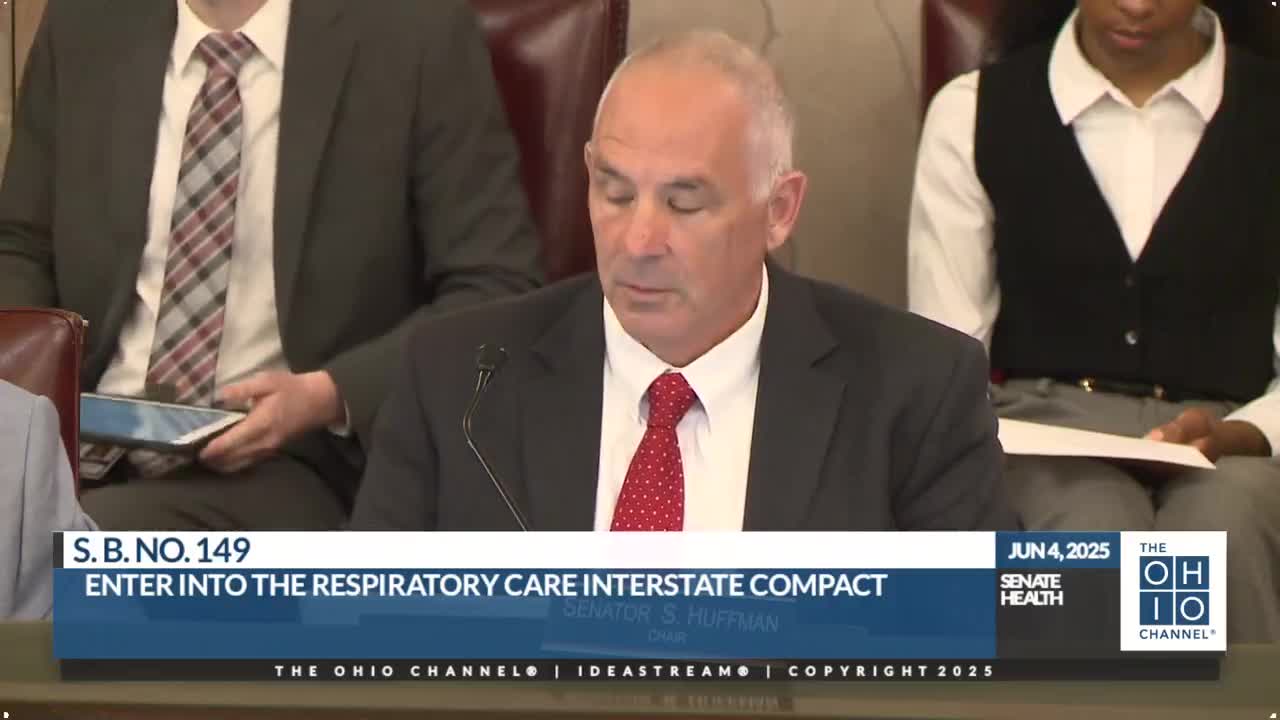
Susan Collier (Ohio Society for Respiratory Care) told the Ohio Senate Health Committee that Senate Bill 149 would enter Ohio into the Respiratory Care Interstate Licensure Compact to facilitate interstate practice and improve public access to respiratory care services.
Collier said the compact allows respiratory therapists licensed in one member state to practice in other member states under compact privileges while preserving state regulatory authority. She told the committee the compact supports rapid deployment of respiratory therapists in public-health emergencies and eases administrative and cost burdens for licensees, including active-duty military members and their spouses.
The witness said the American Association for Respiratory Care finalized compact language in December 2024 and the Ohio Society for Respiratory Care shared that language with the State Medical Board of Ohio in January 2025; the State Medical Board recommended a minor change, which supporters said was incorporated into the bill as introduced. Testimony explained the bill would require the State Medical Board to appoint a board member to the Respiratory Care Licensure Compact Commission and to submit licensee data to the commission’s database for purposes described in the compact.
Supporters compared the measure to existing interstate compacts for nurses, physicians and other professions and told the committee the compact would help address workforce shortages by enabling cross-state practice. The committee accepted proponent testimony; no vote was recorded during the hearing.