Get Full Government Meeting Transcripts, Videos, & Alerts Forever!
Get email alerts on the Mdot Budget Structure Section 107 topic
No spam. Unsubscribe anytime.
House appropriations subcommittee questions MDOT structure, Section 107 design and engineering budget
Summary
Michigan Department of Transportation officials told a House appropriations subcommittee that Section 107 (design and engineering services) covers a broad set of functions across MDOT bureaus and regions, and that committee members requested clearer dollar-level breakdowns tied to the appropriation lines.
At a meeting of the Michigan House Appropriations Subcommittee on State and Local Transportation, Michigan Department of Transportation officials described the agency’s organizational structure and the scope of Section 107 of the state transportation budget, which funds design and engineering services.
Demetrius “Dee” Parker, bureau director for MDOT’s Bureau of Development, told the committee, “It’s a big portion of the budget. It’s got 1,600 full time, employee positions, and it covers everything from capital construction, development, TSC offices, welcome stations, rest areas, regional offices … permits, research, highway operation, geotech, real estate, maintenance.”
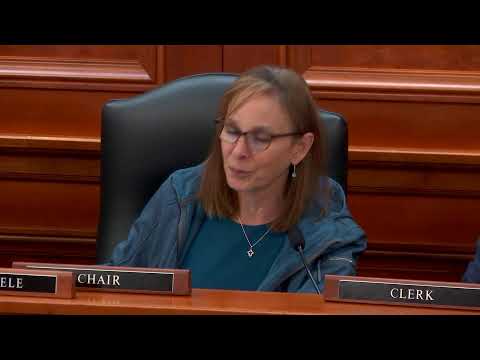
The committee sought more granular budget detail. Chair Representative Steele and other members asked MDOT to provide a clearer, dollar-level mapping from appropriation lines to activities — for example, how federal funds flow into Transportation Service Centers (TSCs), regional offices and central bureaus.
Why it matters: Section 107 funds staff and consultant work that design, inspect and deliver road and bridge projects statewide. Committee members said they need clearer allocation figures to assess whether appropriations match workload and policy priorities.
What MDOT described
Parker and Patrick McCarthy, identified as from MDOT’s Bureau of Finance and Administration, presented an organizational overview that places program development and delivery work primarily in regions and TSCs while central offices develop standards, policies and business services.
Parker summarized MDOT’s responsibilities and scale: the state has about 22,000 road miles and roughly 11,000–12,000 bridges statewide; MDOT is responsible for approximately 9,600 miles and about 4,800 bridges. He described three spending “buckets” within Section 107: region/TSC program development and delivery (PDV), bureau-level (assist operations/central office) costs (SOM), and business services (central support including the Office of Business Development and executive highway administration staff).
Parker said a slide the department provided ties headcount and FTE allocations to regions and bureaus but acknowledged the committee’s request for a clearer dollar breakdown. McCarthy added that the state accounting system Sigma is the source for appropriation and expenditure coding and that many federal funds for roads and bridges are expended through the capital outlay road-and-bridge appropriation rather than the Section 107 buckets.
Committee questions and next steps
Members probed staffing and region-specific roles (for example, the mix of resident engineers, assistant engineers, construction technicians and development staff at TSCs), consultant vs. in-house work, and how federal programs for research and planning are budgeted. Parker and McCarthy agreed to return follow-up reports: (1) a clearer dollar-level mapping of the Section 107 appropriations and how federal funds appear in those lines and (2) additional detail on FTE counts by region and bureau.
Ending
The committee adjourned after adopting the May 21 minutes by unanimous consent. MDOT officials said they would provide the requested supplemental reports and more accessible breakdowns derived from Sigma.