Get Full Government Meeting Transcripts, Videos, & Alerts Forever!
Get email alerts on the Municipal Website topic
No spam. Unsubscribe anytime.
Tualatin previews redesigned city website emphasizing search, accessibility and local photos
Summary
City staff showed council draft pages from a JuiceBox redesign that will move the site to WordPress/Gutenberg, add a persistent search bar and accessibility checks, and launch this fall; staff will begin content migration and integrations next.
Tualatin city staff on May 27 previewed a near-final redesign of the city website that emphasizes a prominent search function, improved mobile access and built-in accessibility tools, with a target to finish the project this fall.
Deputy City Manager Megan George said the city signed a contract with JuiceBox last July and is moving into phase three of a six-phase project that will include website development, testing and staff training, content migration and an anticipated launch later this year. "Our website is our number-one communication tool in the city," George said, citing the 2023 community survey that found 65% of respondents call it a major information source and 29% a minor one.
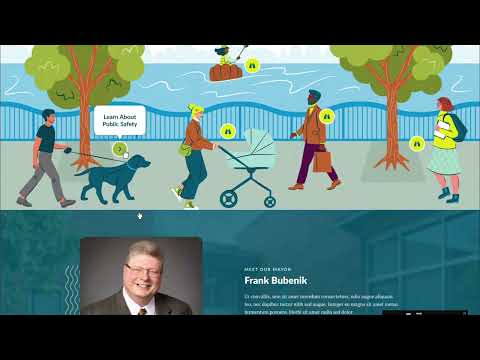
The draft pages shown to the council display a persistent green search bar across the top, a large landing-page search field, monthly-featured photo blocks, calendar and news preview blocks, and custom illustrations intended to reflect Tualatin’s character. Heidi Stanley, the city’s creative communications and marketing program manager, demonstrated department landing pages — including a library landing page with color coding for audiences such as teens — and said the content-management system includes an accessibility compliance tool to check content before publication.
Staff said the city currently averages roughly 30,000–40,000 website visits per month and recorded nearly 100,000 visits in October of the previous year. George and Stanley said most users arrive on mobile devices, primarily Apple devices, which shaped the design choices. JuiceBox also delivered a style guide and modular “content blocks” that staff will use to assemble pages in WordPress’s Gutenberg editor.
Council members asked how features on the current site map to the redesign. Councilor Pratt asked whether the banner of upcoming events remains visible without scrolling; George said feature blocks will appear below the hero area and can be swapped by staff. Councilor Brooks asked whether project pages such as Veterans Plaza could include community photos and social-share functions; George said the projects map will include images and flexible layouts and that the city will solicit community-submitted photos in newsletters and social posts.
On search and content organization, staff said the new site will index keywords more effectively, support tagging (for example, on an aggregated forms page) and let users filter forms by department and purpose. On CMS and maintenance, staff said the city is migrating to WordPress (Gutenberg) to allow easier content edits by staff, include auto-notifications for stale pages and reduce reliance on outside developers. Staff also said the development phase will determine which third‑party integrations (for example, language translation tools and TrackIt permit tracking) will be used.
Stanley said staff will offer trainings and cross-training so departments can maintain content, and noted the communications team is already using elements of the new palette in the city newsletter. George summarized the near-term schedule: the project is transitioning into website development and integrations (phase 3), with testing, training and content migration to follow, and staff currently projects completion this fall.
The council did not take any formal action on the item; staff invited additional feedback and will continue the design and integration work in the coming months.