Get Full Government Meeting Transcripts, Videos, & Alerts Forever!
Get email alerts on the Airport Development topic
No spam. Unsubscribe anytime.
SFO development plan DEIR draws public concern over air quality, noise and induced demand
Summary
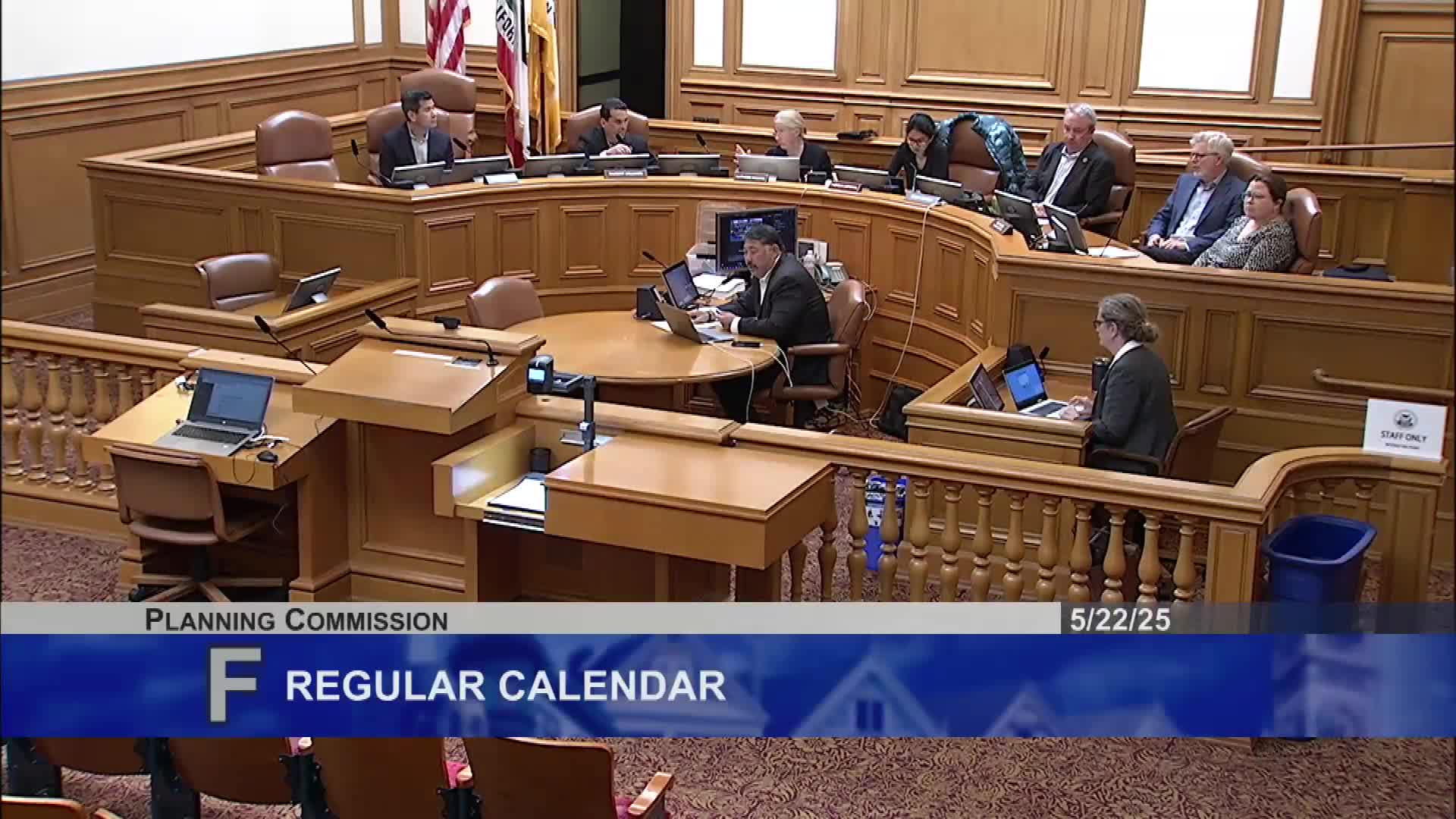
San Francisco Planning Commission held a public hearing May 22 on the San Francisco International Airport's Recommended Airport Development Plan draft environmental impact report, during which airport staff described project components and residents raised concerns about noise, air pollution and whether the plan would spur more passengers and flights.
San Francisco Planning Commission held a public hearing May 22 on the San Francisco International Airport's Recommended Airport Development Plan draft environmental impact report, during which airport staff described project components and residents raised concerns about noise, air pollution and whether the plan would spur more passengers and flights.
The draft EIR, published April 16, 2025, assesses long-range land-side projects such as a new boarding area, a multimodal central hub and an aircraft maintenance hangar. Planning staff said written comments will be accepted through 5 p.m. June 2, 2025, and responses will be published in a later response-to-comments document.
Kei Zushi, environmental case coordinator for the Planning Department, told the commission the draft EIR "concludes that the project with mitigation would result in less than significant impacts" for most topics but that the project would produce "significant and unavoidable operational air quality impacts." Zushi outlined three CEQA alternatives analyzed in the draft, including a reduced-development alternative and a no-project alternative.
Audrey Park, environmental affairs manager at SFO, described representative RADP projects and funding. "There are no taxpayer funds used for SFO projects," Park said, adding RADP capital development would be paid from airport-generated revenues. She said the plan would not change runway configuration or flight paths, which are managed by the Federal Aviation Administration.
Several members of the public told commissioners they do not accept the DEIR's conclusions on growth and cumulative impacts. "This expansion is more likely part of a much larger marketing strategy to entice more customers to use SFO, which will inevitably increase the amount of flight traffic, noise pollution, and chemical pollution over residents' homes," said Liz Lopez, a San Francisco resident. "Please do not accept the environmental review as it is."
Leo Martin, president of the Mothers and Fathers Committee of Bayview Hunters Point, said his neighborhood already faces high pollution burdens: "This will only bring more pollution to our neighborhood, where our impact is already so big."
An unnamed commenter compared the draft's methods unfavorably to European practice and urged the commission to require more detailed, modern analytics. Commissioners asked staff and airport representatives for additional detail in specific areas. Commissioner Brown said she appreciated the DEIR's identification of "significant and unavoidable" air-quality impacts and looked forward to reviewing responses. Commissioner Imperial requested updated traffic and circulation data and asked whether international noise and emissions metrics were being considered.
Planning staff repeatedly reminded speakers that the hearing is limited to the DEIR's adequacy, accuracy and completeness under the California Environmental Quality Act. Written comments are due to Kei Zushi at CPC.SFORADP@sf.gov or mailed to 49 South Van Ness Ave., Suite 1400, San Francisco, by 5 p.m. June 2, 2025. Staff said it expects to publish responses to comments in fall 2025 and to schedule an EIR certification hearing thereafter.
Commissioners did not take a final vote on the document at the May 22 hearing; the item remained at the review-and-comment stage.