Get Full Government Meeting Transcripts, Videos, & Alerts Forever!
Get email alerts on the Procurement Reform topic
No spam. Unsubscribe anytime.
Bill to align judicial review of OPA procurement decisions with administrative law advances to third reading
Summary
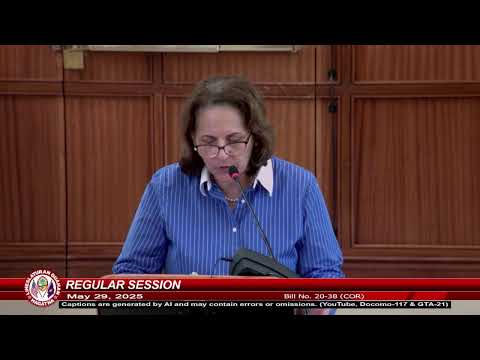
Bill 18‑38 COR, which would change judicial review of Office of Public Accountability procurement decisions to the writ‑of‑review process under existing administrative law, was moved to third reading after senators debated costs, remedies and separation‑of‑powers concerns.
Bill 18‑38 COR, which would amend judicial review procedures for Office of Public Accountability (OPA) determinations in procurement appeals to follow writs of review under the Administrative Adjudication Law (7 GCA Chapter 31), was placed on the third reading file after floor debate.
The bill’s sponsor described the measure as a procedural reform that “would not alter the standard of review” but would move challenges away from civil litigation naming the OPA as a defendant and toward a petition for judicial review consistent with other administrative agencies. The sponsor cited a fiscal note and OPA analysis estimating annual legal costs of roughly $15,000–$20,000 tied to defending OPA decisions in civil suits and the lengthy delays discovery can cause.
Supporters, including senators who served on the committee, said the change would preserve the ability to appeal OPA decisions while reducing the agency’s litigation burden and speeding case resolution. Some senators invoked specific past litigation and the long timeline of prior high‑profile procurement disputes to justify reform. The sponsor thanked the OPA and counsel (identified in floor remarks as Attorney Thompson and Public Auditor Benjamin J. Cruz) for drafting a white paper supporting the change.
Questions raised on the floor included whether the proposed change would meaningfully alter parties’ substantive rights, how courts would handle remand requests, and concerns raised previously by the executive branch when a similar provision was vetoed in the prior legislature. One senator noted the governor’s prior veto message raised separation‑of‑powers considerations about authorizing the public auditor to seek certain writs; supporters said the current draft limited relief to procedural alignment and did not expand substantive enforcement powers.
No numeric roll‑call vote was recorded in the transcript; the author moved Bill 18‑38 COR to the third reading file and named cosponsors from the floor. The transcript records multiple senators urging speedier procurement outcomes and the OPA’s role in preserving procurement integrity, but it does not record the full text of committee amendments beyond what the sponsor summarized.
If enacted, the bill would direct courts to review OPA procurement determinations through the established administrative writ process, with the transcript indicating supporters expect reduced legal costs and shorter delays for contested procurements.