Get Full Government Meeting Transcripts, Videos, & Alerts Forever!
Get email alerts on the Audits Oversight topic
No spam. Unsubscribe anytime.
City councillors and port trustees agree audits and risk assessment should guide oversight; shared-services idea proposed
Summary
Council members and Port of Galveston trustees discussed the port audit schedule, recommended using formal risk assessments to prioritize audits, and explored shared services and possible audit-committee collaboration to increase transparency without politicizing audit work.
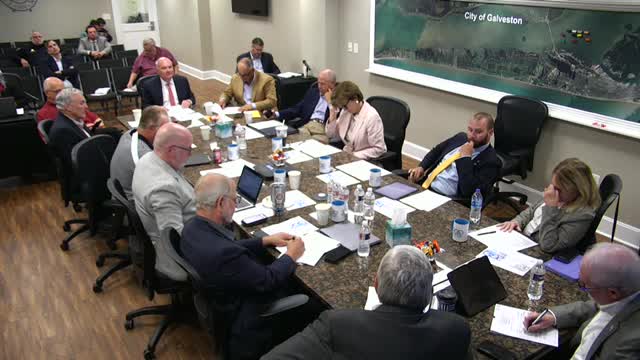
Port trustees and City of Galveston council members used a joint meeting to press for clearer audit planning and stronger oversight guardrails while cautioning against politically charged reviews.
"Audits are absolutely important for all entities," trustee Sheila Lidstone said, urging collaboration on audit scheduling and risk assessment. "We're happy to work collaboratively with the City of Galveston, with the staff, and the city council on any other audits that you believe are necessary for us to undergo."
The port trustees asked council to support regular audits of port operations. Council members and trustees agreed the starting point should be a formal risk assessment to identify the highest-priority audit targets — procurement, construction contracts and major revenue streams such as parking — and then build an audit plan from those risks.
"Risk assessment should drive what you're looking at," Council member Richard (last name not specified) said. "That's the right way to do it: have your auditor lead you in risk assessment so you're looking at the most important things."
Several participants emphasized that limited auditor staffing means a focus on high-impact areas is needed. Trustees proposed that existing committees (not necessarily creating new committees) — for example, a finance committee that includes city and port membership — could be the forum to coordinate risk priorities and avoid duplication.
Concerns about politicization of audits also surfaced. Council Member Alex (last name not specified) described an ongoing audit process that he said had become contentious and warned against audits that become "politically charged." He recommended clear governance and objective, documented audit scopes.
Shared services and staffing
Trustees and council members discussed the potential of shared services (procurement, finance, legal or IT) to realize efficiencies, but council members cautioned that the city is currently understaffed in several departments and that any shared-services move would require careful planning, governance and potentially shared funding for new positions.
City and port leaders agreed to keep the port audit on the city's audit plan and to conduct joint planning for the next audit cycle, with an eye to prioritizing audits that address large-dollar activities and construction contracts. Council members suggested the city could initially contract audit work if hiring new auditors is not feasible immediately.
Why this matters
Port operations involve substantial revenues and capital projects; trustees noted the port handles tens of millions of dollars annually and that core activities such as procurement and construction warrant prioritized audit attention. Council and trustees said better coordination and structured risk assessments will improve oversight, preserve public trust and reduce the chance of avoidable mistakes.
What's next
Council staff said they will integrate the trustees' input into the city's audit-planning cycle for the coming year and explore cooperative options for risk assessment and audit committee roles. Participants asked for clear, written audit scopes and for the auditor to brief relevant committees with sufficient time for input before work begins.