Get Full Government Meeting Transcripts, Videos, & Alerts Forever!
Get email alerts on the Cell Tower Rezoning topic
No spam. Unsubscribe anytime.
Brandon council denies rezoning that would have allowed cell tower near elementary school
Summary
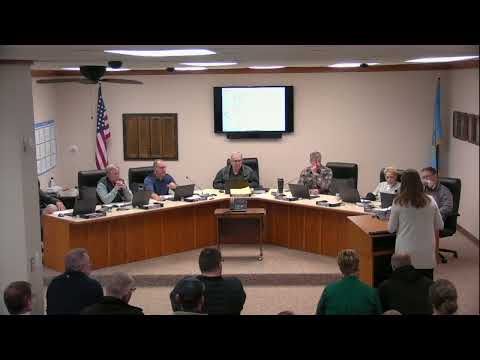
After extensive public comment and debate, the Brandon City Council voted 3–2 (with one abstention) to deny a rezoning request that would have allowed construction of a wireless telecommunications tower on a small parcel across from Robert Benes Elementary and Brandon Valley Intermediate School.
The Brandon City Council on a 3–2 vote with one abstention denied an ordinance to rezone a 0.14‑acre parcel at 108 West Park Street from NRC (natural/river corridor) to General Business, a change that would have cleared the way for a wireless telecommunications tower proposed by Elevated Towers.
Supporters of the denial framed the decision as a land‑use and spot‑zoning concern; opponents of the rezoning, including parents and local residents, urged the council to reject the proposal because of health and safety worries about placing a tower near two schools.
Parents and neighbors filled the council chamber during the public‑comment portion, telling the council they feared long‑term health and developmental harms for children. “Are you willing to vote yes to rezone this land knowing that even one child might suffer long term effects because of that decision?” asked Erin Taggart, who identified herself as a parent and Brandon resident and said about 900 children attend the schools nearby. Taggart cited studies and urged application of the precautionary principle when a sensitive use — a school — is adjacent to a tower site.
Other residents raised related concerns: traffic and pedestrian safety at school drop‑off, alternative locations that might serve the South Side of Brandon without placing a tower adjacent to schools, and perceived conflicts of interest by the tower developer. John Penning presented a petition signed by more than 50 residents asking the city to seek alternative sites. Several commenters said they had reviewed academic studies and international guidance suggesting greater separation between base stations and schools than the proposed site would provide; speakers attributed those claims to outside research rather than to city staff.
Jonah Snyder, representing Elevated Towers, told the council his company had been working with city staff and the Planning & Zoning Commission since November and that the tower was intended to improve local coverage and network densification. “As a community gets to this size…connectivity being able to place a phone call, being able to connect to the Internet, is just something that’s generally important to people,” Snyder said. He told the council Elevated Towers had examined multiple sites, had completed preliminary environmental (NEPA) screening for some alternatives, and that monopole towers are engineered to withstand severe weather and ice conditions.
Patrick (Development Director) summarized the land‑use process and federal limits on local authority over radio‑frequency emissions. He explained that a rezoning is a city land‑use decision that would only permit Planning & Zoning to consider conditional uses (including a tower), and that federal law and FCC rules limit local governments’ ability to base zoning decisions on RF‑emissions concerns. Patrick also said the specific parcel is very small (reported in staff materials as roughly 0.14 acres) and that the parcel is designated NRC on the city’s current land‑use map. Staff noted the distance from the proposed tower location to the nearest school building was about 400 feet (measured using mapping tools), while some public commenters described a much shorter distance to the school property line.
Council discussion focused on two recurring themes: (1) whether approving the rezoning would constitute spot zoning—a single small commercial designation surrounded by NRC and residential parcels—and (2) the balance between addressing service gaps and protecting school adjacency. Planning & Zoning had recommended adoption of the rezoning; several P&Z members attended the council meeting to answer questions.
A motion to deny the rezoning ordinance (Ordinance 732) passed on roll call. The recorded votes were: Fish — yes (to deny); Johnson — no; Cole — no; Lawrence — abstain; Marsau — yes; Steen — yes. The mayor did not cast a deciding vote. Council discussion preceding the vote repeatedly emphasized that this vote was on the rezoning only; any future tower would still require a conditional‑use review by Planning & Zoning and follow other permitting steps if the rezoning had passed.
Because the rezoning was denied, Elevated Towers cannot proceed through the city’s conditional‑use process for this parcel. Patrick told the council that, separately, federal review pathways exist that a carrier or tower company might pursue if they can demonstrate a significant coverage gap and no feasible alternatives, but he said those are outside the city’s land‑use discretion.
The council’s decision leaves the parcel in its current NRC designation. Residents who opposed the site celebrated the vote as preserving the neighborhood and school adjacency; proponents of added wireless capacity said they will continue to explore other sites to serve the South Side of Brandon.