Get email alerts on the Right Of Way topic
No spam. Unsubscribe anytime.
Pullman council adopts right-of-way code updates, approves fee structure for sidewalk use
Summary
At its Feb. 11 meeting, the Pullman City Council passed updates to the city code and adopted a fee structure to allow greater business use of sidewalks; staff were directed to work with community members on activating those spaces.
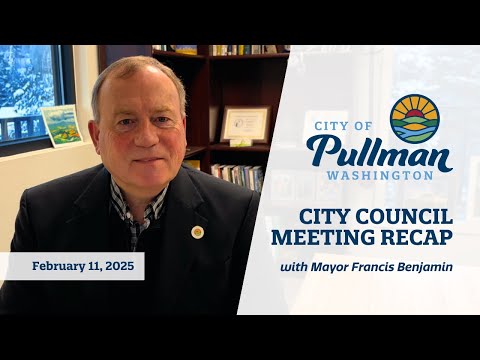
The Pullman City Council on Feb. 11, 2025, approved updates to the city's right-of-way code and implemented a fee structure intended to allow greater business utilization of city sidewalks, Mayor Francis Benjamin said.
The council has debated how to expand business use of sidewalks while maintaining access and constitutional requirements since September, Benjamin said. By the end of the Feb. 11 meeting, the council reached agreement on a path forward and adopted amendments to the code and a fee schedule. Staff were directed to work with community members who want to activate sidewalk spaces.
Council discussion traces back to September, when members began weighing options that balance commercial activation with pedestrian access and legal constraints, Benjamin said. The transcript did not specify the ordinance number, the exact fee amounts, or the vote tally on the adoption. The motion text, mover, and seconder were not provided in the meeting summary.
City staff are now expected to coordinate with businesses and other community members on permitting, compliance, and activation logistics, Benjamin said. The city announced a town-hall meeting for Feb. 25, 6–8 p.m., at the senior center to gather further community input on city matters.
AI generated
The text on this page is AI generated. Summaries, highlights, analysis, and video transcripts are all produced from the original source material.
AI can make mistakes, so if you spot one, and we will fix it for everyone.
Note: the source content is unaltered by us. Any content source we link to, be it a video, an audio recording, or a document, is presented exactly as its publisher released it. That publisher is usually a government body, sometimes an individual official or another organisation.