Get Full Government Meeting Transcripts, Videos, & Alerts Forever!
Get email alerts on the Finance Tif Policy topic
No spam. Unsubscribe anytime.
Duluth council tables proposed policy on tax increment financing incentives for one week
Summary
City Councilors debated a new policy on development incentives for tax increment financing (TIF). Authors said the resolution clarifies TIF use; several councilors requested additional evaluation criteria, risk assessment language and neighborhood-specific considerations before approval. Council voted to table the measure for one week.
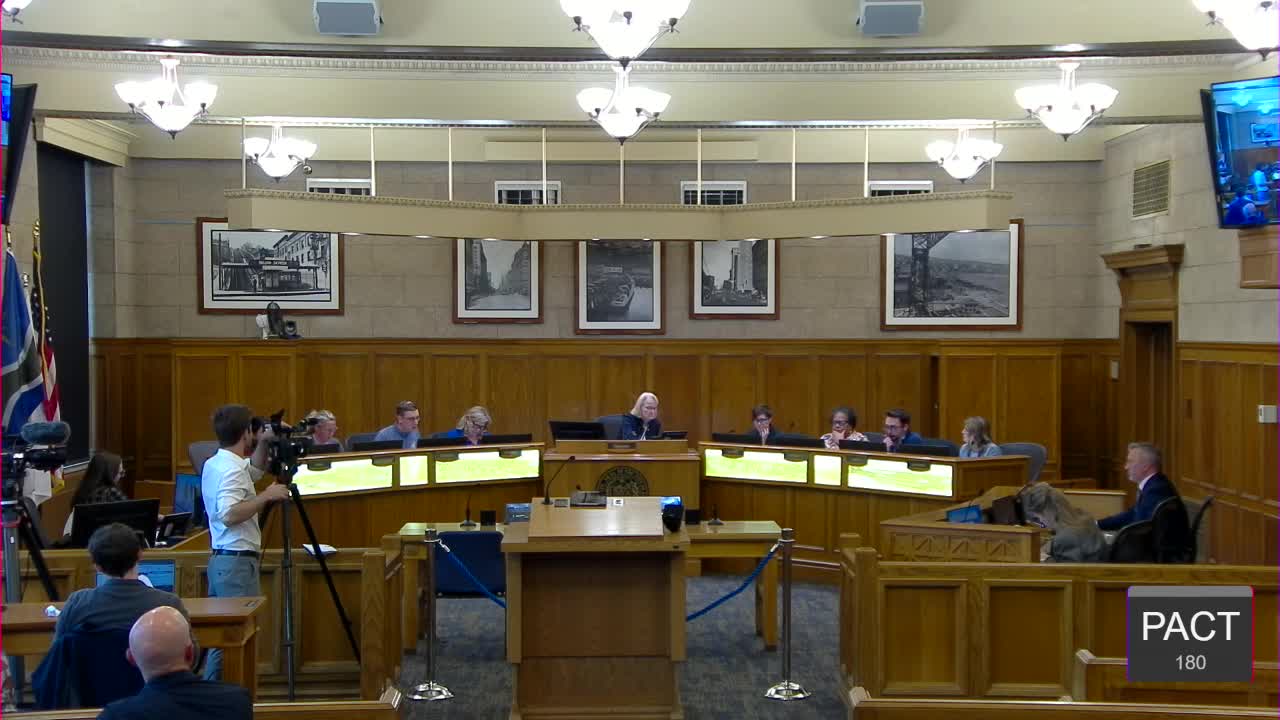
Councilors debated a proposed resolution establishing a policy on development incentives for tax increment financing (TIF) on June 9, 2025. Councilor Andrew Forsman introduced the measure as authorship by Forsman, Randolph and Kennedy; after extended discussion about evaluation criteria, economic-risk analysis and neighborhood impacts, Councilor Dirwachter moved to table the resolution for one week and the motion carried.
Supporters of the policy said it provides clarity about how the city will use TIF to support development and protects taxpayers by defining priorities and limits. Councilor Forsman said the measure could be moved forward before an anticipated TIF proposal later in the month but indicated he would be comfortable postponing to allow edits.
Several councilors asked for additions or clarifications. Councilor Dirwachter requested stronger language patterned after Rochester's and Minneapolis's TIF policies, including explicit evaluation criteria and a clearer economic risk assessment process. Councilor Kennedy said she wanted neighborhood-specific language to address displacement and gentrification concerns and offered to work on language about neighborhood fit. Councilor Mayo suggested integrating affordable housing targets loosely tied to area median income (60'80% AMI) and noted an upcoming housing report might inform that point.
City attorney staff indicated legal staff could assist with amendments and set a hard deadline of noon on Thursday for any text that needed to be prepared for the next meeting cycle.
Councilor Dirwachter moved to table the resolution for one week; the motion was seconded and the council voted to table. No final decision on the policy was made; authors and staff will refine the language and return the item at the next meeting to capture input and potential additions requested by multiple councilors.
Why it matters: Councilors described an upcoming TIF application that would benefit from a clear policy and asked that the city adopt evaluation criteria, risk assessment measures and neighborhood-level protections before approving development incentives tied to tax increment financing.