Get Full Government Meeting Transcripts, Videos, & Alerts Forever!
Get email alerts on the Charter Boat Permit Program topic
No spam. Unsubscribe anytime.
Commissioners delay county charter-boat permit program for six months to allow post-hurricane recovery
Summary
After review and hurricane-related site damage, the commission voted unanimously to delay work on a proposed commercial water-based charter-boat and tour operator permit program for six months to allow time for recovery and additional site assessments.
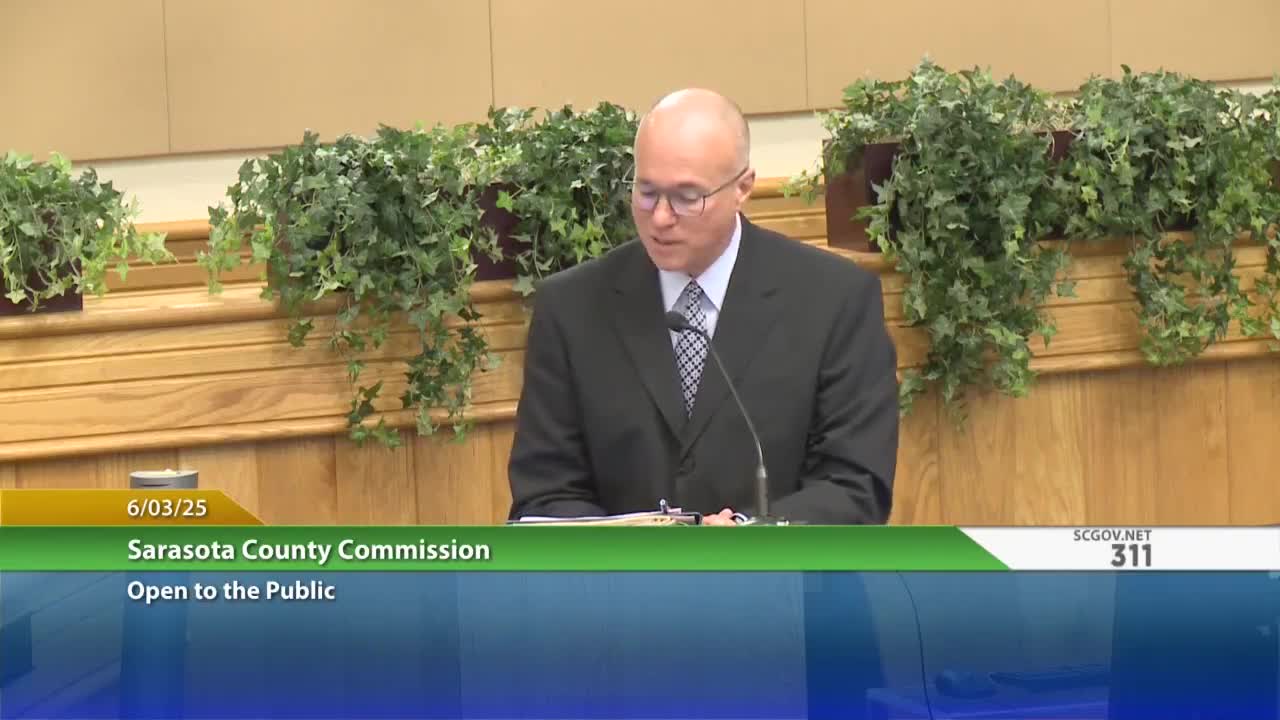
Sarasota County commissioners voted unanimously on June 3 to delay work on a proposed commercial water-based charter-boat and tour-operator permit program for six months, citing hurricane damage to several water-access parks and ongoing recovery work at boat ramps and seawalls.
Parks, Recreation and Natural Resources director Nicole Ressler briefed the board on the task force report that recommended a permit program for small (six-passenger) charter operations operating in three zones (north, mid-county and south), with a proposed cap on permits linked to available parking spaces. The task force had proposed a bid-based permit program with three-year terms, and recommended proceeds be used to fund additional waterfront acquisitions. The board had previously adopted code changes restricting commercial anchoring or parking without permits.
Ressler and staff told commissioners that several recommended sites are still recovering from recent hurricanes and that some seawalls and launch facilities are closed or operating under limited capacity. Commissioners from both sides of the dais said the storms had changed site conditions, and that it would be reasonable to pause implementation to give staff time to repair infrastructure and reassess site readiness. The board voted to delay the permit program for six months and asked staff to report back with updates at that time. Commissioners emphasized fairness to local charter operators and the need to prioritize damaged public infrastructure, such as boat ramps and bait-shop operations, before implementing new permitting burdens.