Get Full Government Meeting Transcripts, Videos, & Alerts Forever!
Get email alerts on the Municipal Finance topic
No spam. Unsubscribe anytime.
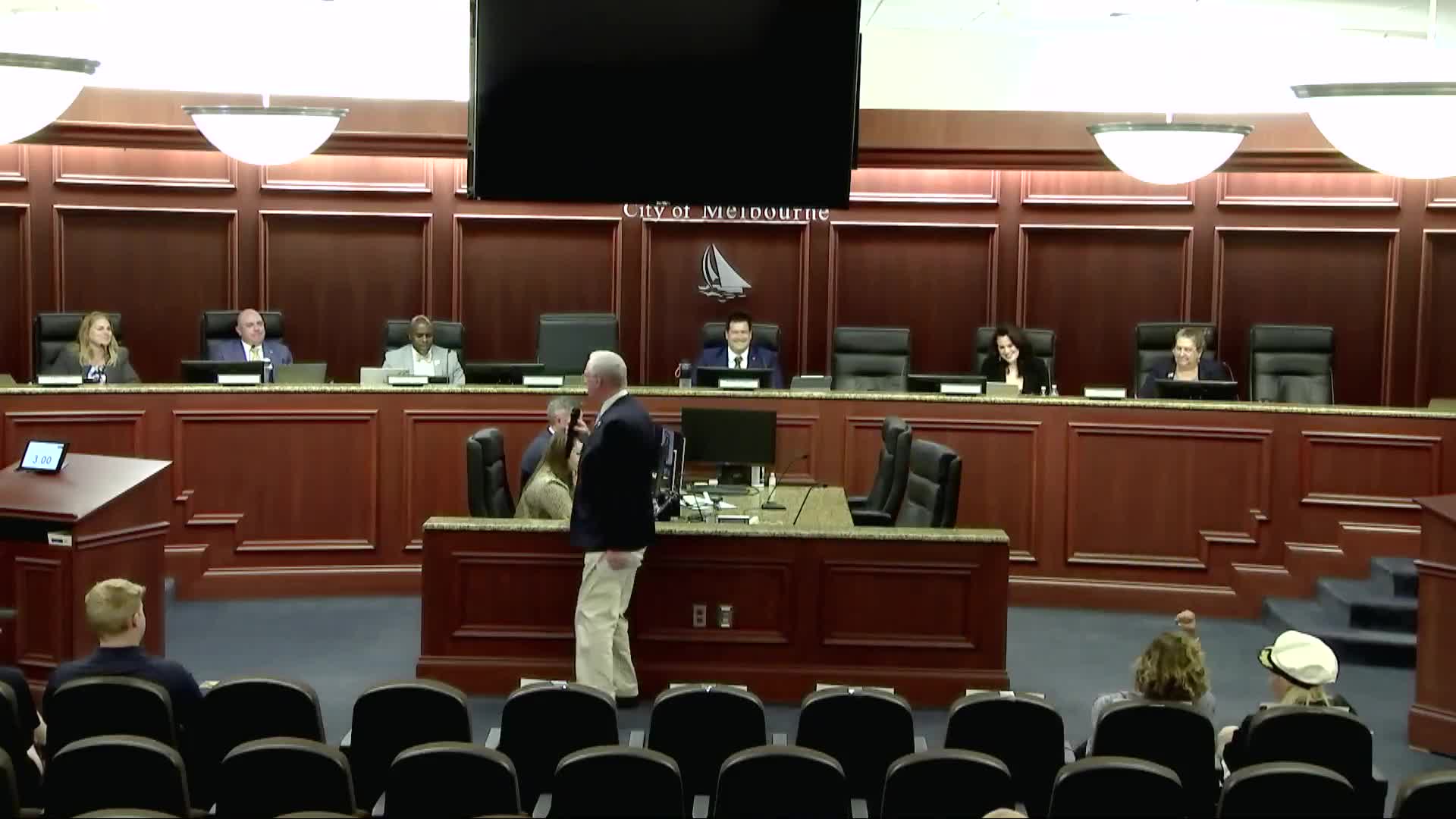
Melbourne council approves 25% increase in development fees, will review every two years
Summary
City Council approved Resolution 43-56 raising development-related fees (building permits, plan reviews, zoning applications) by roughly 25%, added new fees for pre-application meetings and repeat plan reviews, and raised the permit technology fee. Council also directed staff to review the fee schedule every two years.
City Council on May 27 approved a sweeping update to development-related user fees that raises most permit and plan-review charges about 25% and adds several new fees, Councilmember Russo said during the meeting.
The increase, approved as Resolution 43-56, affects building permits, plan reviews and zoning applications, and adds a pre-application meeting fee, a fee for repeated plan-review rounds beyond the fourth review, and a modest per-permit review charge to help fund a new shared reviewer position in community development and engineering. The council also approved raising the technology fee tied to the EnerGov permitting system from $10 to $15 per building permit.
City officials said the changes aim to keep development review workloads from being shifted onto general taxpayers and to better cover staff time devoted to development reviews.
“Since we looked at the first five years there was a CPI increase of 21% and we’re really now into the sixth year,” said Cindy Dittmer, who presented the proposal. “So what we’ve proposed in this resolution is really across the board a 25% increase in the development fees.”
Why it matters: The city described the charges as user fees — costs borne by permit applicants and developers rather than the general fund — designed to offset growing staff workloads tied to plan review and related tasks after implementation of the EnerGov permitting system. Officials said review cycles have lengthened and certain projects now require multiple review rounds; the new repeat-review fee is intended to discourage low-quality initial submissions and recover staff costs for repeat checks.
What council debated: Councilmembers asked several questions about how the new fees would be calculated and where revenue would be allocated. Dittmer said building-division fees will continue to go into the building fund, while community development and engineering fees go to the general fund. She said staff recommends using part of the new revenue to support a full-time equivalent reviewer shared by community development and engineering.
“Some plans are being submitted with the sole intent of having city staff be their QA/QC,” Dittmer said, describing the motivation for a fourth-and-later review charge. “We’d love to have everyone done by the third review, and we think if we start charging for the fourth or subsequent ones, that maybe will make them check their work before they submit it the first time.”
Councilmember LaRusso framed the vote as cost-neutral rather than a revenue grab: “Personally, I don’t see this as a revenue generator. I see this revenue neutral,” he said, adding that developers — not the general taxpayer — should bear the cost of repeated review cycles caused by incomplete or low-quality submissions.
Council action and timing: Councilmember Russo moved approval of Resolution 43-56 with an amendment to shorten the review interval in the resolution so staff will review the fee schedule every two years (the draft had required a five-year review). The motion was seconded by Councilmember Bassett and carried unanimously; the vice mayor announced the motion passed following an aye vote by all council members present. Staff said the fee changes will be implemented as provided in the adopted resolution and that the city will return with follow-up details on implementation and any needed software reporting changes.
Context and next steps: City staff said a 2019 study supported earlier fee-setting and that staffing and software costs have continued to grow. Officials also said they will explore whether EnerGov can provide better reports on review times; if not, staff may recommend an outside consultant for a deeper audit in the future. The council’s two-year review direction will require staff to revisit fee levels and the practical effects of the new charges within two years rather than five.
Ending: Council members who spoke said the increases are intended to protect taxpayers and improve customer outcomes by encouraging better-quality submissions and funding a dedicated reviewer. The city manager and department heads will implement the changes and return to council with any procedural updates needed to operationalize the new fees.