Get Full Government Meeting Transcripts, Videos, & Alerts Forever!
Get email alerts on the Fire Apparatus topic
No spam. Unsubscribe anytime.
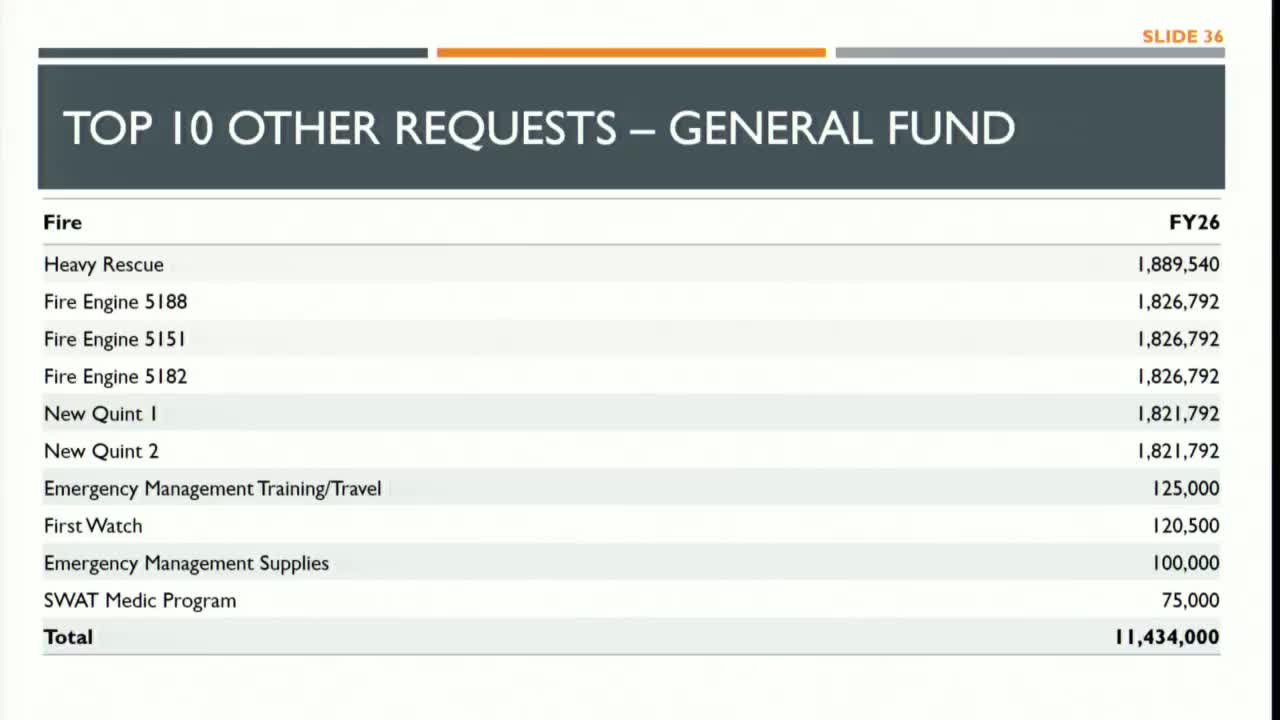
Palm Bay requests new fire quints, heavy rescue and other apparatus; staff warn multi‑year delivery and cost increases
Summary
Fire department and capital staff proposed buying quints, heavy rescue and replacement apparatus over multiple years; staff said deliveries can take two to four years and purchases help ISO rating and reserve capacity.
City of Palm Bay staff told council they plan to seek funding for new fire apparatus — including quints and a heavy rescue vehicle — that staff say would improve coverage and could reduce insurance costs for some properties by improving the department’s ISO rating.
Sean Spillers, capital and asset program administrator, and the fire presenter outlined the apparatus requests and delivery timelines. The city’s request bundle includes quints (a combined engine and aerial ladder), multiple fire engines and a heavy rescue vehicle; staff described total estimated apparatus-related asks in the conversation as exceeding $11 million.
The presenters explained lead times and financing options. The fire presenter said quints and similar apparatus now have multi‑year factory lead times: “we’re looking at anywhere from, 23 to 26 months to be delivered and placed in service,” and warned some aerial ladder trucks can exceed $2 million. Staff said vendors’ prices have risen in the past 12–15 months and noted a typical engine’s expected frontline life is 10 years; some current engine units are 20–25 years old. The fire presenter said replacing older apparatus would increase the city’s reserve fleet and reliability.
Staff argued the apparatus have operational and insurance impacts. The fire presenter said a higher ISO rating could lower insurance costs for homeowners and commercial occupancies: “Single family residents… normally see several $100 in reduction in their fire insurance. Commercial occupancies can see several thousand dollars per year reduction in their fire insurance.” Council members asked about whether to purchase outright, pay during the build or use lease arrangements; staff said payment timing can be structured but cautioned lease programs have tradeoffs.
The presentation included other fire capital details: new Lifepak 35 cardiac devices (ordered and expected in about six weeks), purchased bunker gear and firefighter uniform allotments, paramedic sponsorship for current firefighters, and routine equipment maintenance costs (air bottle testing, radio maintenance and annual certifications). The presenters noted some recurring training and equipment costs will be multi‑year obligations.
Council members asked whether older ladder trucks could be resold to other agencies and whether that would recoup funds; staff said some vehicles are donated or sold but proceeds vary. Council also discussed whether purchases should be phased and whether temporary facilities (including using Ted Whitlock Community Center rooms) could be employed while planning for a permanent station.
No formal votes were taken; staff asked council for direction on how to prioritize apparatus, timing and potential financing strategies ahead of the July workshop.